
Table of Contents
Curtains are one of the few bedroom updates that change how a room looks, sleeps, and feels all at once, yet they’re usually the last thing homeowners think about after paint and bedding. Part of the problem is that “curtains” sounds like a simple purchase until you’re standing in a store facing a wall of fabrics, lengths, and hardware with no clear starting point. Good bedroom curtain ideas solve two problems at the same time: they control light and privacy, and they finish the room visually. This article walks through both sides, from the practical decisions that come first to specific styling ideas you can adapt to your own windows.
What to Decide Before You Pick Bedroom Curtain Ideas
Before browsing bedroom curtain ideas for inspiration, it helps to know what your room actually needs. A bedroom on a bright, east-facing wall has different requirements than one facing a shaded courtyard, and a shared-wall apartment has different privacy needs than a house set back from the street. Start by ranking your priorities: sleep quality (light-blocking), privacy from neighbors or a street-facing window, insulation against temperature swings, and noise reduction if the room faces traffic or shared hallways.
Once you know your priority, the styling decisions get easier because you’re no longer choosing from every option, only the ones that fit. Someone who needs total darkness for shift-work sleep will look at blackout-lined panels first and treat pattern and color as a secondary decision. Someone who just wants a softer, more finished look in a room that already sleeps fine can prioritize fabric and color instead. Naming the priority first keeps the rest of the process from feeling overwhelming.
Bedroom Curtain Ideas for Better Sleep and Light Control
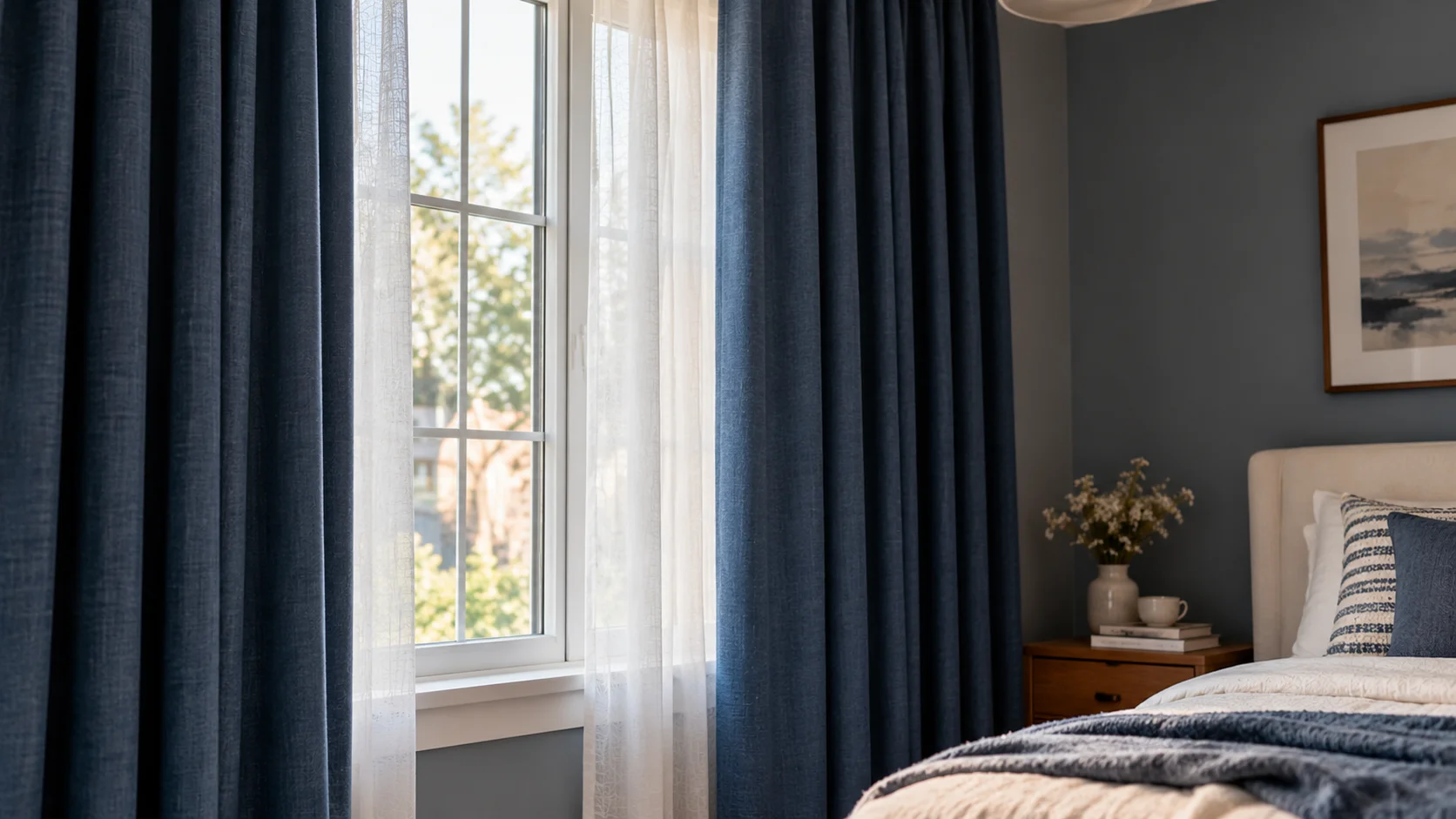
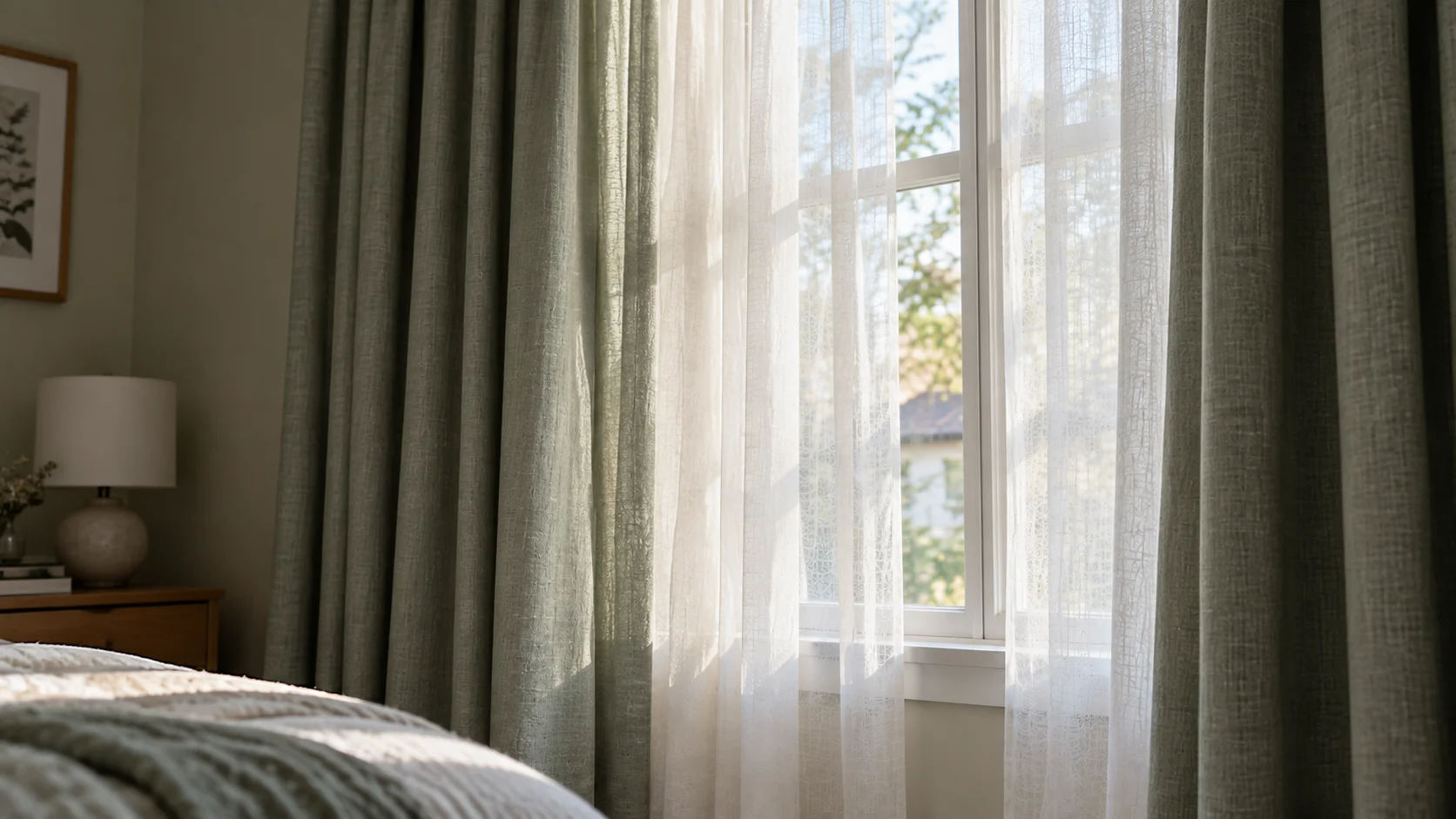
If sleep is the priority, light-blocking performance should drive the decision more than color or pattern. Blackout curtains use a dense woven fabric or an attached lining to stop most exterior light, which matters most for early risers, shift workers, or anyone in a room with streetlights nearby. Room-darkening curtains are a lighter-weight alternative that reduce most light without the heavier, sometimes stiffer feel of full blackout fabric, which suits people who want dimness rather than total dark.
For bedrooms where the window faces a bright exposure, a separate blackout liner clipped to standard curtains is worth considering, since it lets you keep a decorative fabric on the outside while still controlling light from behind it. This approach also makes it easier to swap the visible curtain later without redoing the light-blocking layer. A few light-control options worth comparing side by side:
- Blackout curtains — best for total darkness and shift-work or early-riser schedules
- Room-darkening curtains — a lighter option that dims a room without full blackout
- Blackout liners — clip onto existing curtains to add light control without replacing them
- Cellular or honeycomb shades under curtains — add light control and some insulation in one layer
Bedroom Curtain Ideas for Small Bedrooms and Narrow Windows
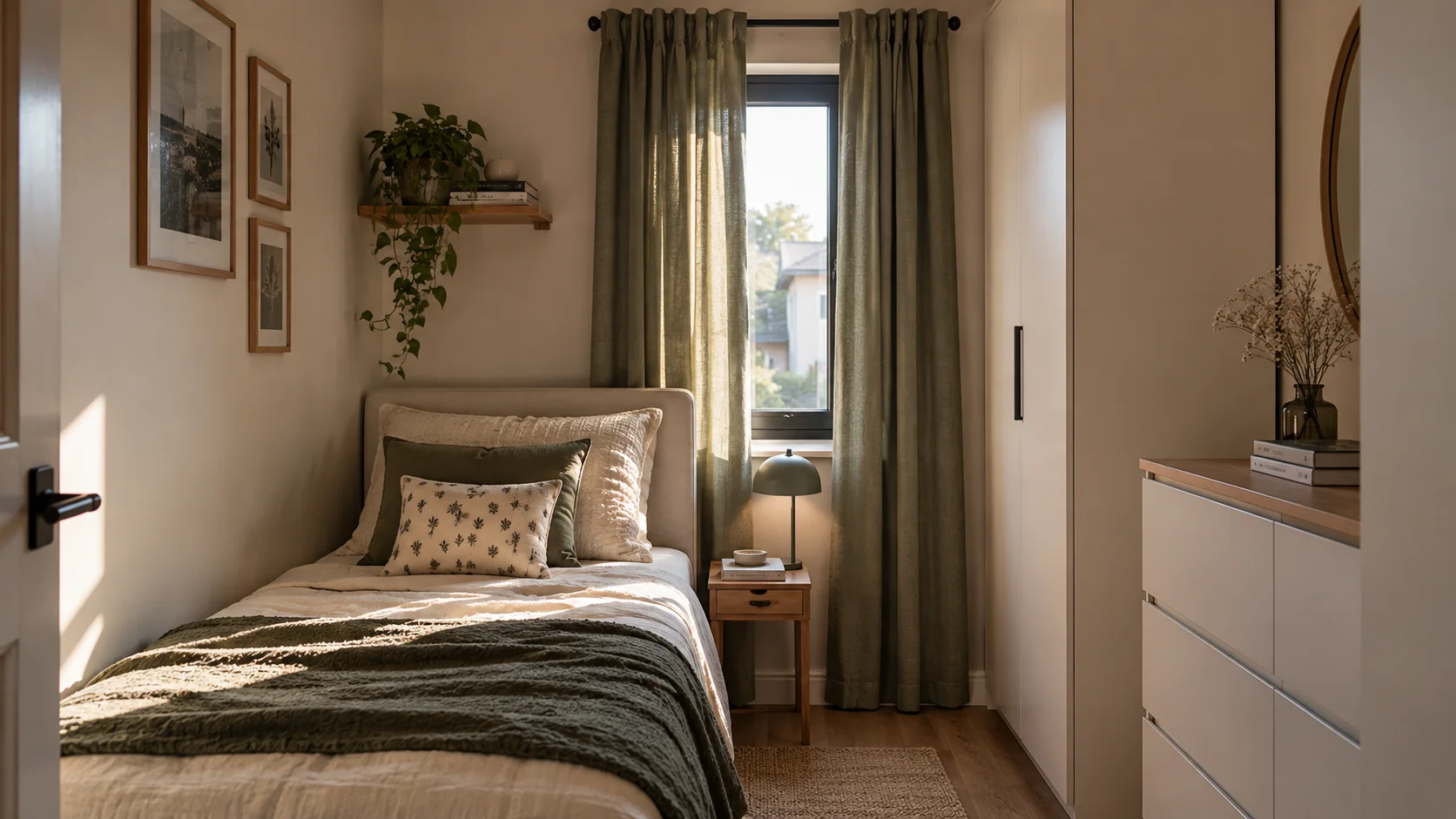
Small bedrooms benefit from curtains that widen the visual footprint of the window rather than following its exact frame. Mounting the rod several inches beyond the window casing on each side, then letting the panels cover part of the wall when open, makes the window appear larger without any construction work. This is one of the more effective bedroom curtain ideas for small rooms specifically because it changes the perceived proportions of the wall, not just the window.
Lighter, softer fabrics also help small rooms feel less boxed in, since heavy, structured curtains can visually shrink a space that’s already tight on square footage. If the room only has one small window, a single wide panel or a pair of narrow panels pushed fully to the sides during the day keeps more of the wall visible, which reads as more open. Narrow windows respond well to the same wide-mount approach, since it corrects for a window that would otherwise look disproportionately small against the wall around it.
Choosing a Curtain Length: Puddled, Floor-Length, or Cropped
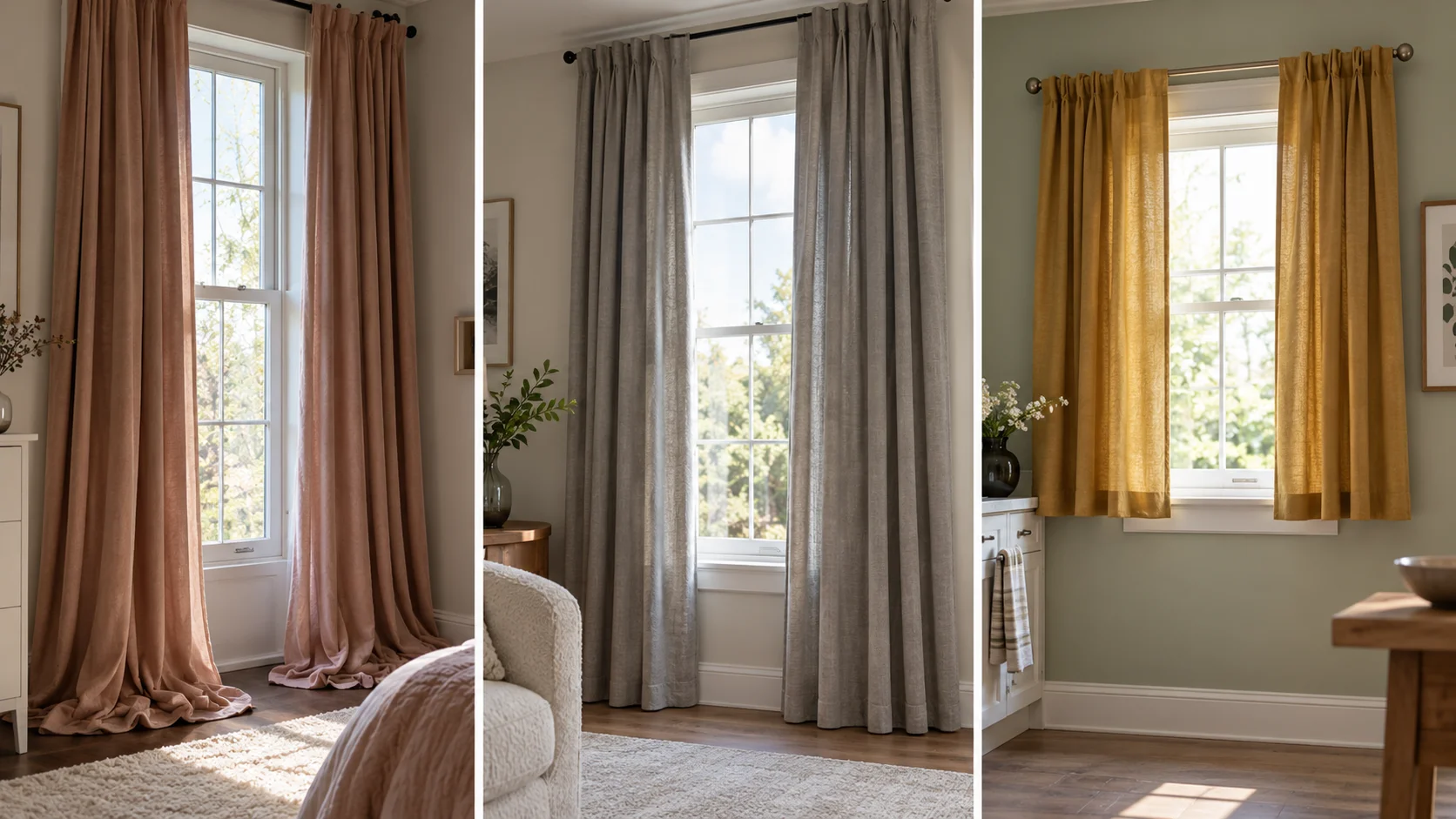
Length affects the formality and finish of a bedroom more than almost any other curtain decision. Floor-length panels that just graze the floor read as clean and current, and they work in nearly any bedroom style from modern to traditional. A puddled hem, where a few extra inches of fabric rest on the floor, adds a softer, more romantic feel and tends to suit primary bedrooms with a more formal or layered decor style rather than everyday or kids’ rooms.
Cropped curtains that stop above the windowsill or floor are less common in bedrooms specifically because they expose more hardware and radiator or vent space, but they can work over a window seat or in a room where floor-length fabric would interfere with furniture. A few length options and where they tend to work best:
- Floor-length (just touching the floor) — the safest, most versatile choice for most bedrooms
- Puddled (2–4 inches of extra fabric) — best for formal or romantic primary bedrooms
- Sill-length or apron-length — practical over a radiator, window seat, or low furniture
- Extra-long, pooled fully — a dramatic, high-end look for larger rooms with clearance to spare
Bedroom Curtain Ideas Using Color and Pattern
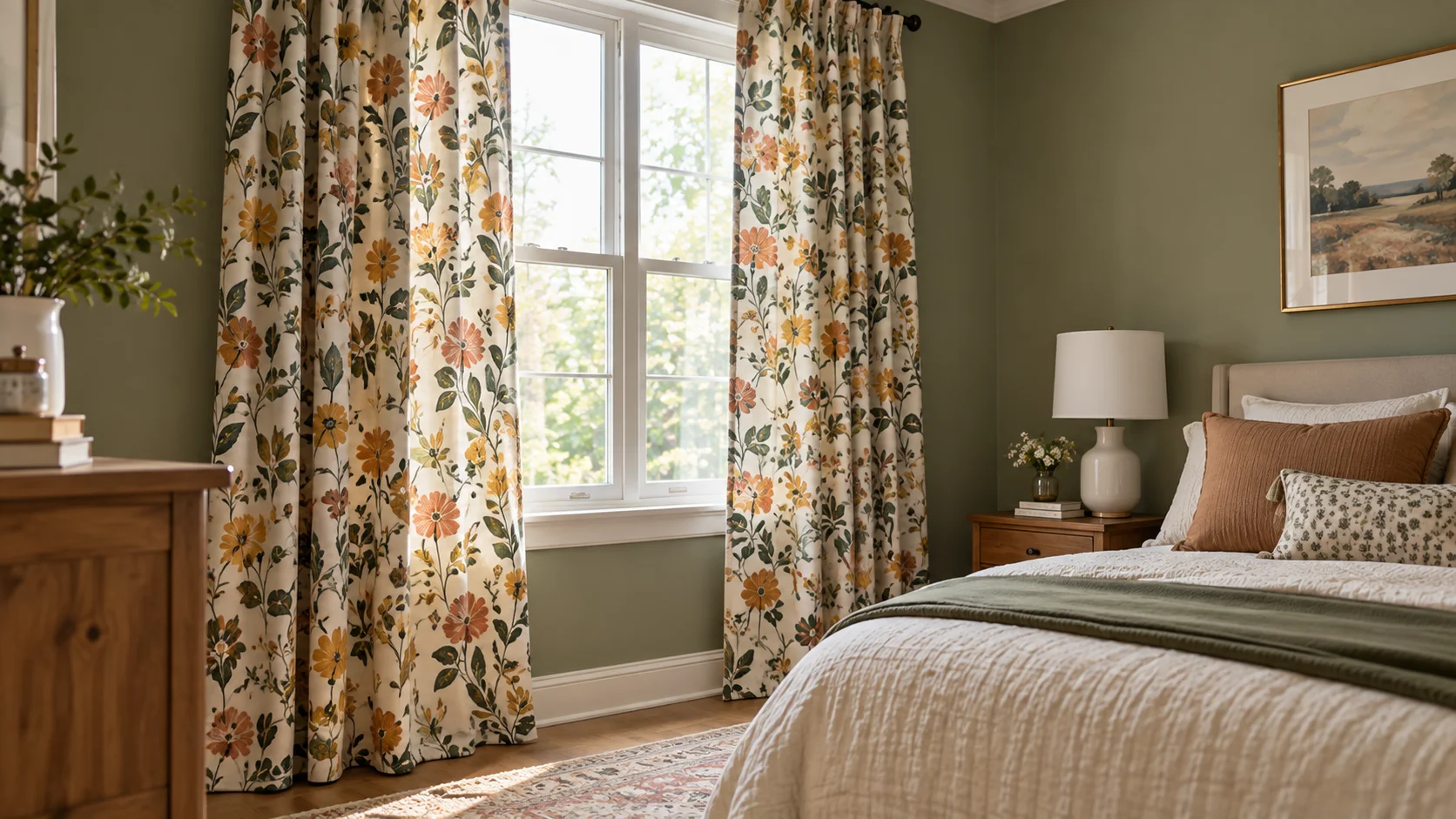
Color is where most bedroom curtain ideas start, but it works best as a decision made after light control and length are settled, not before. Curtains in a tone close to the wall color create a quiet, cohesive look that makes the room feel larger and calmer, which is a common choice for primary bedrooms meant to function as a restful retreat. Curtains in a contrasting or complementary color instead turn the window into a focal point, which suits a room that already has a fairly neutral base and needs a point of visual interest.
Pattern works the same way: a bold print can anchor a room with plain walls and simple bedding, while a room that already has pattern in the rug, art, or headboard usually reads better with a solid or subtly textured curtain instead. If you’re unsure, a solid curtain in a color pulled from an existing accent (a pillow, a piece of art, or the headboard) is a low-risk way to add color without the curtains competing with everything else in the room.
Layering Sheers and Blackout Panels Together
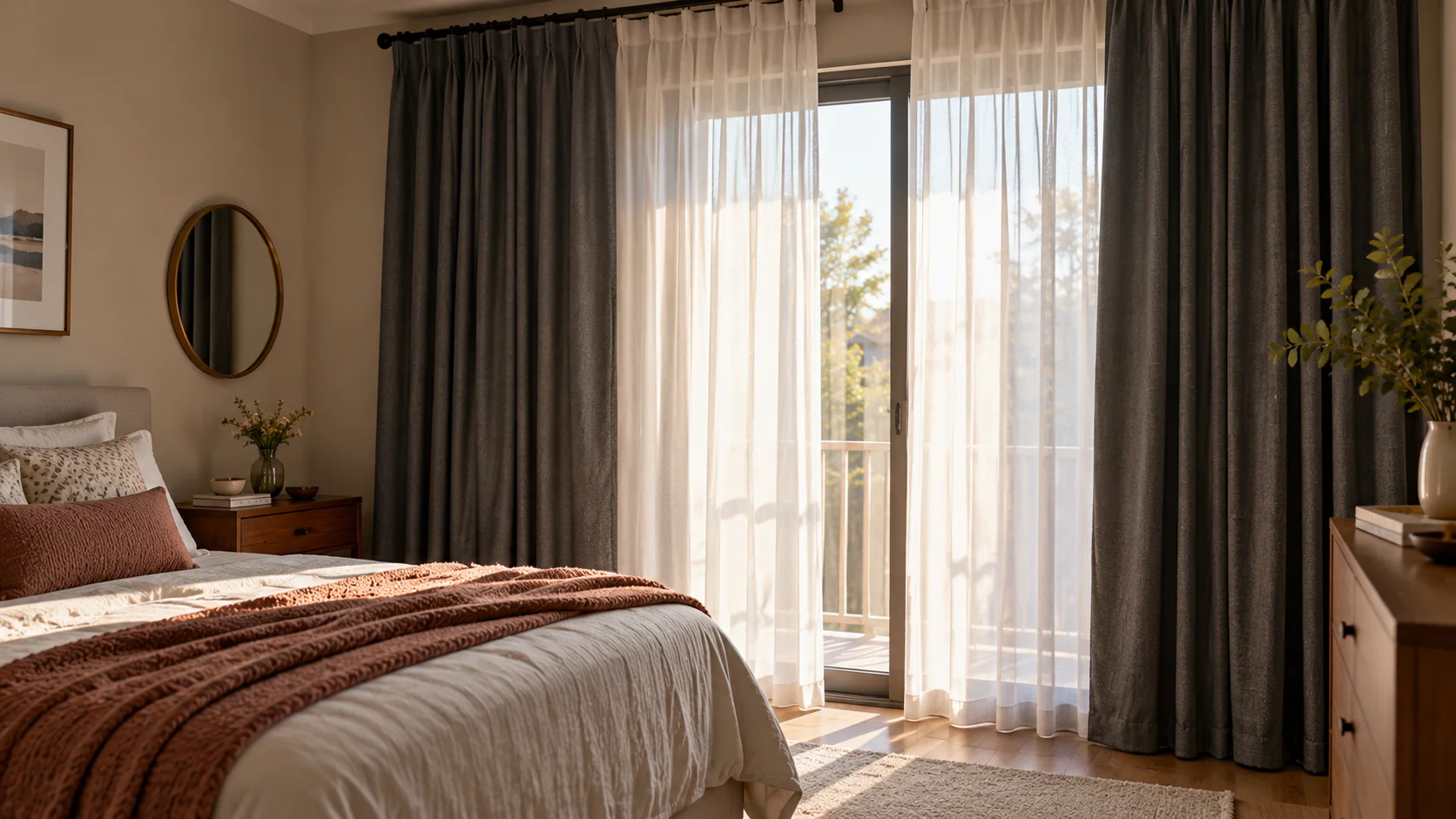
Layering is one of the more functional bedroom curtain ideas because it solves two needs with two separate fabrics instead of compromising on one. A sheer panel closest to the window lets in soft daylight and adds privacy during the day without blocking the view entirely, while a heavier blackout or room-darkening panel behind it (or on a second rod) can be closed at night for full light control. This setup also means you’re not stuck choosing between a decorative fabric and a functional one, since each layer does its own job.
Layering requires a double bracket or a double rod, which adds a small amount of hardware cost, but it gives more control than a single curtain can offer on its own. A few reasons layering works particularly well in bedrooms:
- Lets you keep sheers open for daytime light while closing blackout panels only at night
- Adds a small amount of extra insulation from the second fabric layer
- Gives the window a fuller, more finished look than a single panel
- Makes it easy to update the decorative sheer later without replacing the functional layer
Choosing the Right Fabric for Bedroom Curtains
Fabric affects how a curtain performs as much as how it looks, so it’s worth treating as a functional decision rather than a purely visual one. Velvet has a dense weave that blocks light well and adds a warm, formal look, but it can be heavier to manage and generally needs professional cleaning. Linen and linen blends have a relaxed, textured look that suits casual or modern bedrooms, though on their own they let in more light unless paired with a liner. A few common fabric options and what they tend to suit:
- Velvet — strong light-blocking and a formal look, heavier and often dry-clean only
- Linen or linen-blend — casual, textured look; usually needs a liner for real light control
- Cotton — breathable, easy to maintain, and works in most bedroom styles
- Polyester or polyester-blend — durable and easy to clean, a practical choice for everyday bedrooms
- Silk or silk-look fabrics — a formal, refined finish, generally more delicate and best away from direct sun
Because fabric weight and finish vary by manufacturer, checking the specific product’s care instructions and light-blocking rating before buying is worth the extra few minutes, rather than assuming all curtains in a given fabric category perform the same way.
Hanging Curtains Higher and Wider to Add Height
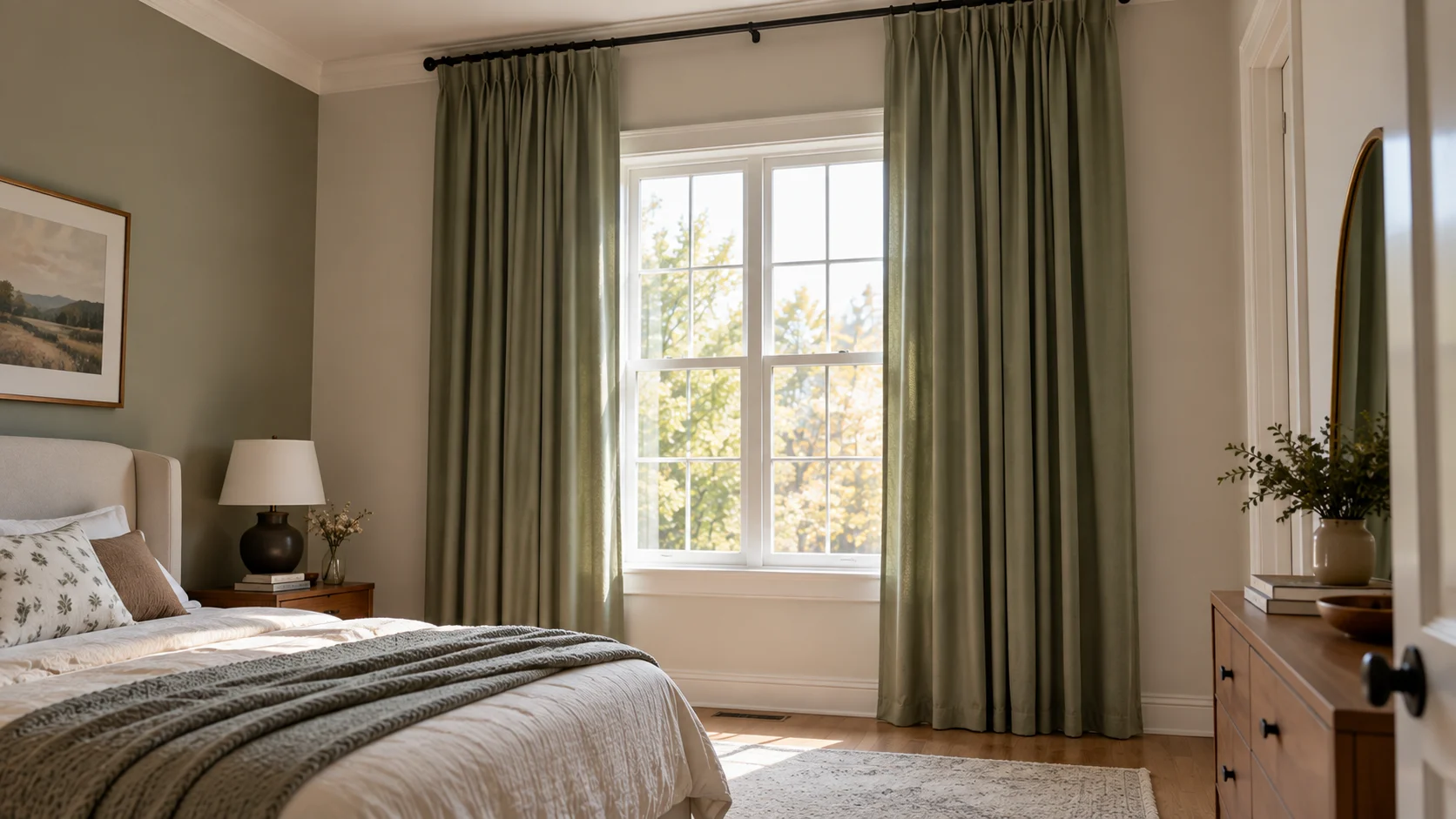
One of the simplest bedroom curtain ideas to execute is also one of the most effective: mounting the rod closer to the ceiling instead of directly above the window frame. This draws the eye upward and makes the ceiling feel higher, which works in almost any bedroom regardless of style or budget, since it doesn’t require different curtains, only different placement. The same principle applies horizontally — mounting the rod a few inches wider than the window casing lets the panels frame rather than cover the glass when open, which also lets in more daylight.
This approach costs nothing beyond the rod itself and a slightly longer curtain panel if the higher mount changes the drop length needed. It’s worth measuring twice before buying, since a higher mount usually means the curtain needs to be longer than a standard length made for hanging directly above the window frame.
Ceiling-Mounted Curtain Tracks
For an even taller look, a track mounted directly on the ceiling rather than the wall pushes the curtain line as high as it can go and creates a clean, built-in appearance. This method also tends to improve insulation slightly, since it closes the gap at the top where warm or cool air can otherwise escape around a standard rod. It does require secure mounting into a stud or appropriate anchor given the weight of a full curtain panel, so checking the ceiling material and curtain weight beforehand matters more here than with a standard wall-mounted rod.
Bedroom Curtain Ideas for a Cozy, Layered Nook
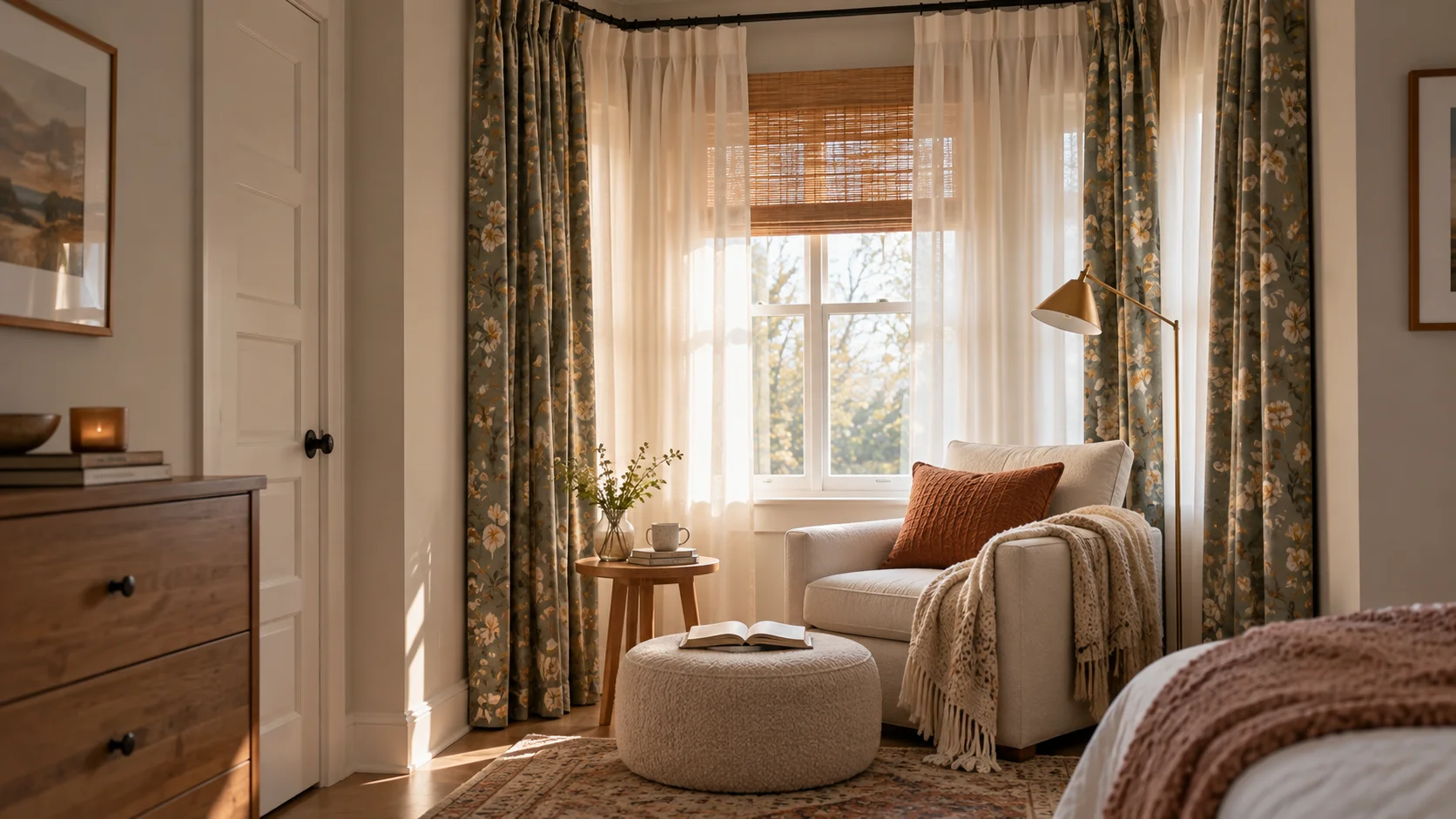
Curtains can do more than dress a window — hanging a panel around a reading chair, a window seat, or one side of the bed creates a defined, cozy nook without adding furniture or walls. This works particularly well in larger bedrooms where one corner feels underused, since the curtain visually separates the space without blocking light or airflow the way a solid partition would. A softer, lighter fabric usually suits this use better than a heavy blackout panel, since the goal here is ambiance rather than light control.
This is also a low-commitment way to test a bolder color or pattern, since a nook curtain covers less fabric than a full window treatment and can be swapped out easily if the look doesn’t work as well as expected. Pairing it with a small clip-on sconce or reading light finishes the effect without requiring an electrician or built-in fixture.
Using Curtains as a Headboard or Soft Room Divider
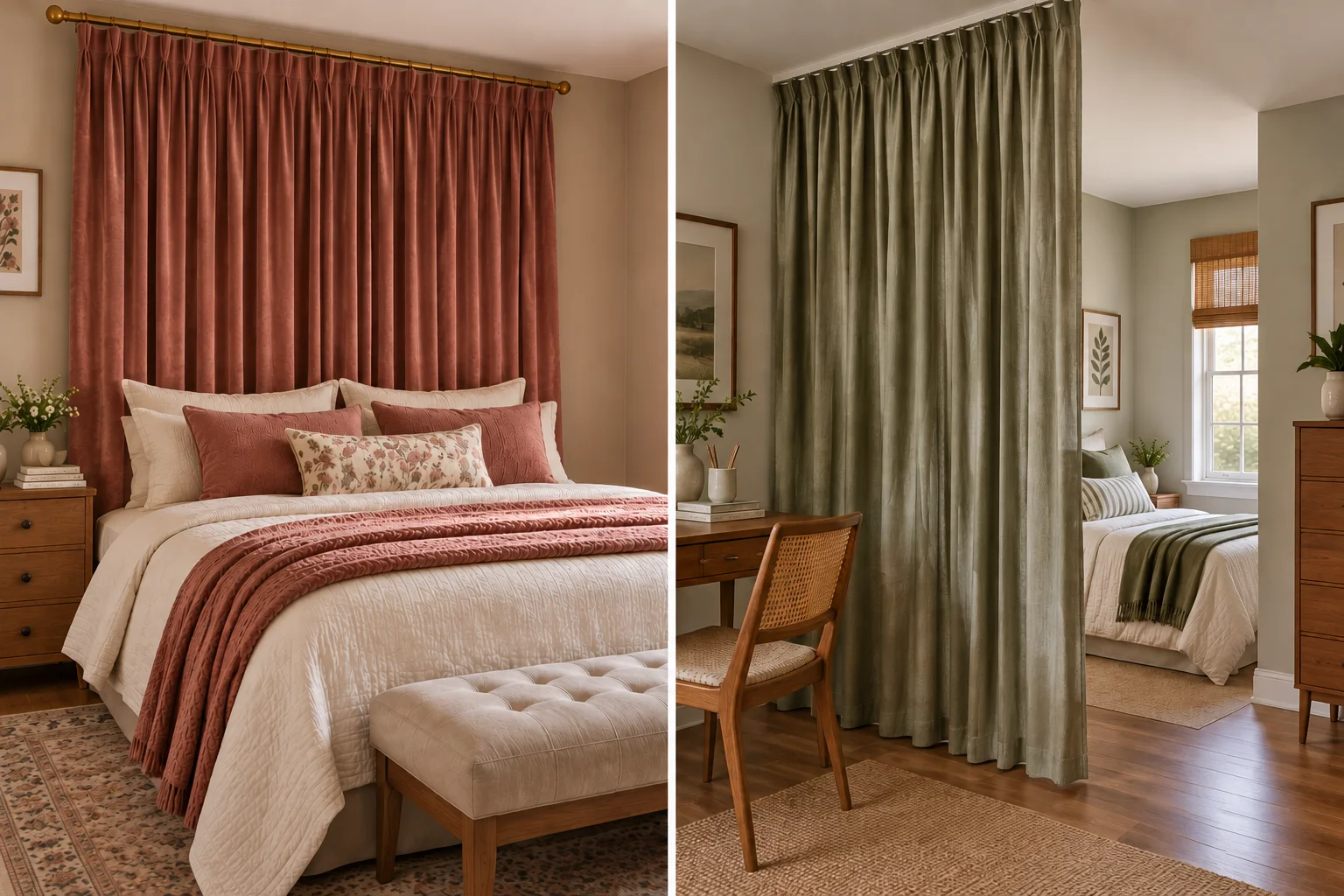
In bedrooms without a strong architectural headboard wall, hanging a wide curtain panel or two behind the bed can stand in for a headboard, adding softness and color to the space above the bed without built-in furniture. This works especially well in rented spaces where a wall-mounted headboard isn’t practical, since curtains can be hung from a simple tension rod or ceiling track and removed without any damage to the wall.
The same idea extended across a wider stretch of wall — or hung from a ceiling track through the middle of a larger room — can divide a bedroom from a home office or dressing area in an open-plan layout. This is a useful option for studio apartments or multipurpose rooms where a permanent wall isn’t an option but some visual separation still helps the space feel organized rather than one undivided block.
Matching Curtain Style to Your Bedroom’s Overall Look

Bedroom curtain ideas work best when they follow the style already established by the furniture, bedding, and wall color, rather than being chosen in isolation. A modern bedroom with clean lines and a neutral palette usually suits simple grommet or hidden-tab curtains in a solid color or subtle texture, since busy hardware or heavy trim can clash with the room’s minimal look. A farmhouse or traditional bedroom tends to suit pinch-pleat or rod-pocket curtains in natural fabrics like cotton or linen, often paired with a simple wood or wrought-iron rod.
A boho-styled bedroom has more room for pattern, layered textures, and mixed hardware, since the style itself embraces a more collected, less matched look. Whatever the style, keeping curtain hardware finish consistent with other metal finishes in the room (light fixtures, door hardware, bed frame) is a small detail that keeps the space from feeling disjointed even when the curtain fabric itself is bold.
Budget-Friendly Bedroom Curtain Ideas
Not every improvement requires new curtains. Rehanging existing panels higher and wider, as described earlier, costs only the price of a longer rod and is one of the most effective no-cost-to-low-cost bedroom curtain ideas available. Adding a plain, inexpensive blackout liner behind an existing decorative curtain is another low-cost way to improve function without replacing fabric you already like.
For a moderate budget, ready-made curtains from a home goods retailer in a slightly higher thread count or a natural fiber blend offer a noticeable upgrade in look and drape over the thinnest budget options, without reaching custom pricing. Custom or made-to-measure curtains sit at the higher end of the budget range and make the most sense for oddly sized windows, very high ceilings, or a specific fabric that isn’t available in standard lengths — situations where a ready-made panel genuinely won’t fit rather than simply being a nicer option.
Common Bedroom Curtain Mistakes to Avoid
Some of the most common issues with bedroom curtains come from measurement and proportion rather than fabric or color choice. Curtains that are too short for the window, ending well above the floor or sill without an intentional cropped design, tend to make a room look unfinished rather than styled. Curtain panels that are too narrow for the window, showing gaps of exposed glass when closed, also undercut an otherwise good fabric and color choice.
A few other mistakes worth checking for before finalizing bedroom curtain ideas:
- Hanging the rod directly on the window frame instead of wider, which narrows the perceived window size
- Choosing a fabric weight that doesn’t match the room’s light-control needs
- Skipping a liner in a bright room and expecting a decorative fabric alone to block light
- Ignoring how the curtain hardware finish looks against other metal finishes in the room
- Buying curtains before measuring the actual drop needed from the chosen mounting height
How to Maintain Bedroom Curtains So Ideas Last
Even well-chosen bedroom curtain ideas lose their impact if the curtains aren’t kept up. Regular light dusting or a low-suction vacuum attachment removes surface dust before it builds up, which matters most for textured or pleated fabrics that trap more dust than smooth ones. Checking the manufacturer’s care label before washing is worth doing every time, since fabrics like velvet or silk-blends often require dry cleaning or spot cleaning rather than a standard wash cycle, and washing them incorrectly can shrink or warp the fabric.
For washable fabrics like cotton or polyester blends, a gentle cycle and low-heat drying (or air drying to avoid excess wrinkling) generally keeps the fabric and any blackout lining intact longer than high-heat drying would. Rotating or straightening pleats after washing, and rehanging curtains promptly rather than leaving them folded, also helps them keep their shape and continue looking the way they did when first hung.
FAQ
Mounting the rod wider and higher than the window frame, and choosing lighter-weight fabrics over heavy or structured ones, are the two changes that make the most visual difference in a small bedroom without needing more space.
Floor-length curtains that just graze the floor are the most versatile choice for bedrooms, while curtains that stop noticeably short of the floor without an intentional cropped design tend to look unfinished.
Blackout curtains with a dense weave or attached lining block the most light, while a separate blackout liner added behind a decorative curtain is a good option if you want to keep a specific fabric on the outside layer.
Yes, layering a sheer panel with a blackout or room-darkening panel on a double rod is a common approach that allows soft daylight during the day and full light control at night.
It depends on the priority: velvet and heavier blends block the most light, cotton and polyester blends are easy to maintain, and linen offers a relaxed look but usually needs a liner for real light control.
Mounting the rod several inches above the window frame, or as close to the ceiling as practical, generally makes the window and the room look taller without changing the curtains themselves.
Patterned curtains work well in a room with an otherwise neutral base, while a room that already has pattern in the bedding, rug, or art usually looks more balanced with a solid or subtly textured curtain instead.
A wider, higher-mounted rod, a floor-length or slightly puddled hem, and a natural-fiber-look fabric are the details that most affect how finished and higher-end curtains look, more than the price point of the fabric itself.
Love inspiring interiors, practical design ideas, and beautiful spaces? Follow us on Facebook, Instagram, and Pinterest for more interior inspiration, home styling ideas, and everyday design tips.