
Table of Contents
Why an Extra Small Apartment Living Room Feels Harder to Design
An extra small apartment living room ideas comes with a specific set of constraints that a regular small living room doesn’t always have — a doorway that eats into your only usable wall, a radiator or column in the middle of the floor, or a footprint so tight that a standard-size sofa simply won’t turn the corner. For context, the average studio apartment in the U.S. runs about 440 square feet, well under the national apartment average of 1,052 square feet — which is exactly the size category where this problem shows up most.
The goal of this article isn’t to give you 40 random photos to scroll past. It’s to walk through 25 specific, non-repeating ideas — grouped by furniture, zoning, color, lighting, storage, décor, and daily habits — so you can pick what actually applies to your room instead of wading through filler.
Furniture & Layout Ideas for an Extra Small Apartment Living Room
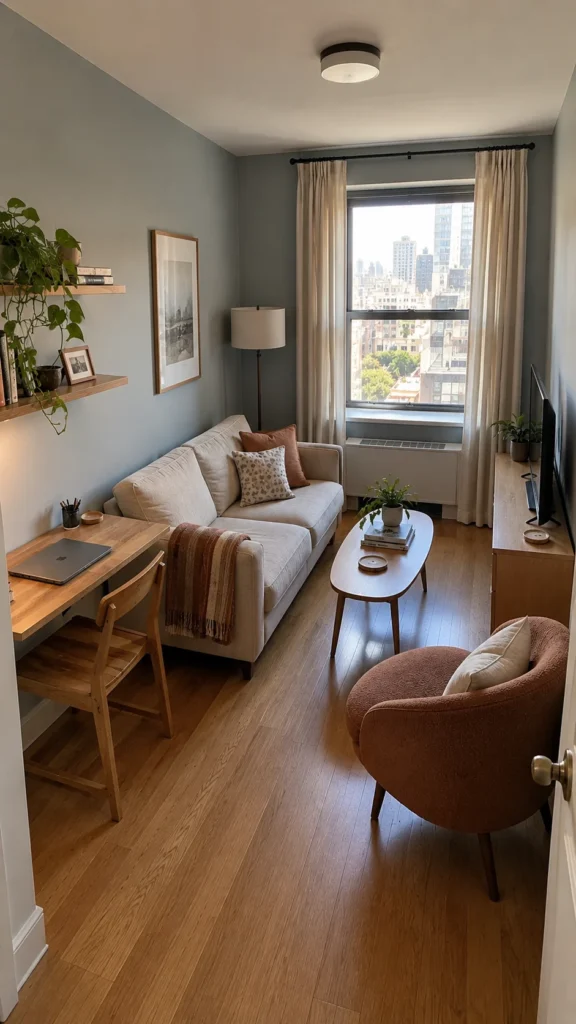
Furniture scale is the single biggest factor in how an extra small apartment living room ideas feels, and it matters more than color or style. A sofa that’s technically “small” on a showroom floor can still be too deep, too tall-backed, or too wide once it’s against your actual wall, so measure your space first — including door swing and walking paths — before shopping. Furniture with visible legs reads as lighter and lets the eye travel underneath, which matters enormously in a tight footprint.
Beyond scale, every piece of furniture in a room this size should justify the floor space it takes up. Multi-functional pieces let you skip buying a second item entirely, while flexible pieces like nesting tables or a wall-mounted desk disappear when they’re not needed. The trade-off worth knowing: multi-functional furniture often costs more upfront, and cheaper folding or lift-top mechanisms can wear out, so check hardware quality before buying.
- Choose furniture with visible legs instead of pieces that sit flush to the floor
- Scale the sofa or loveseat to the room’s actual dimensions, not the showroom display
- Use nesting tables that collapse down to almost no footprint when not in use
- Swap a standalone coffee table for a storage ottoman that serves both purposes
- Choose a sofa bed or daybed if the room occasionally needs to host overnight guests
- Add a wall-mounted, drop-leaf desk that folds flat when you’re not working
- Mount the TV on the wall instead of using a floor-standing media stand
Zoning an Extra Small Living Room Without Adding Walls
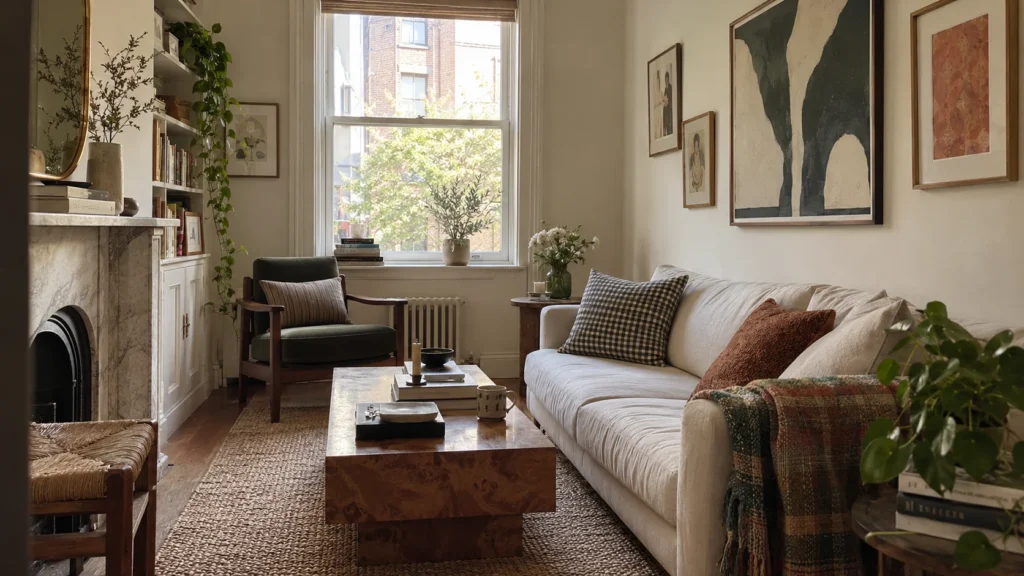
In an open-plan or studio-adjacent extra small apartment living room, defining the living area without a physical wall comes down to a few reliable visual cues. A rug does more work than decoration here — it tells the eye “this is the living room” even without a wall, as long as it’s sized so that at least the front legs of your seating sit on it. Too small, and the seating area looks like it’s floating disconnected from the rest of the floor.
Furniture itself can do the same job a wall would. The back of a sofa, a low open shelf, or even a curtain hung from a ceiling track can separate a living area from a kitchen or entry without blocking light or sightlines the way a solid partition would. Keeping any divider low or open-backed, rather than solid and floor-to-ceiling, keeps both sides of the room feeling connected instead of chopped up.
- Use a rug sized so the front legs of your seating rest on it, anchoring the zone
- Use the back of a sofa or a low, open-backed shelf as an informal room divider
- Hang a curtain or drape on a ceiling track as a soft, movable partition
Color and Texture Choices for an Extra Small Apartment Living Room
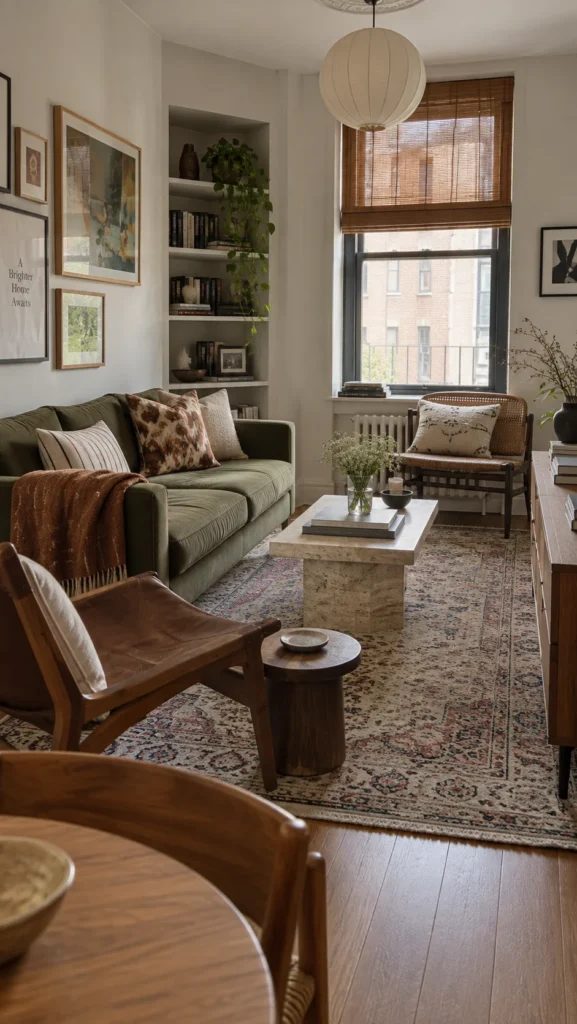
Light, neutral wall colors reflect more available light, which is why they’re consistently recommended for a small living room — whites, warm greys, and soft beiges bounce daylight around a room that likely only has one window. That doesn’t take color off the table entirely; a single accent introduced through textiles rather than paint adds personality without visually shrinking the room.
Reducing contrast between large surfaces also helps a small room read as more open. Matching upholstery tone closely to the wall color makes a sofa or shelving unit recede rather than dominate, and renters without paint permission can achieve a similar effect through curtains, rugs, and furniture choices alone rather than wall treatments.
- Paint or decorate walls in a light, neutral tone to reflect available daylight
- Match large furniture upholstery closely to the wall color to reduce visual bulk
- Add one accent color through pillows or a throw instead of an accent wall
Lighting and Mirror Placement in an Extra Small Living Room
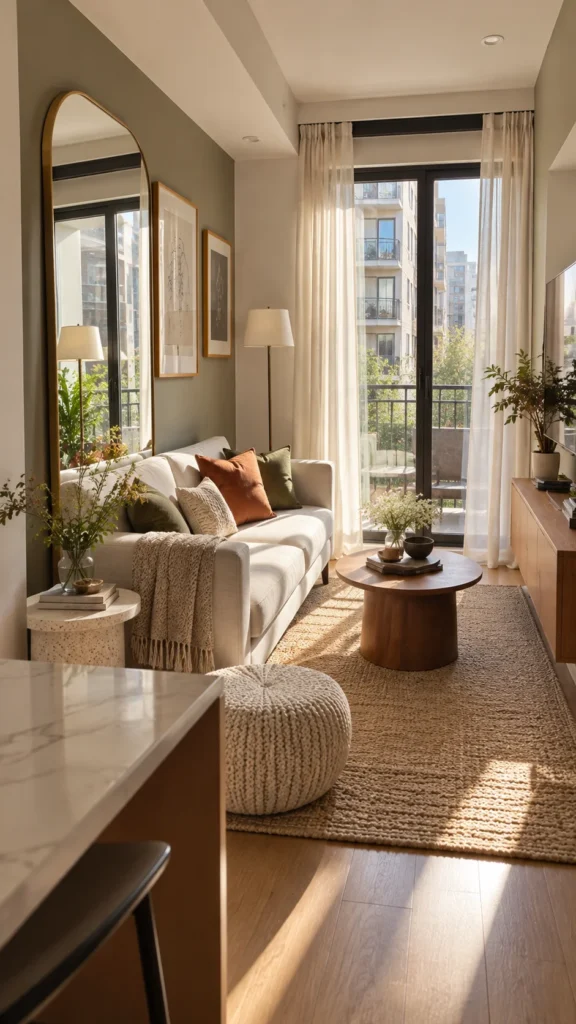
A well-placed mirror is one of the few tools that genuinely changes the perceived size of an extra small apartment living room rather than just reducing clutter. Positioned opposite or near a window, a large mirror reflects natural light back into the room and creates the illusion of a second window, which reads as depth rather than flatness.
Lighting affects the room just as much as the mirror does. A single overhead fixture tends to flatten a small space and cast hard shadows, while layering a floor lamp, a table lamp, and warm-toned bulbs creates a sense of depth and makes the room feel considered. Dimmable bulbs are an inexpensive way to shift from bright daytime light to a softer evening mood without buying new fixtures.
- Place a large mirror opposite or near a window to reflect natural light
- Layer lighting with a floor lamp, table lamp, and overhead fixture instead of one source
- Use dimmable, warm-toned bulbs to adjust mood without new fixtures
Storage Ideas for an Extra Small Apartment Living Room
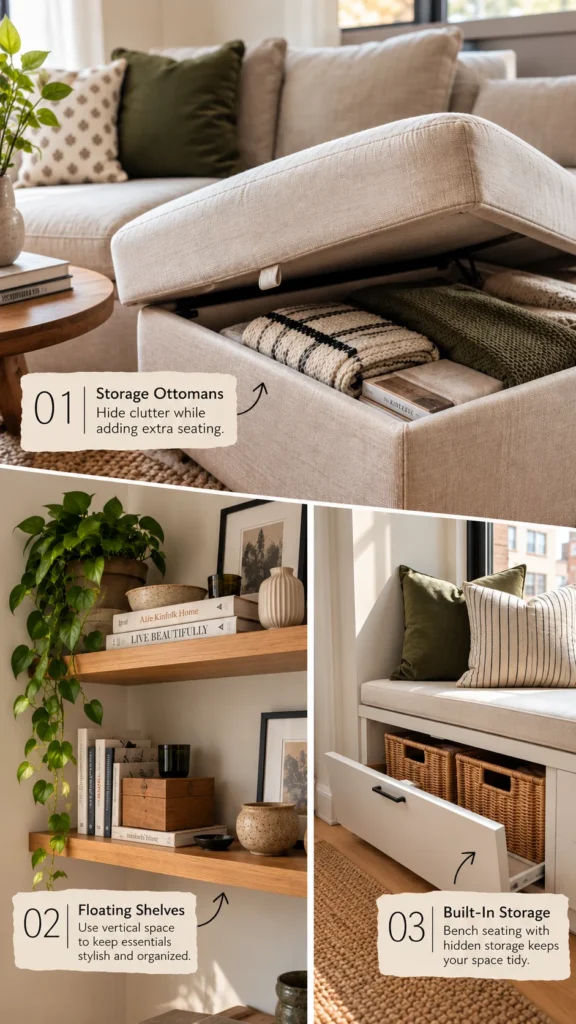
Storage in an extra small living room fails most often not because there isn’t enough of it, but because it isn’t placed where clutter actually happens — remotes and chargers pile up on the coffee table because there’s nowhere closer to put them. Before buying more bins, take stock of what accumulates in the room and place a small, dedicated container exactly where that item lands.
Vertical storage is the other lever worth pulling before adding more floor-level furniture. Wall-mounted shelves, a slim console, or under-sofa bins use square footage you’re not otherwise competing for, keeping the floor plan open for walking paths while still giving every category of item a home.
- Add floating shelves above the sofa for books or display items
- Use a slim console with drawers behind the sofa for remotes and chargers
- Use under-sofa storage bins for out-of-season throws or extra bedding
- Use labeled baskets on open shelving so visible storage doesn’t read as clutter
Visual Décor Tricks That Make a Small Living Room Feel Larger
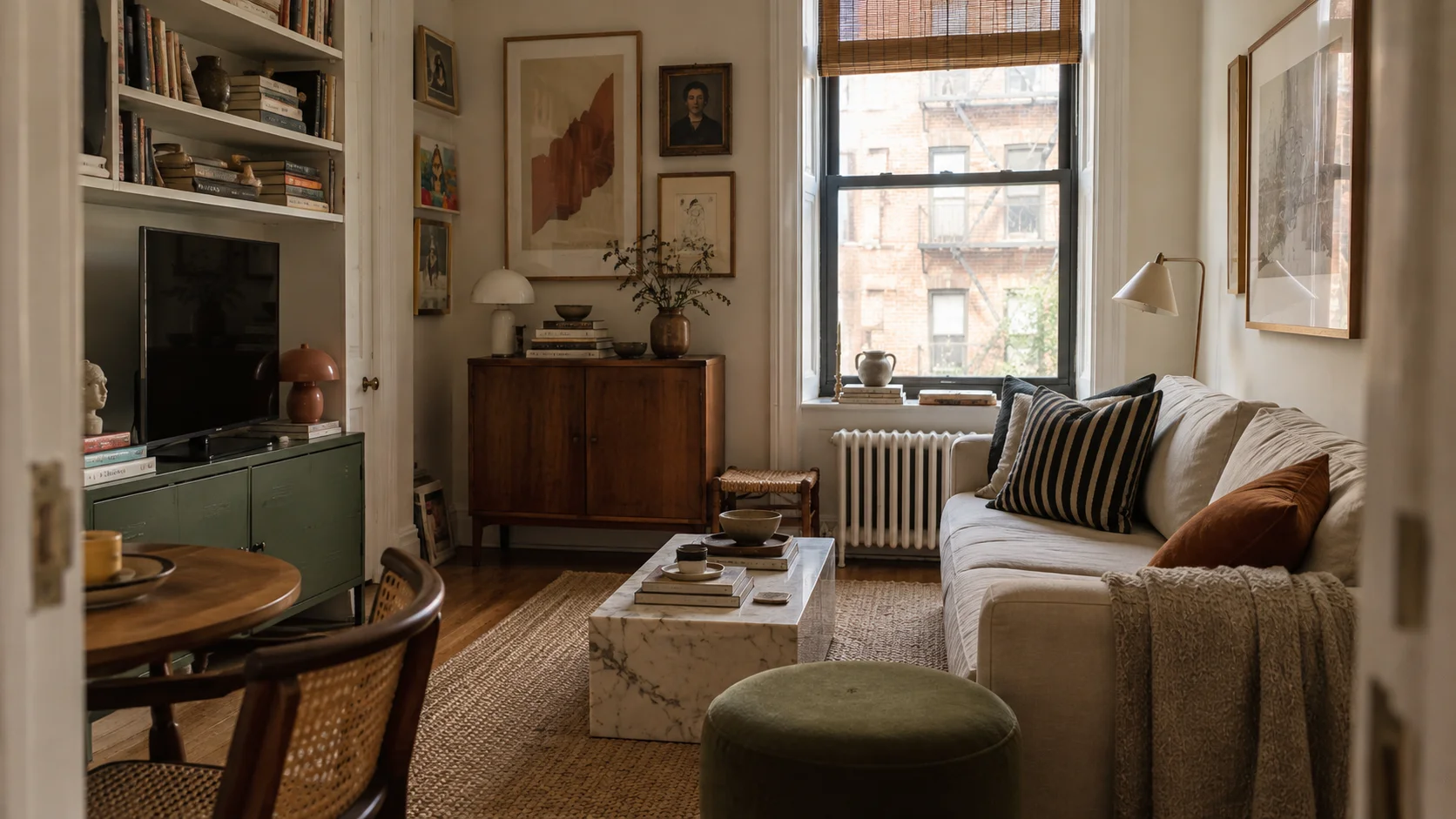
Beyond furniture and layout, a handful of styling choices affect how spacious an extra small apartment living room ideas feels without changing its actual dimensions. Limiting the number of accessories on display keeps the eye from bouncing between too many small objects, which is one of the fastest ways a small room starts to look cluttered even when it’s technically tidy.
Height and focal points matter too. Hanging curtains close to the ceiling rather than at the window frame draws the eye upward and makes the walls feel taller, while choosing one statement piece — a bold piece of art, a single patterned pillow, a distinctive lamp — reads as more intentional than several smaller decorative items competing for attention.
- Limit accessories on display to avoid visual clutter building up
- Hang curtains near the ceiling rather than at the window frame for a height illusion
- Choose one statement décor piece instead of several smaller competing items
Habits and Maintenance for an Extra Small Living Room
A small living room that looks great on move-in day often drifts back toward clutter within months, usually because there’s no clear “home” for new items that enter the space. Assigning every category of object a specific spot, even a small one, makes it far easier to put things away quickly instead of setting them down on the nearest flat surface.
Because there’s less square footage to begin with, a small amount of clutter is proportionally more visible than it would be in a larger room — which is exactly why small, consistent habits matter more here than anywhere else in the home. A short daily reset does more for an extra small apartment living room’s long-term appearance than any single storage purchase.
- Assign a specific “home” for daily-use items like remotes, mail, and chargers
- Do a five-minute nightly reset instead of a single large weekly cleanup
Common Mistakes in an Extra Small Apartment Living Room
The most frequent mistake is buying furniture sized for a “small” room in general rather than for the specific extra small apartment living room in question — a sofa that’s fine at 140 square feet can completely block circulation at 90. The second most common issue is over-decorating: filling every shelf and wall in an attempt to make the room feel “finished” usually has the opposite effect, since visual clutter reads as smaller regardless of the room’s actual size.
A less obvious mistake is ignoring traffic flow in favor of a “prettier” furniture arrangement. If you have to turn sideways to pass the coffee table or squeeze behind a chair to reach a door, the layout is working against the room rather than for it, no matter how good it looks in a photo.
Making It Work Long-Term
None of these 25 ideas require a full renovation or a big budget to start — most begin with measuring the room honestly and removing one oversized piece before adding anything new. An extra small apartment living room ideas that’s been thought through this way tends to feel calmer and more spacious than a larger room furnished without the same attention to scale and flow.
The goal isn’t to make the room look bigger than it is for the sake of a photo — it’s to make it function well for the life actually happening in it, whether that’s watching TV, working from the sofa, or hosting a friend for coffee on a Tuesday night.sofa, or hosting a friend for coffee on a Tuesday night.
FAQ
Prioritize a light, consistent color palette, add a large mirror near a window, and choose furniture with visible legs so light can pass underneath. These three changes affect perceived space more than any single purchase.
Yes, in moderation. A single dark accent wall or dark textiles can work well, but covering all walls in a dark tone in a room with limited natural light will usually make it feel smaller.
Choose a rug large enough that at least the front legs of your main seating sit on it. A rug that’s too small will make the seating area look disconnected from the rest of the floor.
Fewer, better-scaled pieces generally outperform more furniture. A sofa or loveseat, one coffee table (ideally with storage), and one or two storage pieces is often enough for a functional layout.
Rearranging existing furniture for better flow, adding a mirror, swapping heavy curtains for lighter ones, and using vertical wall shelving are all low-cost changes that don’t require new furniture purchases.
Often yes, if it lets you skip buying a second piece of furniture entirely — a storage ottoman replacing both a coffee table and a bin, for example. Check the quality of moving parts before buying, since cheaper mechanisms can wear out.
Use a rug to anchor the seating zone, or place a low, open-backed shelf or the back of a sofa between the living area and the rest of the room, rather than a solid partition that blocks light.
In most extra small apartment living rooms, yes — mounting the TV frees up floor space for a slim console or shelving underneath instead of a bulky, dedicated stand.
Love inspiring interiors, practical design ideas, and beautiful spaces? Follow us on Facebook, Instagram, and Pinterest for more interior inspiration, home styling ideas, and everyday design tips.