
Table of Contents
Most bedrooms don’t lack storage because the room is too small — they lack it because the available space isn’t being used with any real plan. Clothes pile up because the closet only uses hanging rail and ignores the floor and back wall, drawers get crammed because nothing inside them is separated, and the floor around the bed becomes a landing zone for everything that doesn’t have an assigned spot. The good news is that a bedroom rarely needs more furniture to fix this; it needs the furniture and space it already has arranged with intention.
This guide walks through practical bedroom storage ideas by zone — under the bed, inside the closet, on the walls, and in the furniture you choose — so you can pick the ones that fit your room instead of trying to apply every idea at once. Each section explains not just what to do, but why it works, so the system actually holds up once the “after photo” excitement wears off.
Start With a Real Declutter Before You Shop for Storage
Buying bins and baskets before deciding what you’re actually storing is the single most common reason bedroom storage ideas fail within a few months. A new shelf or under-bed box just gives clutter a new place to hide instead of removing it, which means the room looks tidy for a week and then slides right back to where it started.
Before adding a single container, sort what’s currently in the room into a few honest categories. This step takes less time than most people expect and makes every storage decision afterward much easier, because you’re organizing what you actually keep rather than everything you currently own.
- Keep and use often — should get the most accessible spot (eye-level shelf, top drawer)
- Keep but used rarely — seasonal clothing, extra bedding, out-of-rotation shoes
- Donate or sell — still in good condition but no longer worn or used
- Relocate — items that belong in another room entirely, like books that could live in a living room shelf
- Discard — damaged, expired, or duplicate items with no real use left
Bedroom Storage Ideas for Small Spaces
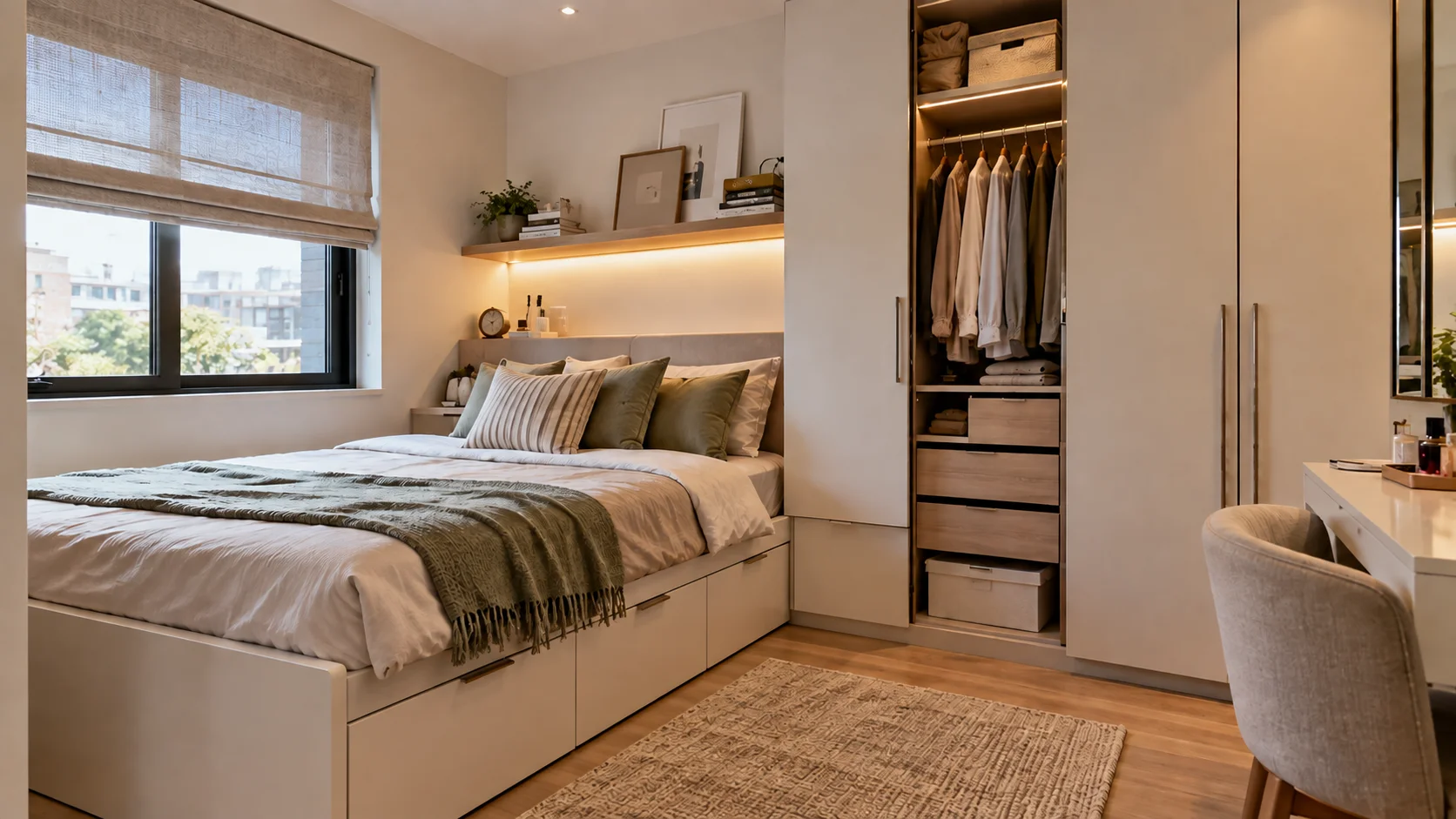
A small bedroom forces better decisions, which is why some of the most effective bedroom storage ideas actually come from compact rooms rather than large ones. The two biggest opportunities in a tight bedroom are almost always underused: the space beneath the bed and the wall space above furniture, both of which take up zero additional floor area.
The goal in a small room isn’t to fit more storage in — it’s to make the storage you add disappear visually, so the room doesn’t feel more crowded even though it’s holding more. That usually means choosing pieces that match the wall color, sit low to the ground, or tuck into gaps that would otherwise be wasted.
Use the Space Under the Bed
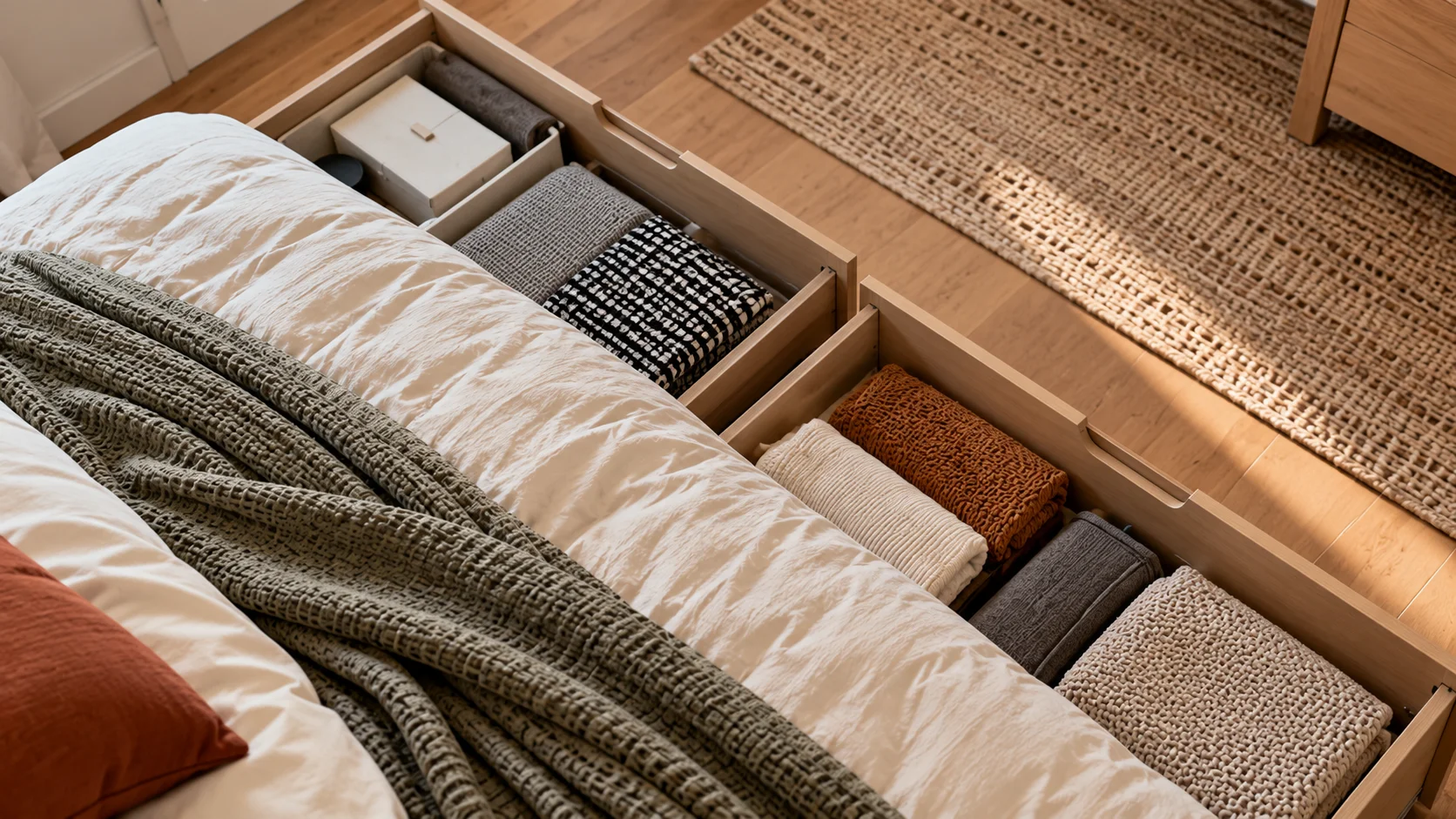
The area beneath a standard bed frame can hold several standard bins’ worth of seasonal clothing, spare bedding, or off-season shoes, yet it’s one of the most commonly ignored storage zones in a bedroom. Low, flat bins with lids keep dust out and slide in and out easily, and choosing bins that fit your specific bed height (measured before you buy) prevents the frustrating problem of containers that jam halfway.
If you’re starting from scratch, a platform bed with built-in drawers removes the need for separate bins altogether and keeps the under-bed area fully enclosed, which some people prefer for a cleaner look. Either approach turns an area that’s usually just collecting dust into functional square footage without changing the room’s footprint at all.
Go Vertical With Wall-Mounted Shelves
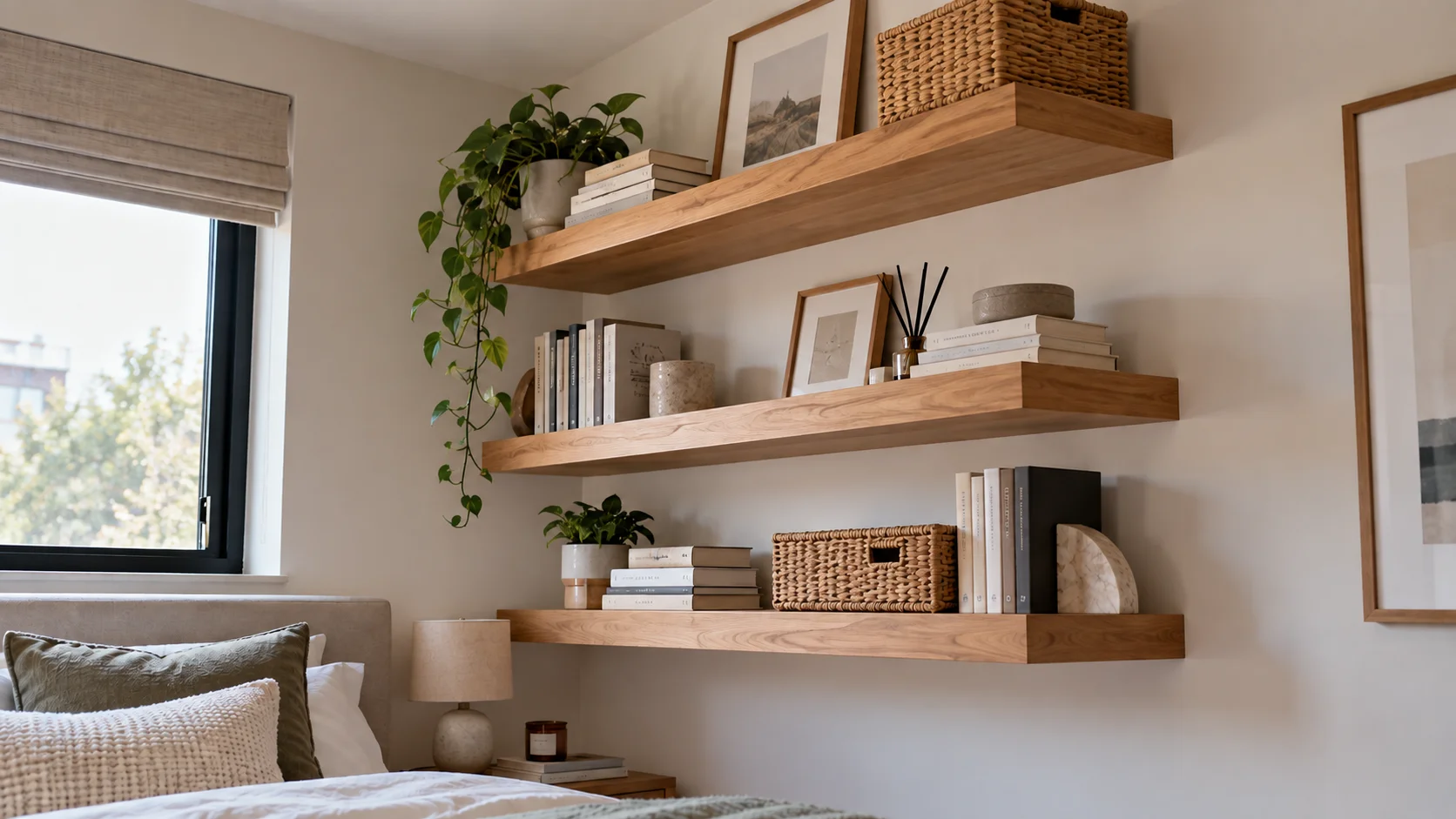
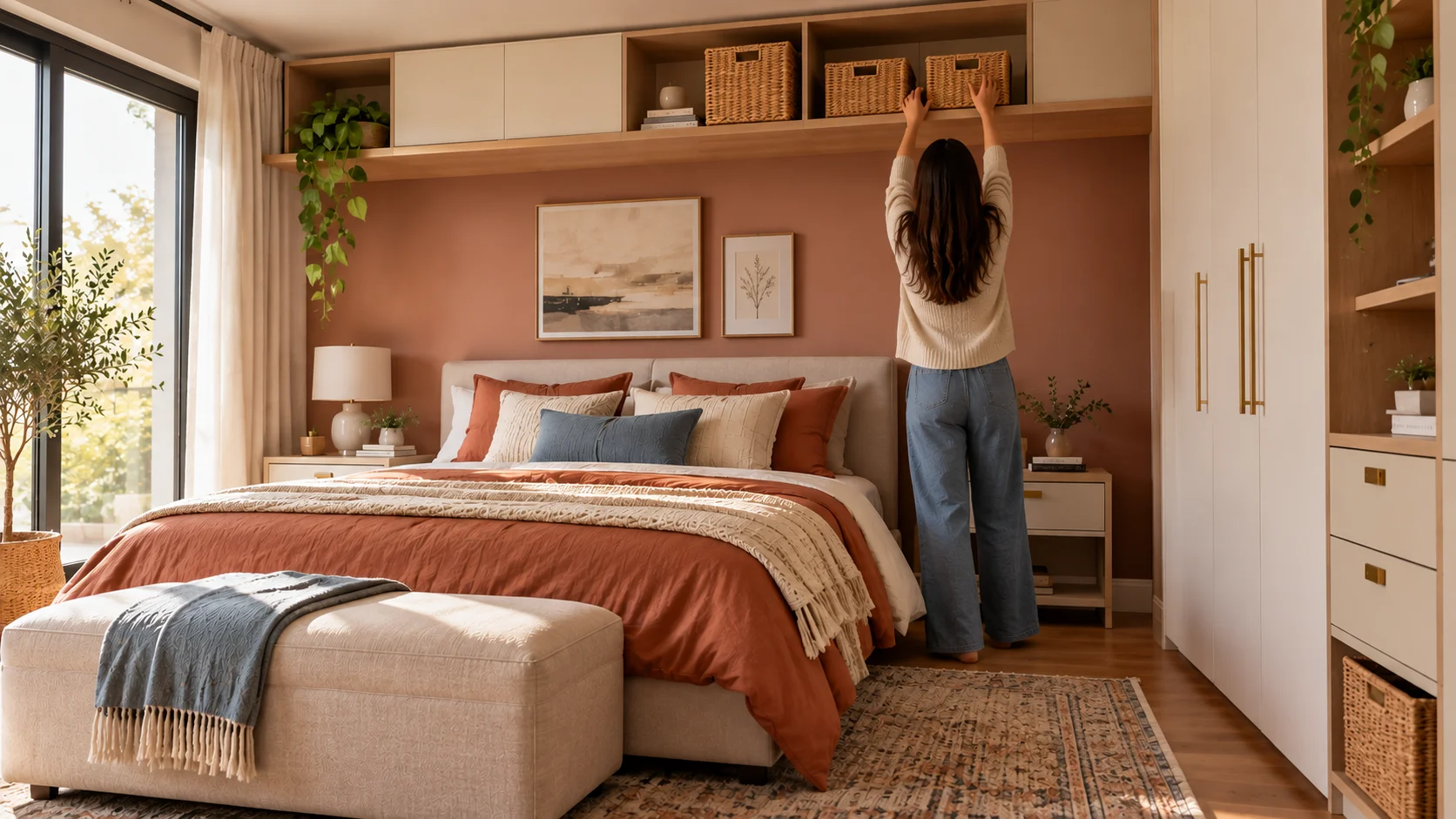
Floor space is finite in a small bedroom, but wall space above furniture — over a dresser, beside a window, above a headboard — is almost always available and unused. Floating shelves installed in that space give you somewhere to put books, folded items, or decorative storage baskets without sacrificing an inch of walking room.
The key to making vertical storage work well is restraint: shelves that are too deep or too crowded read as clutter even when technically organized. Keep shelf items limited to what you’d actually want visible, and use closed baskets on shelves for anything you’d rather not see on display.
Closet and Wardrobe Storage Ideas
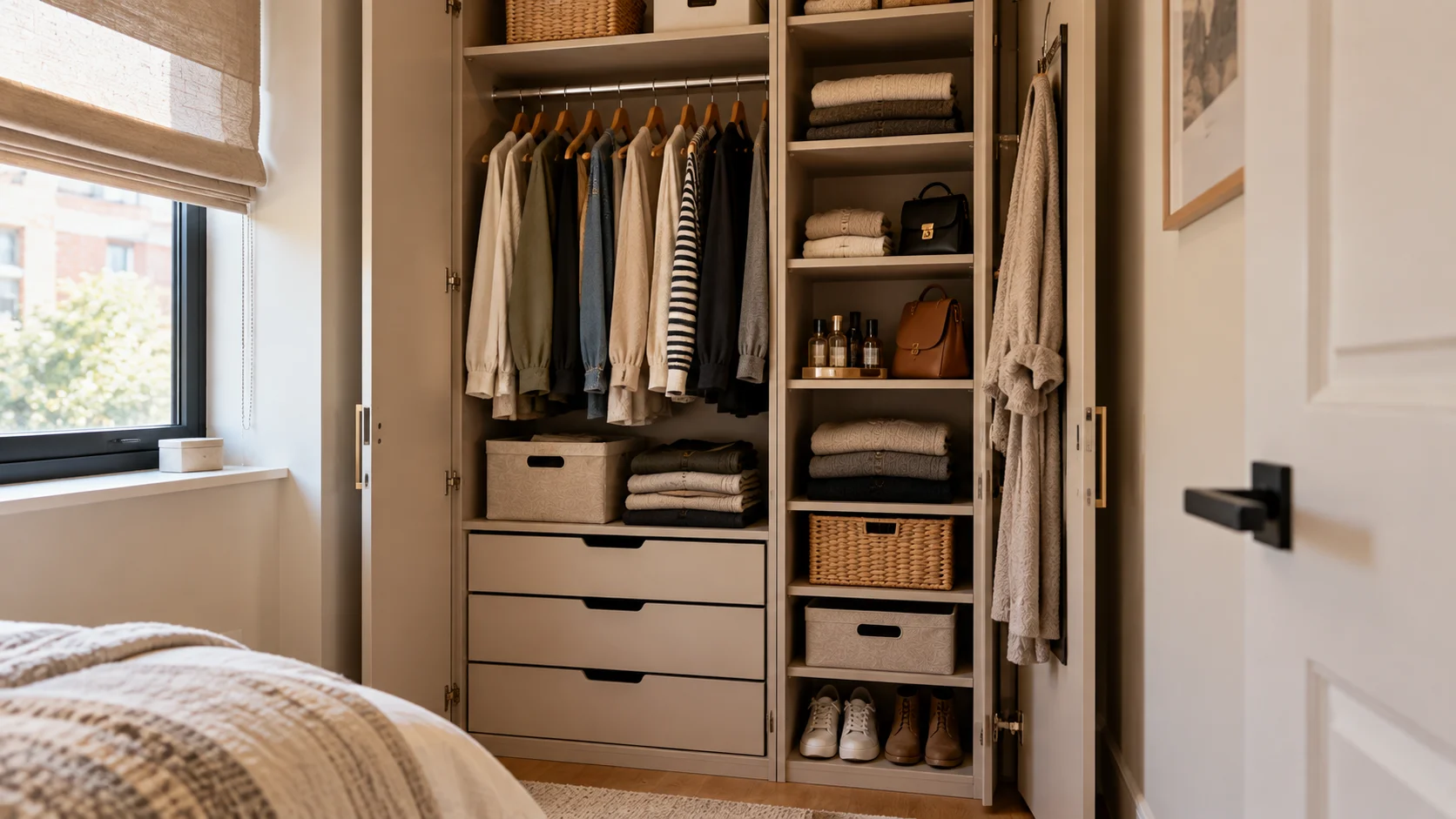
Closets are usually the single biggest storage opportunity in a bedroom, but most only use the hanging rail and leave the floor and the space above the rail empty. A closet organized with real zoning — hanging, folded, floor, and overhead — can often double its effective capacity without any structural changes or new furniture.
Wardrobe-based bedroom storage ideas work the same way even without a built-in closet: a freestanding wardrobe with a mix of hanging space, shelves, and drawers gives you the same zoning benefits in a single piece of furniture, which is often the better option for renters who can’t modify a closet.
Maximize Hanging Space First
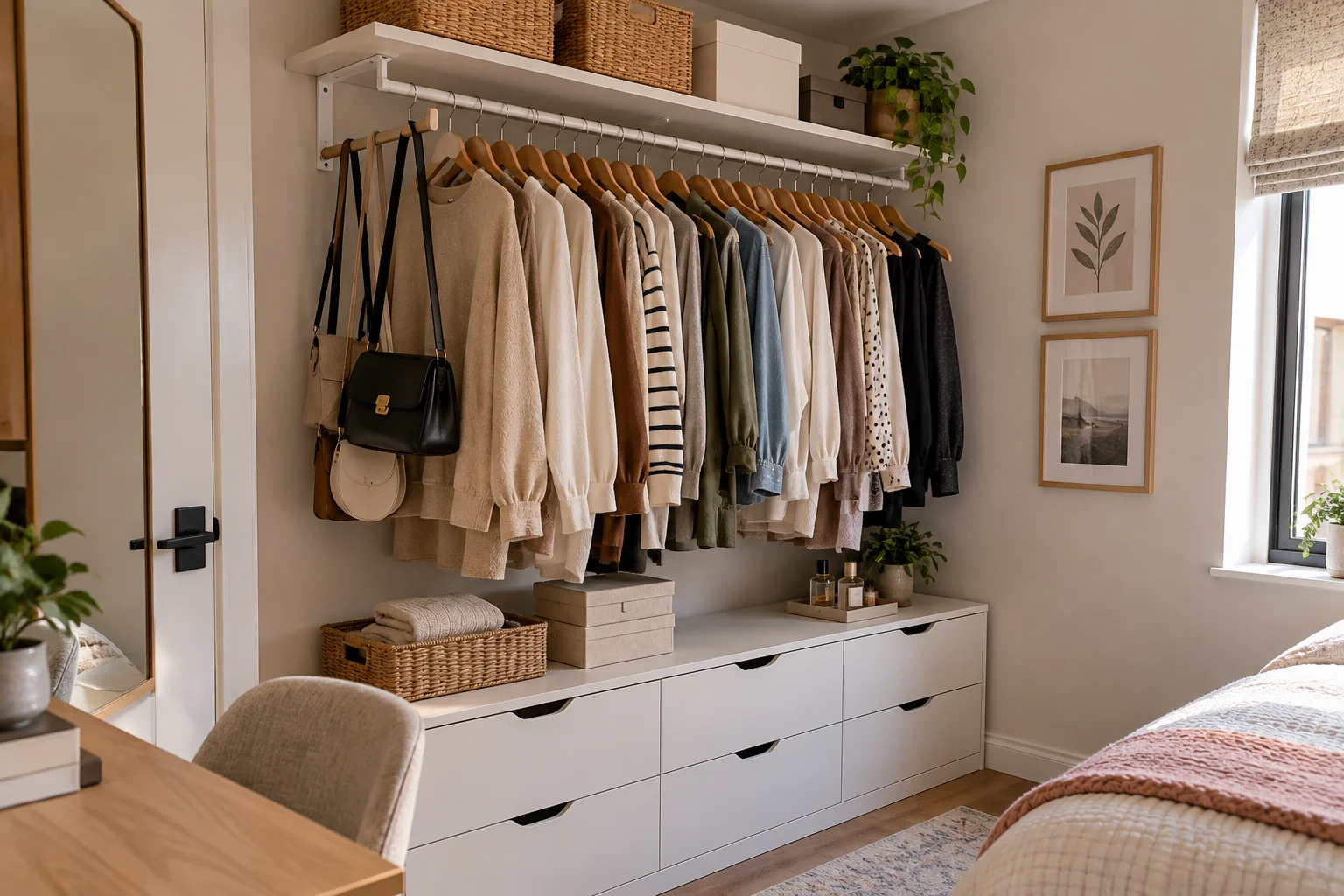
A second, lower hanging rod installed beneath the existing one instantly doubles the hanging capacity for shorter items like shirts, folded pants, and skirts, and it’s one of the more overlooked bedroom storage ideas for anyone with a standard single-rod closet. This works particularly well in closets that are tall enough to leave dead air space above where clothes currently hang.
For clothing that stays folded, slim velvet or flocked hangers save noticeably more rail width than standard plastic ones, since clothes don’t slide and bunch together the way they do on a smooth surface. The extra width reclaimed this way is often enough to fit several more garments in the same physical rail length.
Add Drawer and Bin Organizers
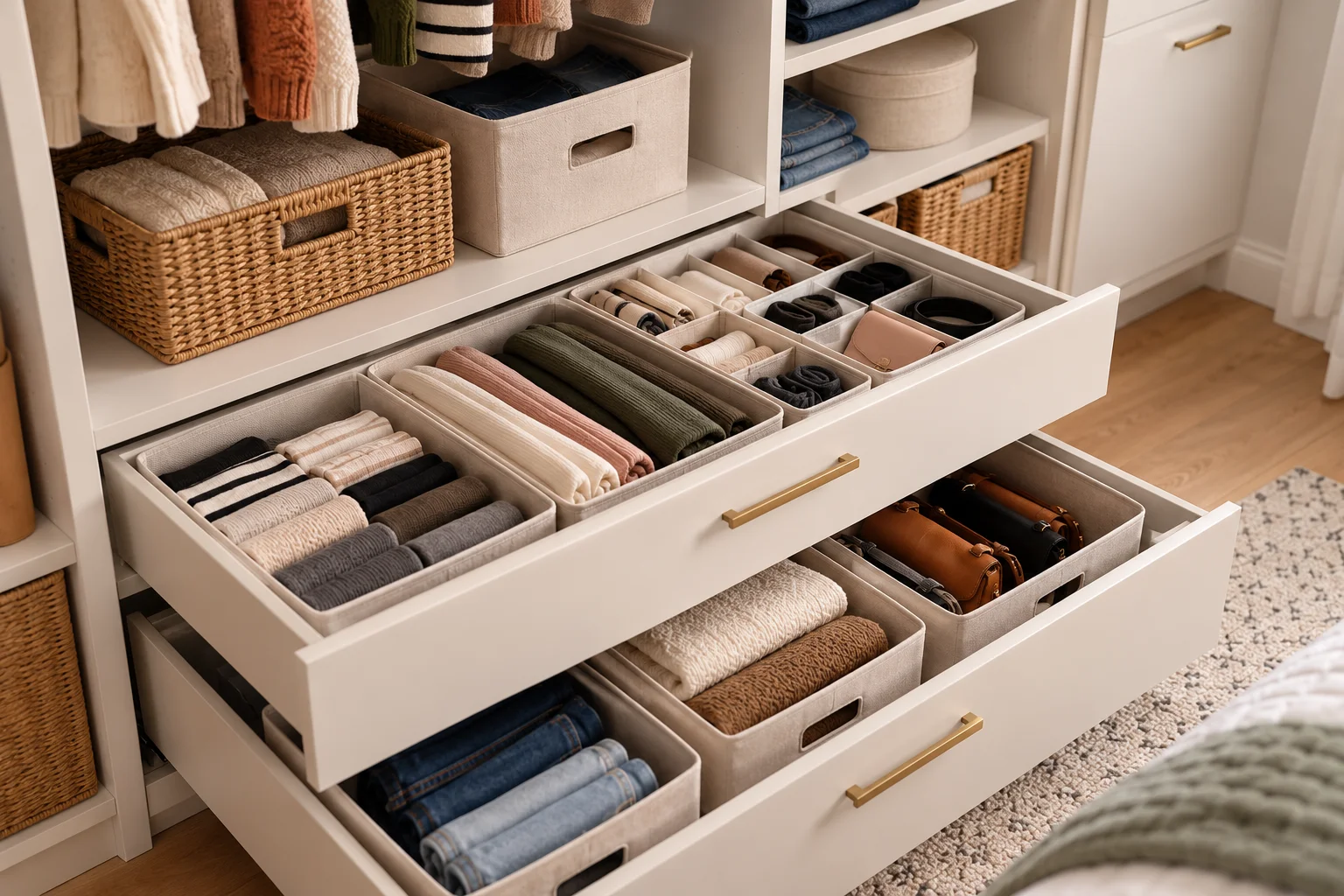
Drawer dividers stop a single drawer from becoming one large pile of mixed items, and they make a noticeable difference in how quickly you can actually find something without digging. Separating by category — folded shirts in one section, underwear and socks in another — keeps the system intact even on busy mornings when there’s no time to refold anything.
The top shelf of a closet, above the hanging rail, is prime territory for labeled bins holding out-of-season clothing or items used only occasionally. Because that space is harder to reach, it should hold things you’re not retrieving weekly, which keeps the more accessible parts of the closet reserved for daily-use items.
- Clear labeled bins for out-of-season clothing on the top shelf
- Drawer dividers to separate socks, underwear, and accessories
- A shoe rack or slim shoe shelving on the closet floor
- Slim hangers to reclaim hanging rail width
- A hook strip on the closet wall for belts, scarves, or bags
Bedroom Storage Furniture Worth Considering
If you’re furnishing a bedroom from scratch or planning a bigger update, choosing pieces that build storage in from the start avoids the need to add extra bins and shelves later. This matters most in rooms with limited floor space, where every additional freestanding piece takes up room that could otherwise stay open.
Not every bedroom needs every option below — the right choice depends on what you’re actually short on space for, whether that’s clothing, bedding, or simply somewhere to sit and store things at the same time.
Storage Beds

A storage bed with drawers built into the base replaces the need for separate under-bed bins, and it keeps the stored items fully enclosed rather than visible along the floor. This is a strong option for bedrooms that don’t have a dedicated closet, since the bed itself becomes a secondary storage piece.
The tradeoff is worth knowing before buying: storage beds are heavier and harder to move than a standard frame, and the drawer mechanisms vary widely in quality, so it’s worth checking how the drawers open (side-access versus lift-up base) against how much bedroom floor space you have to work the drawers in and out.
Storage Benches and Ottomans
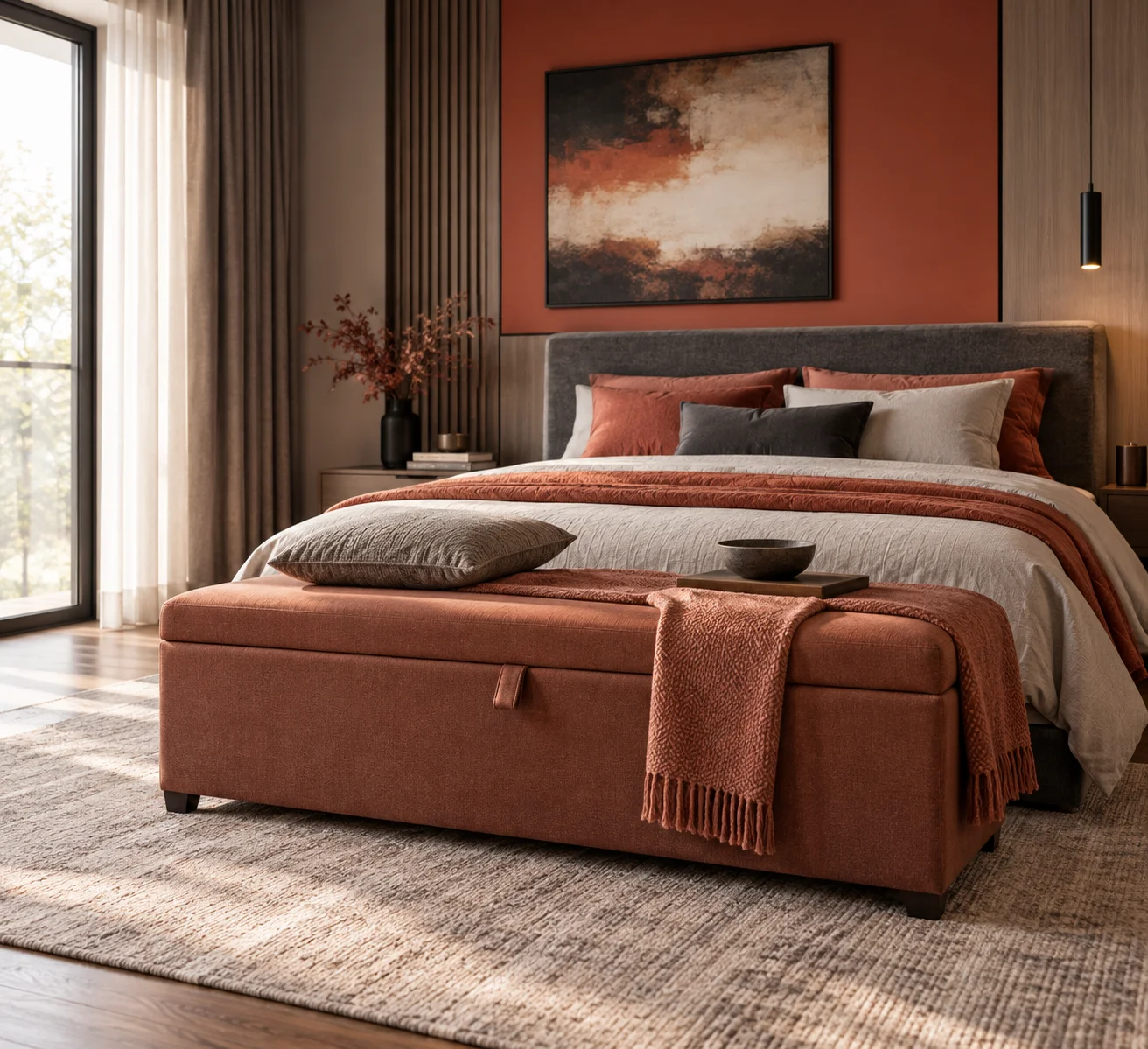
A bench or ottoman with a lift-up lid at the foot of the bed adds seating and storage in the same footprint, which makes it one of the more space-efficient bedroom storage ideas for rooms that need both. It’s particularly useful for extra pillows, blankets, or off-season bedding that doesn’t need daily access.
Because these pieces sit in an open part of the room rather than tucked against a wall, choosing one that matches the room’s existing color palette keeps it from feeling like an added piece of furniture rather than storage that belongs there.
Nightstand and Bedside Storage Ideas
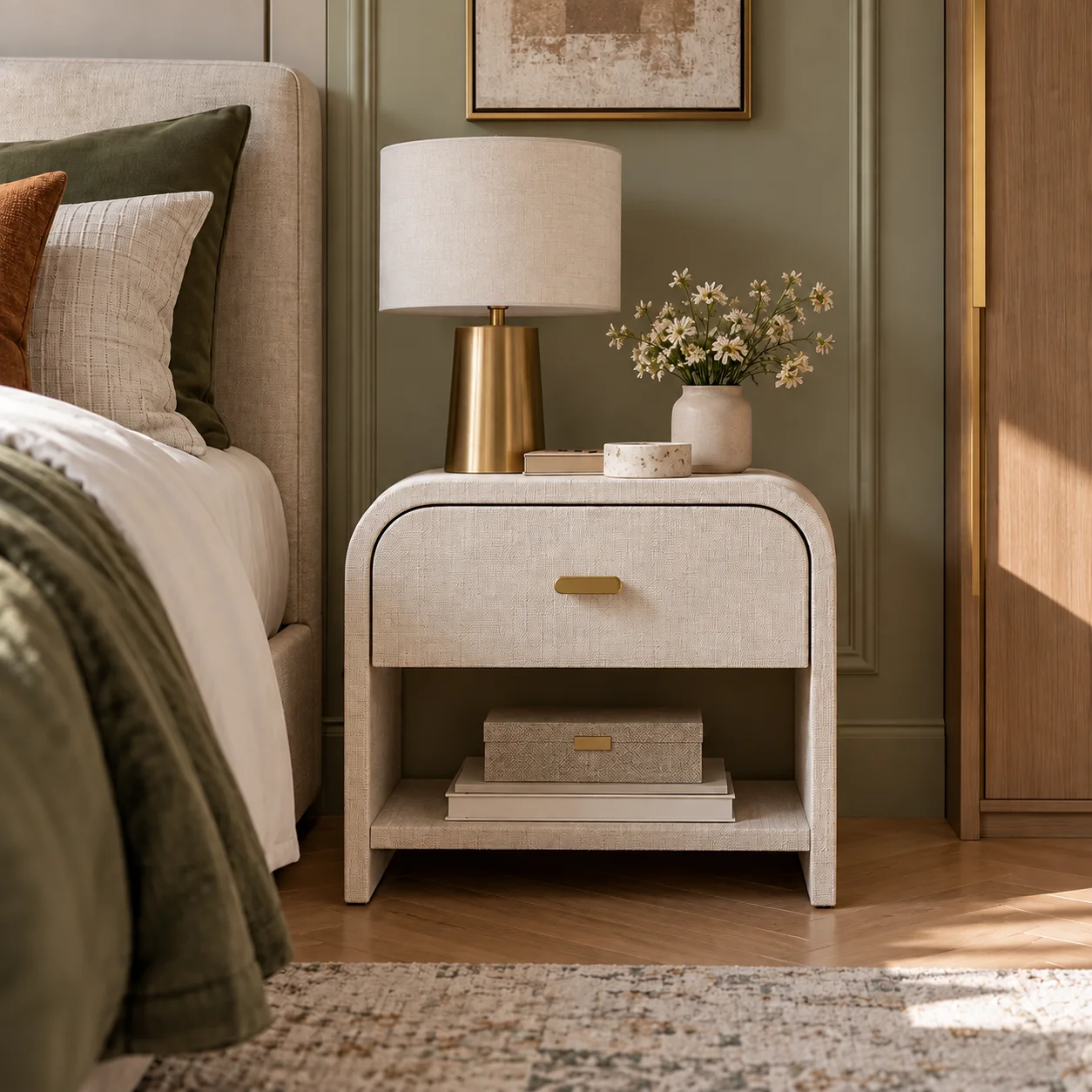
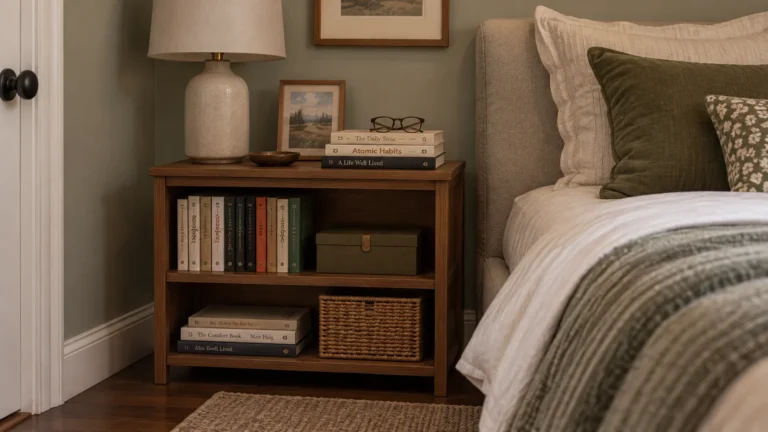
A nightstand handles more daily-use items than almost any other piece in the bedroom — chargers, glasses, books, medication, skincare — which means it clutters fastest if it doesn’t have enough internal organization. A nightstand with at least one drawer keeps small items out of sight, while an open shelf below works well for a stack of books or a basket for miscellaneous items.
For bedrooms too small for a full nightstand, a wall-mounted shelf beside the bed provides the same bedside function — somewhere for a lamp, a glass of water, and a book — without needing floor space at all. This is especially useful in rooms where the gap between the bed and the wall is too narrow for standard furniture.
Storage Ideas for Doors and Unused Corners
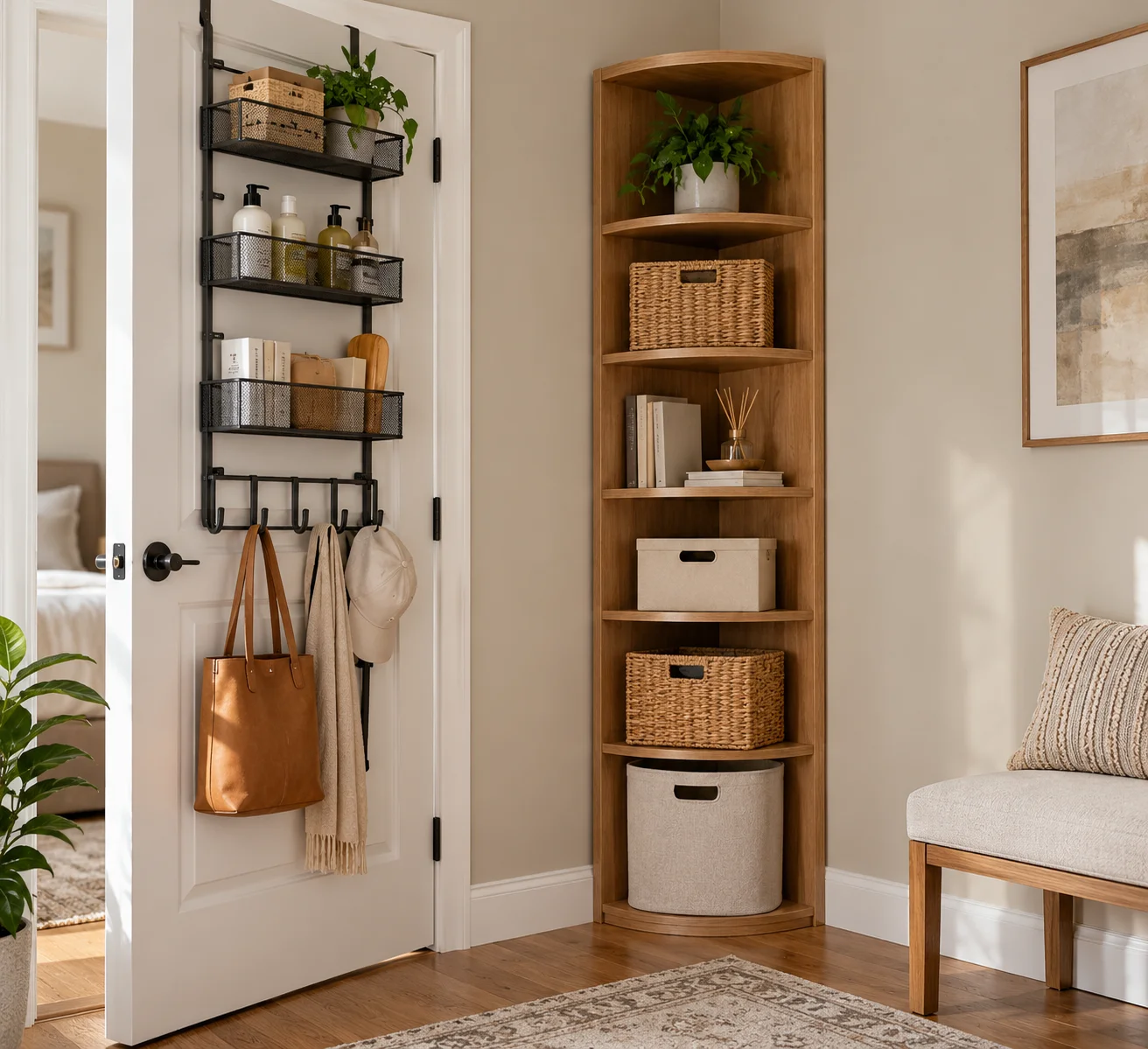
The back of a bedroom door is functional storage space that almost never gets used for anything beyond a single hook. An over-the-door organizer or a row of hooks can hold bags, robes, scarves, or accessories, freeing up drawer or closet space for items that need to be folded or hung more carefully.
Corners are the other consistently overlooked zone, particularly in bedrooms with an awkward layout. A slim corner shelf unit or a narrow rolling cart tucked beside a dresser makes use of space that would otherwise sit empty, and because it doesn’t interrupt the main walking path of the room, it doesn’t make the space feel more crowded.
- Over-the-door hooks or an organizer for bags, robes, and accessories
- A slim corner shelf unit in an otherwise unused corner
- A narrow rolling cart between the bed and dresser for small items
- Wall-mounted hooks for jewelry or everyday accessories
- A door-mounted mirror with hidden storage behind it
Balancing Open Storage and Closed Storage
Not every item needs to be hidden away, and treating all bedroom storage the same way usually backfires. Open storage — shelves, baskets, a visible rail — works well for things you’re comfortable displaying and use often enough that hiding them adds friction. Closed storage, like drawers and lidded bins, is better suited to items you don’t want visible or don’t need daily access to.
The most functional bedrooms usually mix both rather than committing fully to one. A closet with some open shelving for frequently grabbed items and closed drawers for everything else tends to stay organized longer than a fully closed system, simply because putting things away is easier when the “home” for an item doesn’t require extra steps.
Common Bedroom Storage Mistakes to Avoid
A few recurring mistakes undo otherwise solid bedroom storage ideas, and most of them come down to buying storage before deciding what it needs to hold. Purchasing bins, baskets, or organizers without measuring the actual space first is the most common one — a bin that’s slightly too tall for the under-bed gap, or a drawer organizer that doesn’t match the drawer’s dimensions, ends up unused within a month.
The second common mistake is filling every visible surface with decorative storage baskets, which can visually clutter a room even when the contents are perfectly organized. A bedroom with too many baskets stacked on shelves or the floor can look busier than one with slightly less storage but more breathing room between pieces.
- Buying storage containers before measuring the space they’re meant to fill
- Overloading open shelves until they look cluttered rather than organized
- Ignoring vertical wall space in favor of only floor-based furniture
- Mixing too many storage materials and colors, which reads as visual noise
- Skipping the decluttering step and organizing items that should have been removed
How to Maintain Your Bedroom Storage System
A storage system only works as long as it’s easy to keep up. The most reliable way to maintain one is making sure every category of item has a single, obvious home — if laundry, accessories, or paperwork don’t have an assigned spot, they’ll always end up on the nearest flat surface regardless of how well the rest of the room is organized.
A short seasonal check, roughly twice a year, keeps the system from slowly drifting back toward clutter. Swapping seasonal clothing between the closet and under-bed storage, and doing a quick pass to remove anything that’s no longer used, takes far less time than a full reorganization and prevents the room from needing one in the first place.
FAQ
Under-bed storage and wall-mounted shelving are generally the most effective, since neither takes up floor space — the right choice depends on whether you’re short on space for clothing (favor closet and under-bed solutions) or everyday items (favor shelving and a nightstand with drawers).
A freestanding wardrobe with a mix of hanging space, shelves, and drawers replicates what a built-in closet offers, and combining it with under-bed bins and an over-the-door organizer usually covers most of what a closet would have handled.
Yes, as long as bins are measured against the specific bed’s clearance height beforehand — flat, low-profile bins with lids work well for seasonal clothing, shoes, and spare bedding that don’t need daily access.
A storage bed keeps items fully enclosed and avoids visible bins along the floor, but it’s heavier and harder to move; bins are more flexible and usually cheaper, so the better option depends on whether a cleaner look or lower cost matters more.
Start by decluttering, then reorganize what already exists — adding a second hanging rod, drawer dividers, and wall hooks all improve storage without purchasing new furniture.
Buying containers or organizers before measuring the space and deciding what needs to be stored, which usually results in bins that don’t fit or systems that get abandoned within weeks.
A mix works best — open storage suits frequently used items you don’t mind displaying, while closed storage suits items you’d rather keep out of sight or don’t access often.
Twice a year is generally enough for most people, timed around seasonal clothing swaps, which keeps the system from drifting back into clutter without requiring a full overhaul.
Love inspiring interiors, practical design ideas, and beautiful spaces? Follow us on Facebook, Instagram, and Pinterest for more interior inspiration, home styling ideas, and everyday design tips.