
Table of Contents
How to Add Rugs to a Minimalist Room Without Losing the Aesthetic
A minimalist room can start to feel cold once the furniture is in place and the walls are bare by design. This usually happens because hard flooring — wood, polished concrete, or tile — has nothing to soften it, and the eye has nowhere to rest. Learning how to add rugs to a minimalist room solves this without adding visual noise, because a rug does something no wall art or accessory can: it grounds the floor plane itself.
The challenge most people run into is choosing a rug that adds warmth without becoming the loudest object in the room. A minimalist space has fewer competing elements, so every choice — color, texture, size — carries more visual weight than it would in a busier interior. This guide walks through color, material, sizing, and placement so the rug reads as part of the room’s structure rather than a decorative afterthought.
Choosing the Right Rug Colors for a Minimalist Room
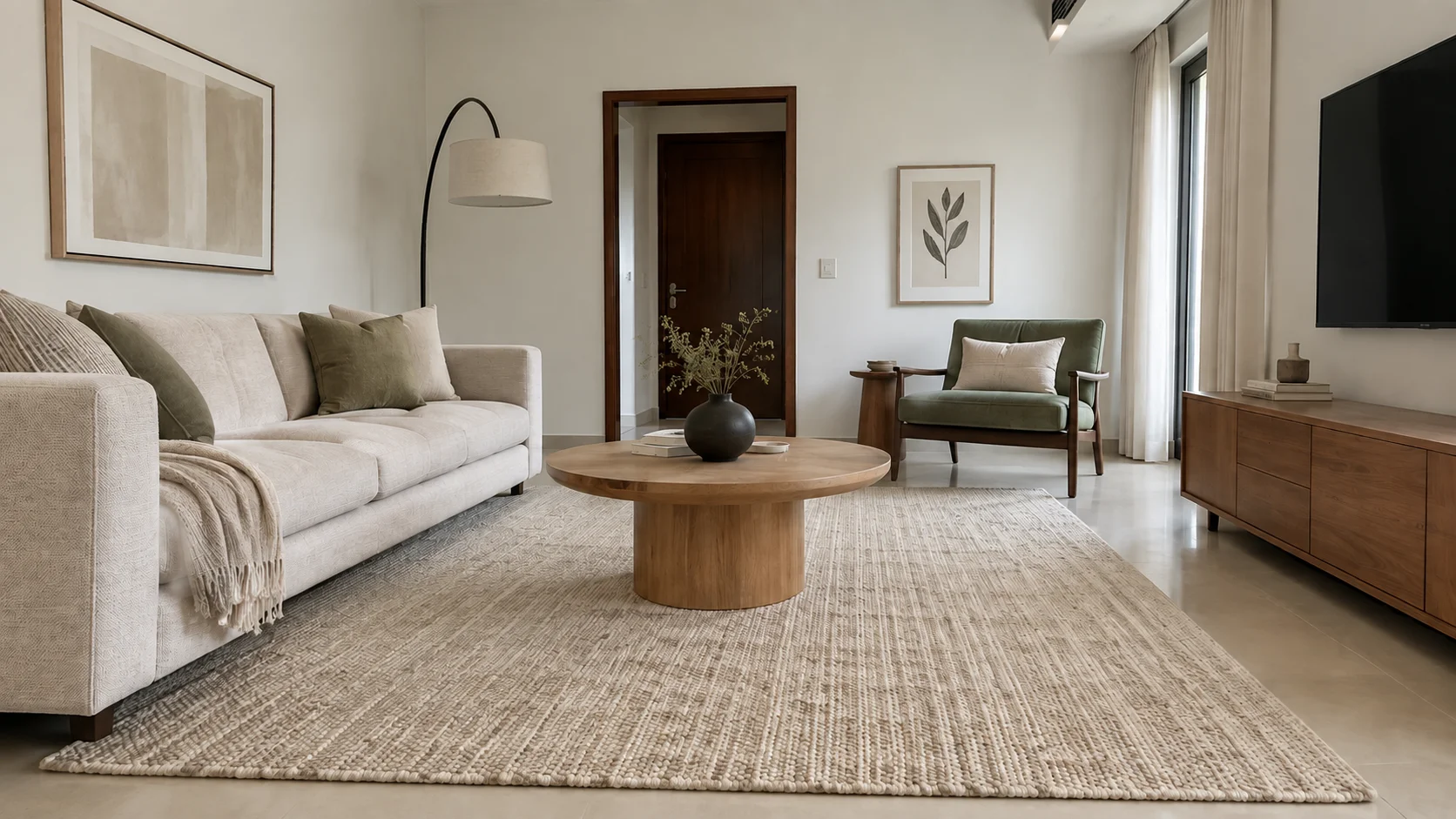
Color is usually the first decision, and it’s where most mistakes start. When you’re figuring out how to add rugs to a minimalist room, stick to tones that already exist in your walls, furniture, or flooring — soft greige, warm white, taupe, oatmeal, and charcoal all work because they extend the palette instead of introducing a new one. A rug that matches the room’s existing undertone disappears into the architecture in a good way, letting the furniture and negative space stay the focal point.
If the room already feels too neutral or flat, a slightly darker or lighter shade of the same family adds depth without competition. A muted terracotta, dusty blue, or sage green rug can bring in a touch of color while still reading as calm, provided it’s desaturated rather than bright. Avoid high-contrast or saturated colors here — they pull the eye away from the room’s proportions, which works against the entire point of a minimalist layout.
Picking Textures and Materials That Add Warmth
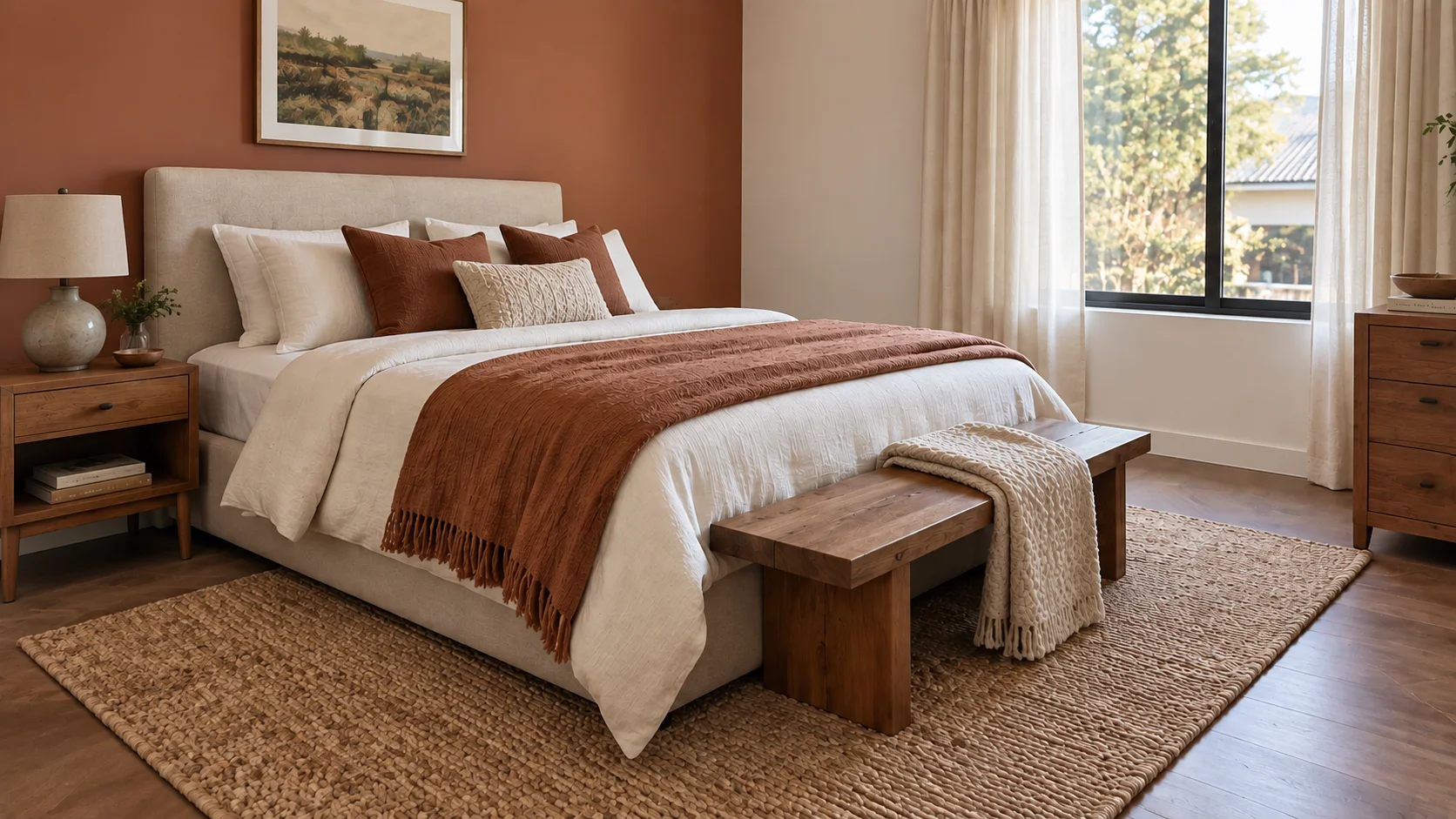
Texture does more heavy lifting than pattern in a minimalist space, since pattern is often kept to a minimum. A textured, low-contrast rug adds tactile interest without disrupting the room’s clean lines, which is why natural fibers show up so often in minimalist interiors. The weave itself becomes the detail, instead of a printed design competing with the furniture.
Material also affects how the room feels underfoot and how it wears over time, so it’s worth matching the fiber to the room’s actual use. A few materials worth considering:
- Wool: soft, durable, naturally insulating, and a strong choice for living rooms and bedrooms
- Jute or sisal: rougher, organic texture that suits low-traffic areas and adds an earthy note
- Flatweave cotton or wool: low profile, easy to keep flat under furniture, good for high-traffic zones
- Wool-blend shag: adds coziness to a bedroom without overwhelming a small footprint
- Synthetic (polypropylene or nylon): budget-friendly and practical for households with pets or kids
Getting the Rug Size Right
Size is where a well-chosen rug can still fail if the proportions are off. A rug that’s too small for the room makes the whole layout feel disconnected, almost like it’s floating in the middle of the floor rather than anchoring it. As a general rule, a living room rug should be large enough to sit under at least the front legs of the sofa and chairs, so the furniture and rug read as one grouped composition.
In smaller rooms, this can feel counterintuitive — it seems safer to size down — but a slightly larger rug actually makes a small space feel more open, while a small rug in a large room does the opposite and shrinks the room visually. Measure the seating area first, then work outward: leave a consistent border of exposed floor around the rug’s edges, typically a foot or so, so the rug looks intentional rather than like leftover carpet.
How to Place Rugs in a Minimalist Room by Space
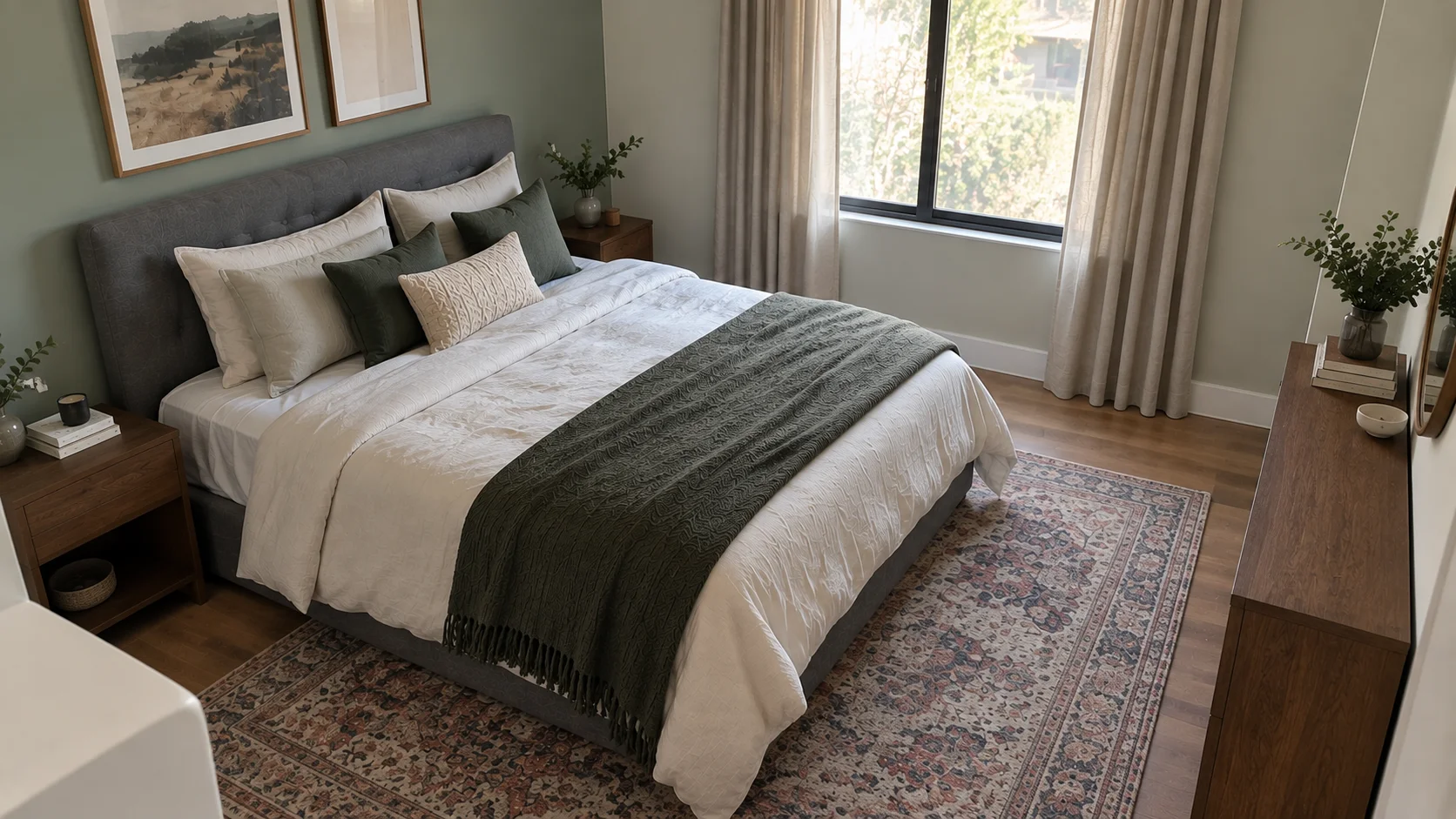
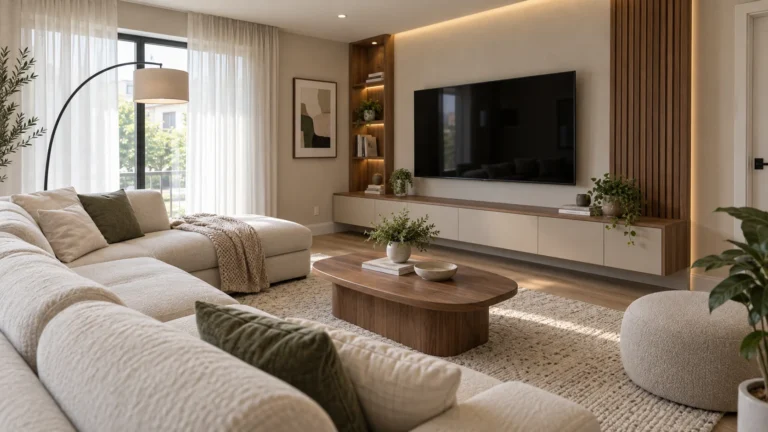
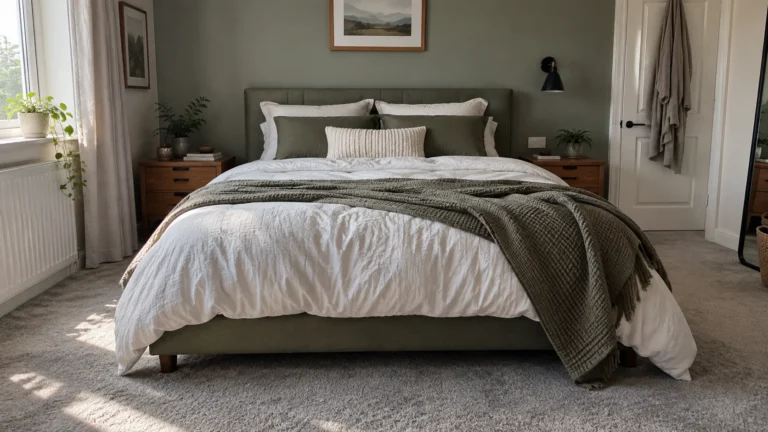
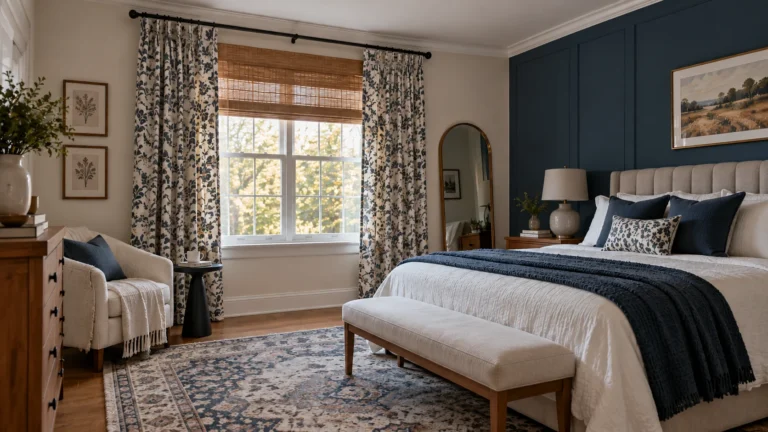
Placement rules shift slightly depending on which room you’re working with, since each space has different furniture groupings and traffic patterns. In a living room, the goal is to unify the seating area — front legs of the sofa and chairs on the rug, back legs off, works well in open-plan layouts, while placing all four legs on the rug tends to suit smaller or more enclosed rooms. In a bedroom, a rug placed so it extends at least a foot and a half out from each side of the bed gives your feet a soft landing without needing to cover the whole floor.
In a home office or dining area, function matters more than styling. A flatweave or low-pile rug is easier to roll a desk chair across or slide dining chairs over, and it keeps the space looking tidy since there’s no risk of bunching or shifting underfoot. Whichever room you’re placing it in, keep pathways and doorways clear of the rug’s edge, since a rug that interrupts foot traffic will feel like clutter no matter how well it matches the palette.
Living Room
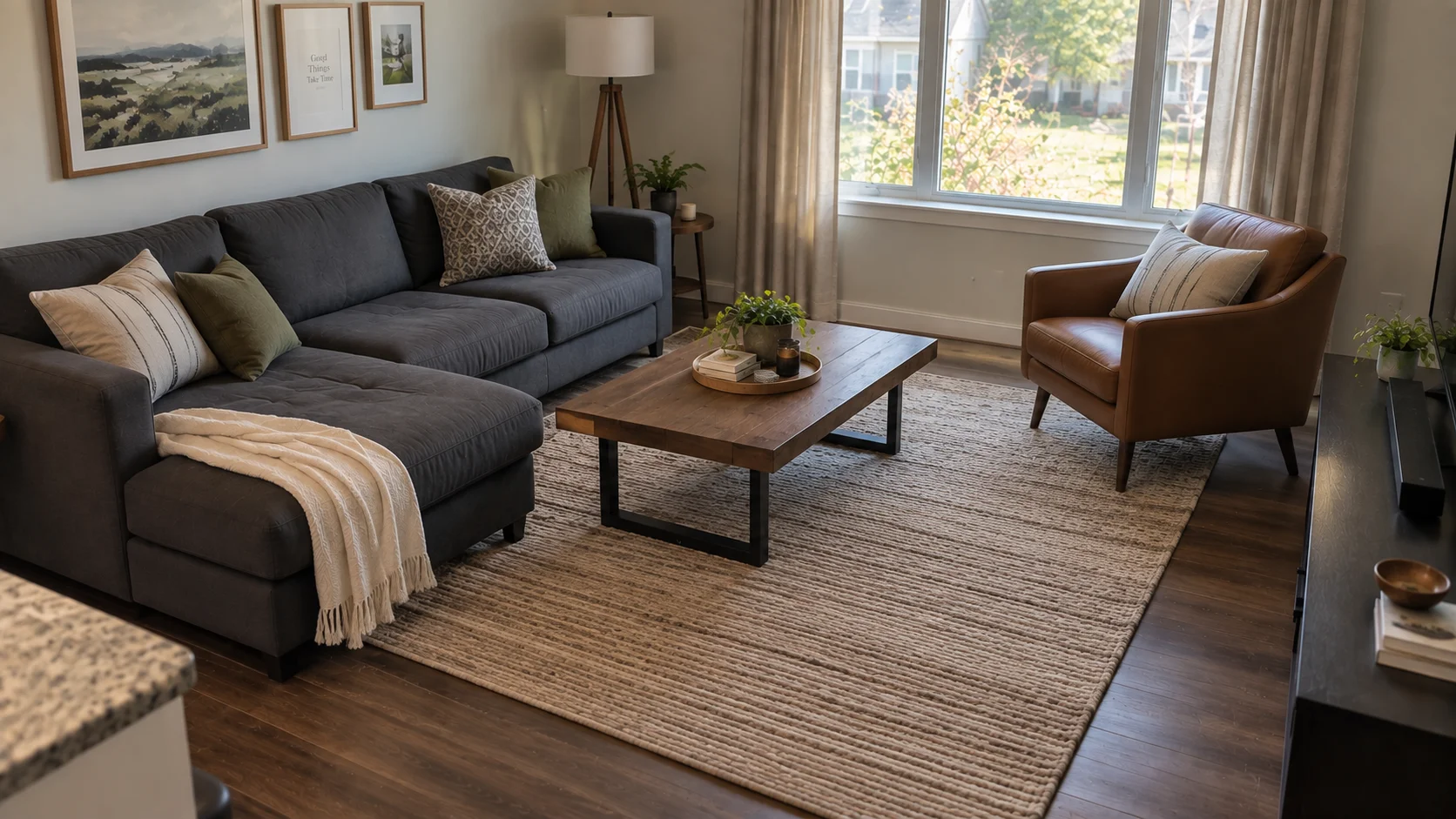
Center the rug under the coffee table and at least the front legs of the seating pieces so the whole grouping feels connected rather than scattered.
Bedroom
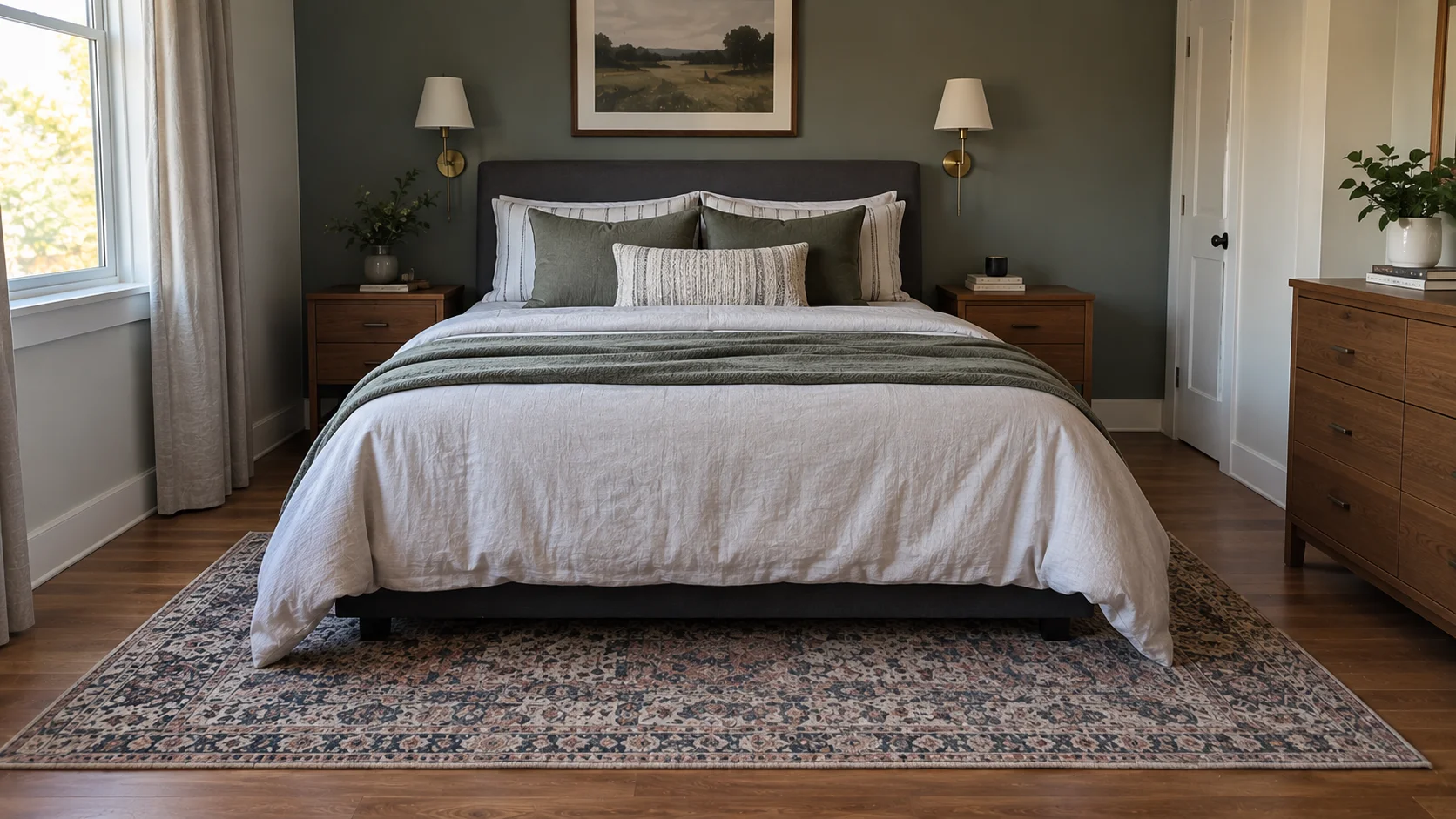
Place it lengthwise along the foot or sides of the bed, prioritizing the areas where your feet actually land when you get up.
Home Office
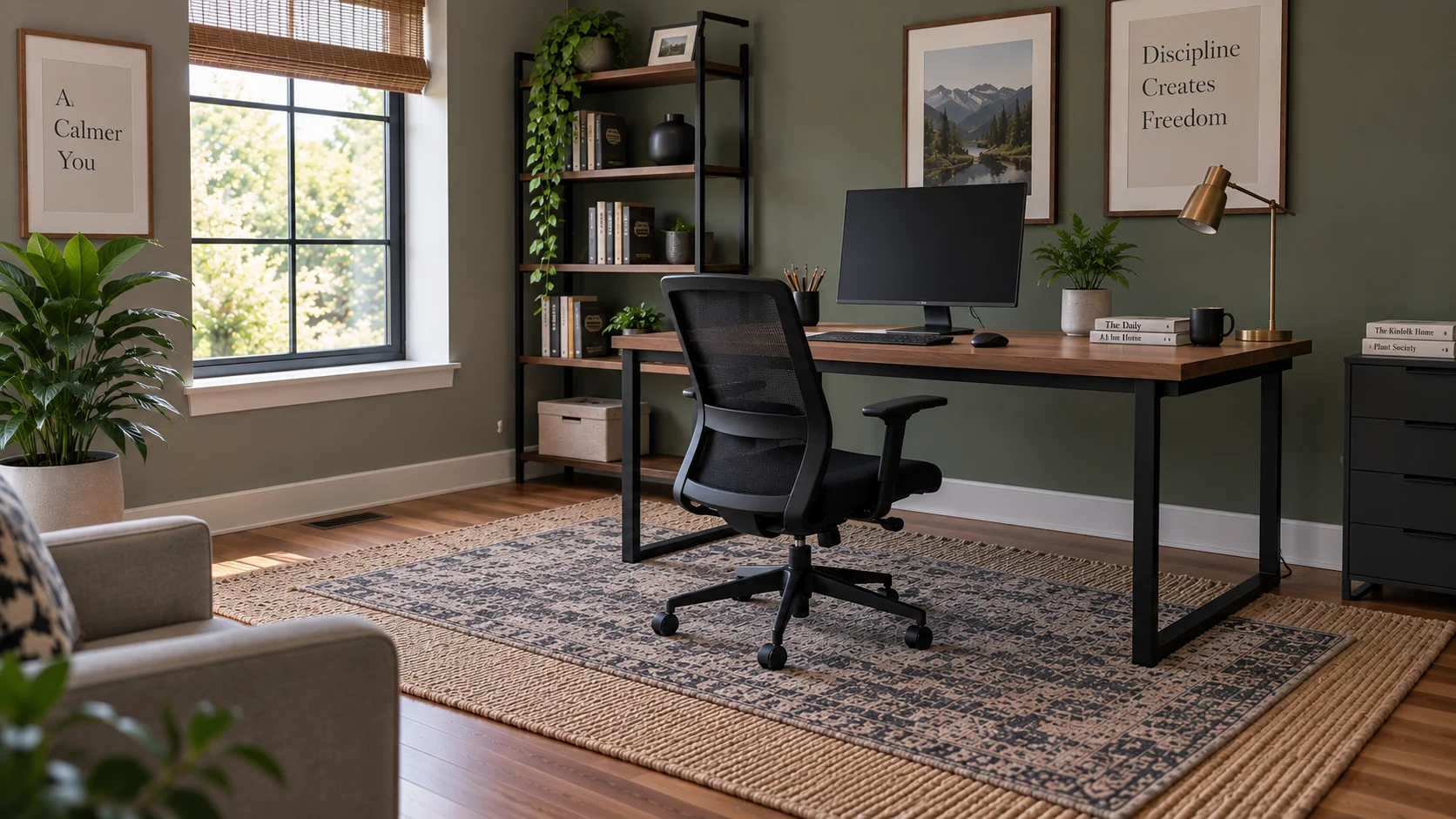
Choose a low-pile or flatweave option sized to allow the desk chair to roll freely across it.
Should You Layer Rugs in a Minimalist Room?
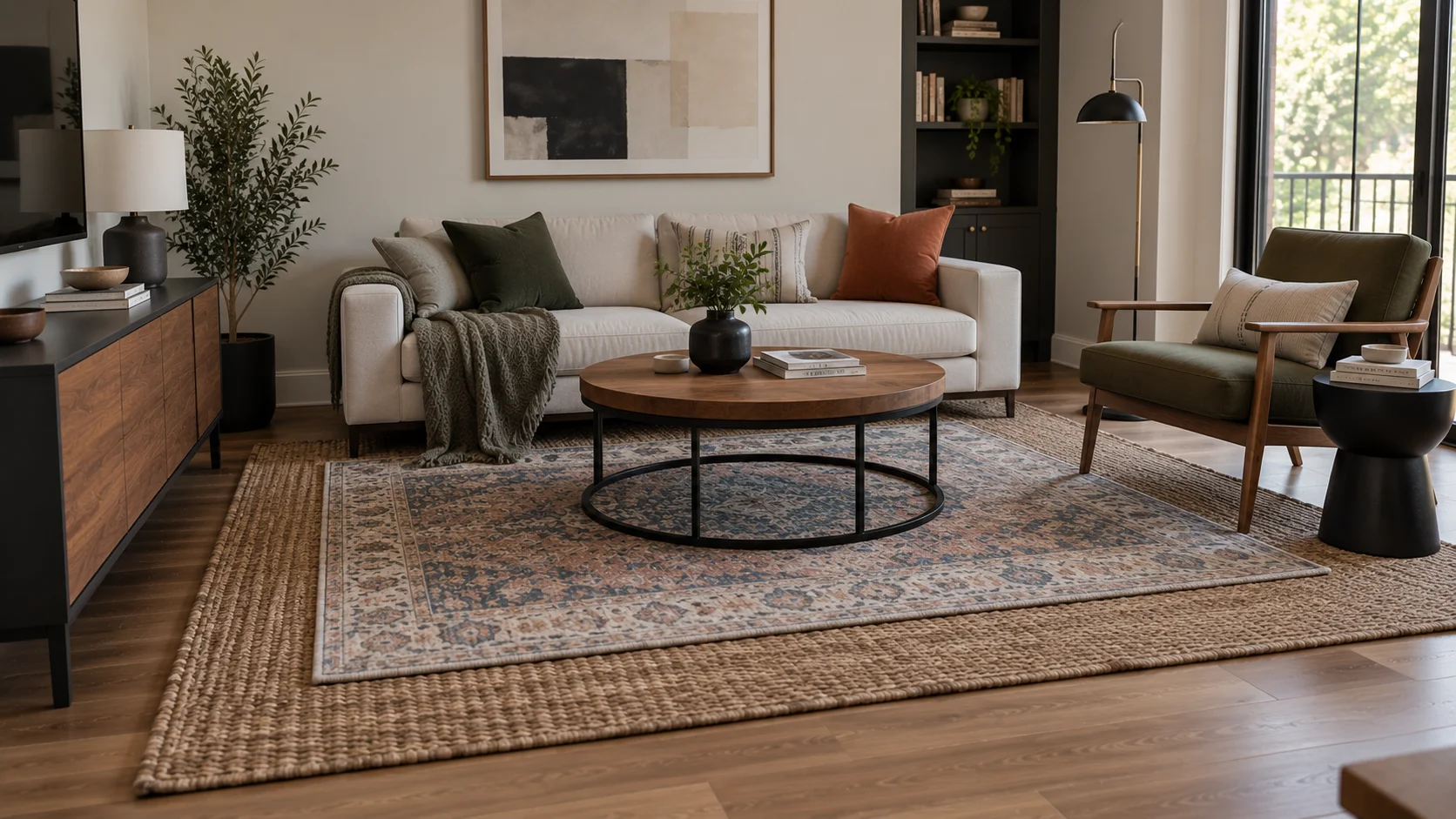
Layering feels like it contradicts minimalist principles, but done with restraint it can actually add dimension rather than clutter. The key is treating the two rugs as a single visual layer, not two separate statements — a large, flat, neutral base rug topped with a smaller textured or patterned piece keeps the look grounded instead of busy.
If you’re considering this approach to add rugs to a minimalist room without overcrowding it, a few guidelines help keep it from tipping into visual noise:
- Use a solid, muted base rug and a textured or subtly patterned top layer, not two patterns
- Keep both rugs in the same general color family
- Limit layering to one seating or lounge area, not the whole room
- Choose a smaller top rug that’s clearly proportioned to a specific piece of furniture, like a reading chair
- Avoid layering in small rooms, where it tends to read as clutter rather than intention
Common Mistakes When Adding Rugs to a Minimalist Room
The most frequent mistake is choosing a rug that’s technically neutral but has the wrong undertone — a cool grey rug on warm wood flooring, for instance, creates a mismatch that’s subtle but noticeable. Another common issue is going too small, which is almost always driven by budget rather than design intent, and it undercuts the whole effect of a carefully chosen rug.
A few other mistakes show up consistently across minimalist rooms:
- Choosing a heavily patterned or brightly colored rug that competes with the furniture
- Skipping a rug pad, which leads to bunching, slipping, and a shorter rug lifespan
- Placing the rug off-center from the furniture grouping it’s meant to anchor
- Using a thick, high-pile rug in a room with low furniture, which throws off visual proportion
- Adding more than one or two rugs to a single open room
Budget-Friendly Ways to Add Rugs to a Minimalist Room
A quality rug is an investment, but there are ways to work at different budget levels without compromising the look. At no cost, start by rearranging existing furniture to see if a smaller rug you already own could work in a different spot, or in a different room entirely. At a low cost, synthetic fiber rugs in flatweave or low-pile styles offer the same visual effect as wool for a fraction of the price, and they’re widely available in the neutral tones minimalist rooms call for.
At a moderate budget, wool-blend rugs offer better durability and a nicer hand-feel underfoot while still staying reasonably priced. At the higher end, hand-woven wool or natural fiber rugs from specialty retailers tend to last longer and develop a better patina over time, which can make sense if the rug is going in a high-visibility, high-traffic room like a living room.
- No-cost: reposition a rug you already own into a better-suited room
- Low-cost: synthetic or polypropylene flatweave in a neutral tone
- Moderate: wool-blend rugs with better durability and texture
- Higher-investment: hand-woven wool or natural fiber rugs for long-term use
Maintaining a Minimalist Rug Without Extra Clutter
Once the rug is in place, keeping it looking intentional comes down to simple maintenance rather than restyling. Regular vacuuming prevents fibers from flattening unevenly, and rotating the rug occasionally evens out wear from foot traffic and sun exposure, especially near windows.
Spot-clean spills as they happen rather than letting them set, and follow the care instructions specific to the rug’s fiber — wool and natural fibers like jute typically need different cleaning approaches than synthetic blends. A rug that’s well maintained continues to look like a deliberate design choice rather than a worn-out addition, which matters more in a minimalist room than almost anywhere else, since there’s nothing else in the space to distract from it.
Final Thoughts on Adding Rugs to a Minimalist Room
A rug is one of the few elements that can add warmth to a minimalist room without adding visual clutter, but it only works when color, texture, size, and placement are all considered together. Get the proportions and undertones right, and the rug stops looking like an accessory and starts functioning as part of the room’s structure — quiet, intentional, and doing real work underfoot.
FAQ
Neutral tones that match your existing wall or floor undertone — greige, taupe, oatmeal, or charcoal — work best, since they extend the palette rather than introducing a new one.
Yes, as long as the pattern is subtle and tonal — geometric or linear designs in muted, low-contrast colors can add interest without overwhelming the space.
Size it so the front legs of your sofa and chairs sit on the rug, which visually unifies the seating area instead of leaving it disconnected from the floor.
Yes, if you keep both rugs in the same color family and limit it to one seating area — layering two patterns or bright colors will work against the minimalist look.
Wool or a wool blend is a common choice for bedrooms because it’s soft underfoot and adds warmth without a heavy visual footprint.
Not strictly, but a rug helps ground hard flooring and can prevent an intentionally sparse room from feeling cold or unfinished.
Stick to one rug per room, choose a size proportioned to the furniture grouping, and avoid bold colors or busy patterns that pull focus.
Sizing too small — an undersized rug reads as disconnected from the furniture and undercuts the grounded look a minimalist room is going for.
Love inspiring interiors, practical design ideas, and beautiful spaces? Follow us on Facebook, Instagram, and Pinterest for more interior inspiration, home styling ideas, and everyday design tips.