

Table of Contents
What’s Driving Luxury Candle Design Trends in 2026
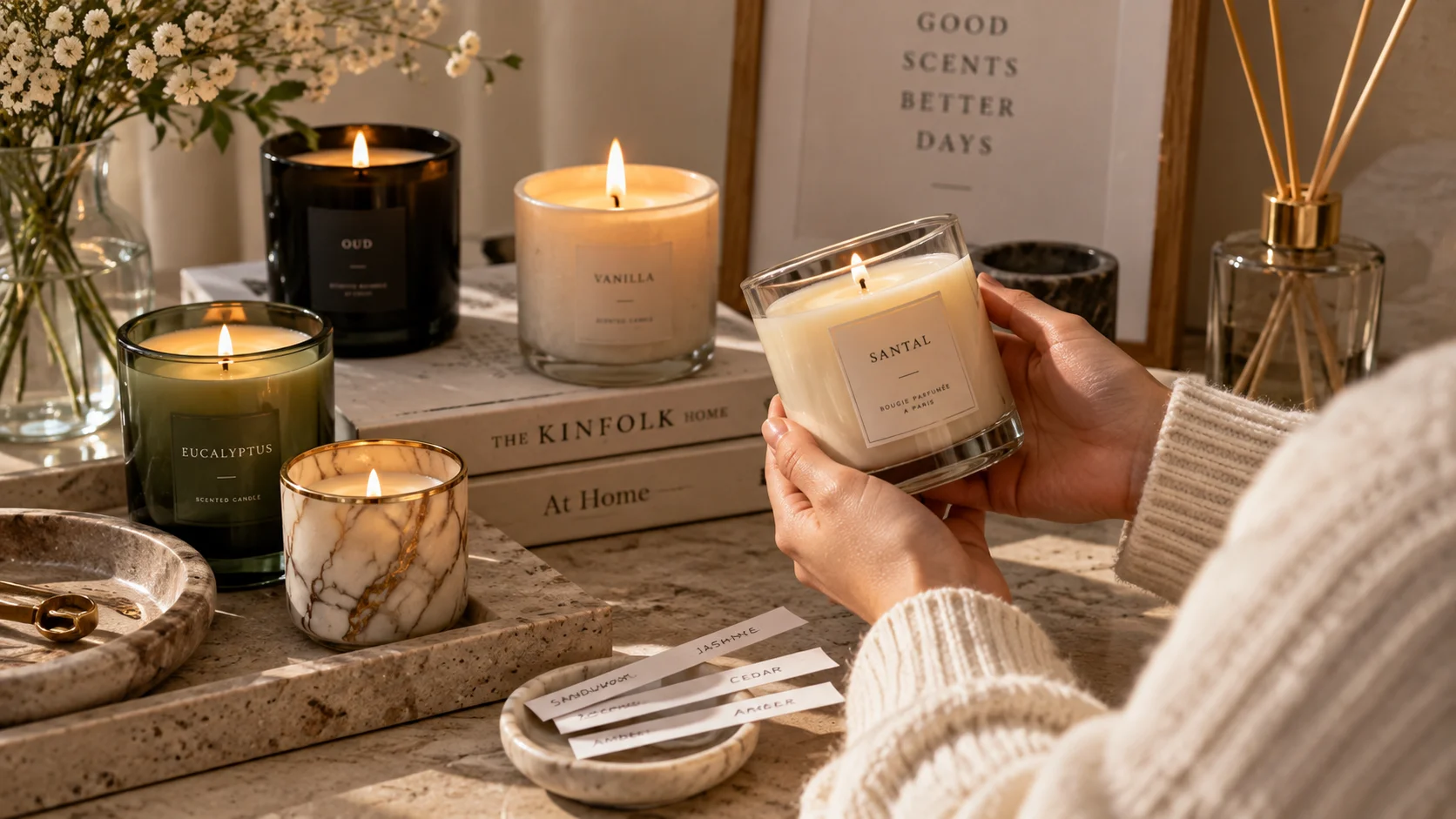
A candle used to be judged almost entirely on scent throw and burn time. That’s no longer where the conversation starts. The luxury candle design trends 2026 shoppers and designers are following now treat the candle as an object first — something that has to earn a place on a shelf, a console, or a styled tray even before it’s lit. This shift is showing up in how vessels are shaped, what materials brands choose, and how much restraint goes into the finish.
The reason this matters for anyone buying or gifting candles this year is that “luxury” has quietly been redefined. It’s less about a recognizable logo on the label and more about whether the piece holds up as decor on its own. Understanding the actual luxury candle design trends 2026 brands are building around helps you tell the difference between a candle that’s genuinely well-made and one that’s just priced like it is.
Sculptural Vessels Take Over Luxury Candle Design
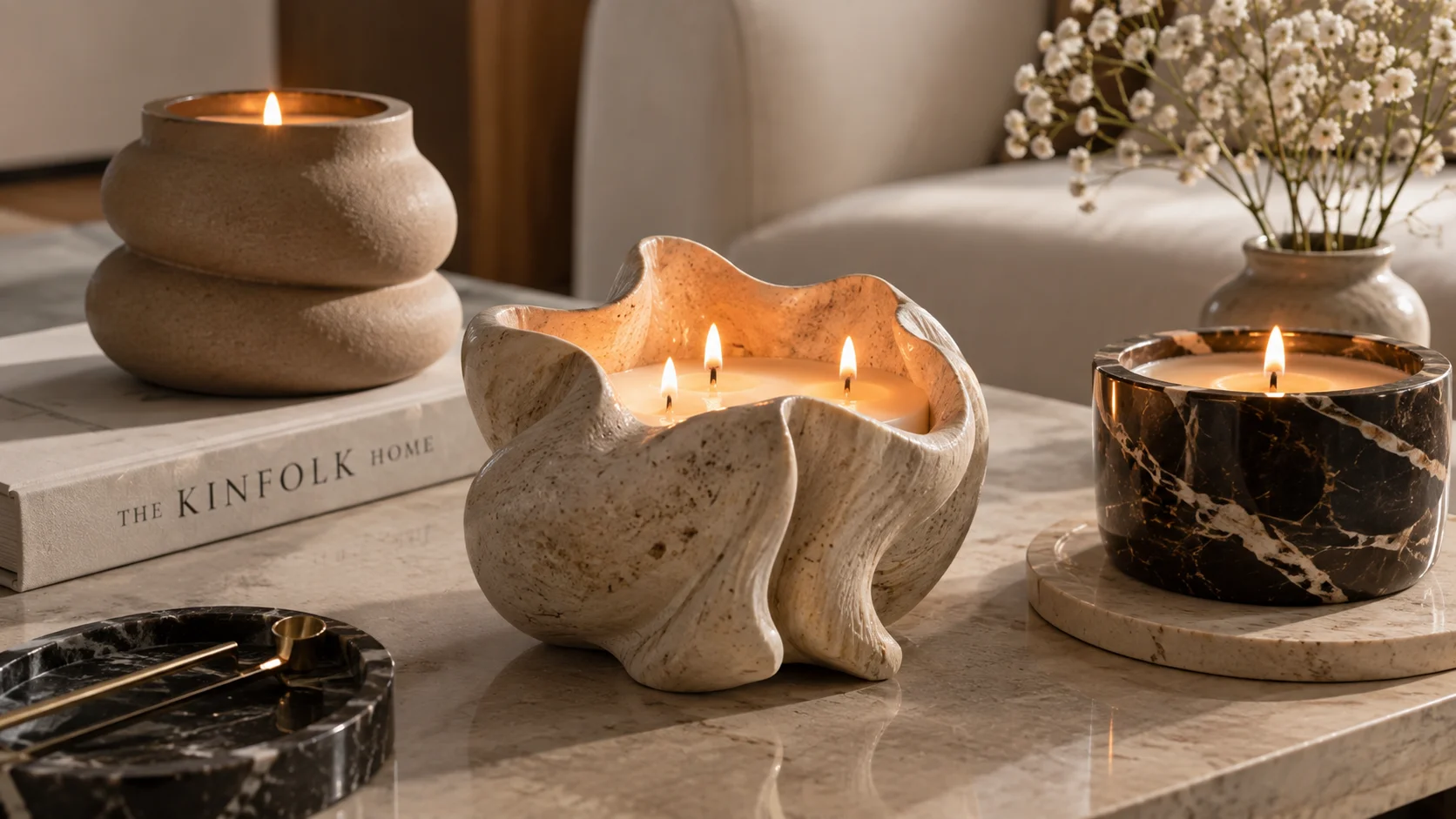
The most consistent theme across this year’s luxury candle design trends is the vessel itself becoming the point. Instead of a plain glass jar with a label wrapped around it, high-end brands are shaping candles in unglazed clay, hand-thrown ceramic, frosted glass, and even resin cast to look like carved stone. The goal is for the container to survive the candle — to get reused as a planter, a catchall dish, or a standalone piece once the wax is gone.
This isn’t purely decorative ambition. A vessel that looks intentional photographs better, sits more naturally next to existing decor, and doesn’t need to be hidden once the fragrance fades. It’s a practical answer to a common complaint: nobody wants a beautiful room undercut by a candle that looks disposable.
- Unglazed clay and stoneware finishes
- Hand-blown or frosted glass with visible texture
- Cast resin styled to resemble marble or raw stone
- Vessels designed with a clear “second life” after the wax is gone
- Weighted bases that read as intentional, not hollow
Matte Finishes and Natural Textures in Candle Design
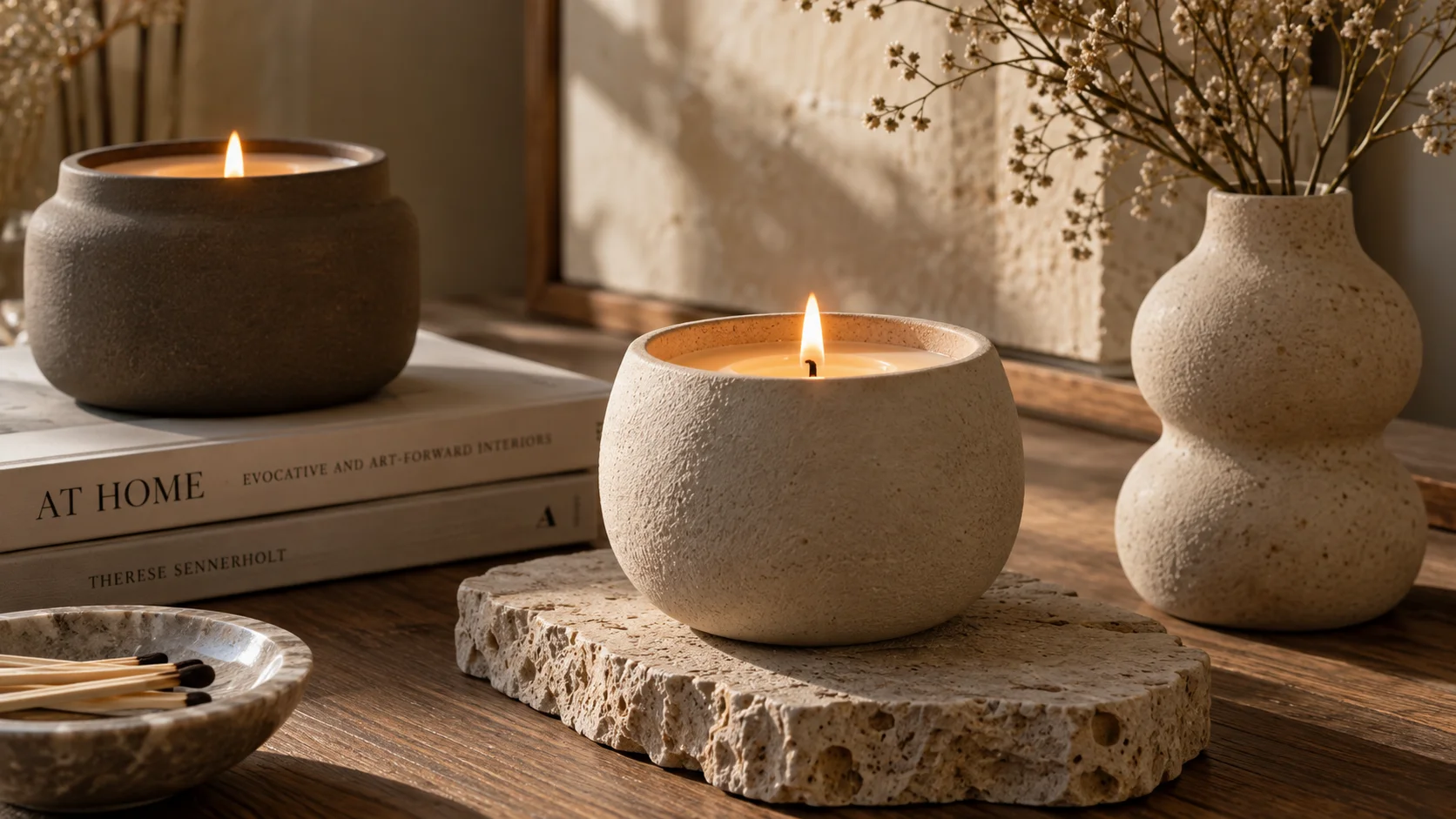
Alongside sculptural shapes, the finishes themselves have pulled back from anything glossy or reflective. Matte black, chalky cream, taupe, and stone-like textures dominate what’s currently being released, and the intent is consistency — a candle that doesn’t compete visually with the room it sits in. Glossy, high-shine glass reads as mass-produced next to these newer releases, even when the fragrance inside is comparable.
This texture-first approach also changes how candles get styled. A matte, neutral vessel works on open shelving, inside a vignette with books and objects, or alone on a nightstand without needing anything to “match.” That versatility is part of why this particular thread of luxury candle design trends 2026 has moved so quickly from niche brands into mainstream retail.
Wellness-Led Scent Design Is Reshaping Luxury Candles
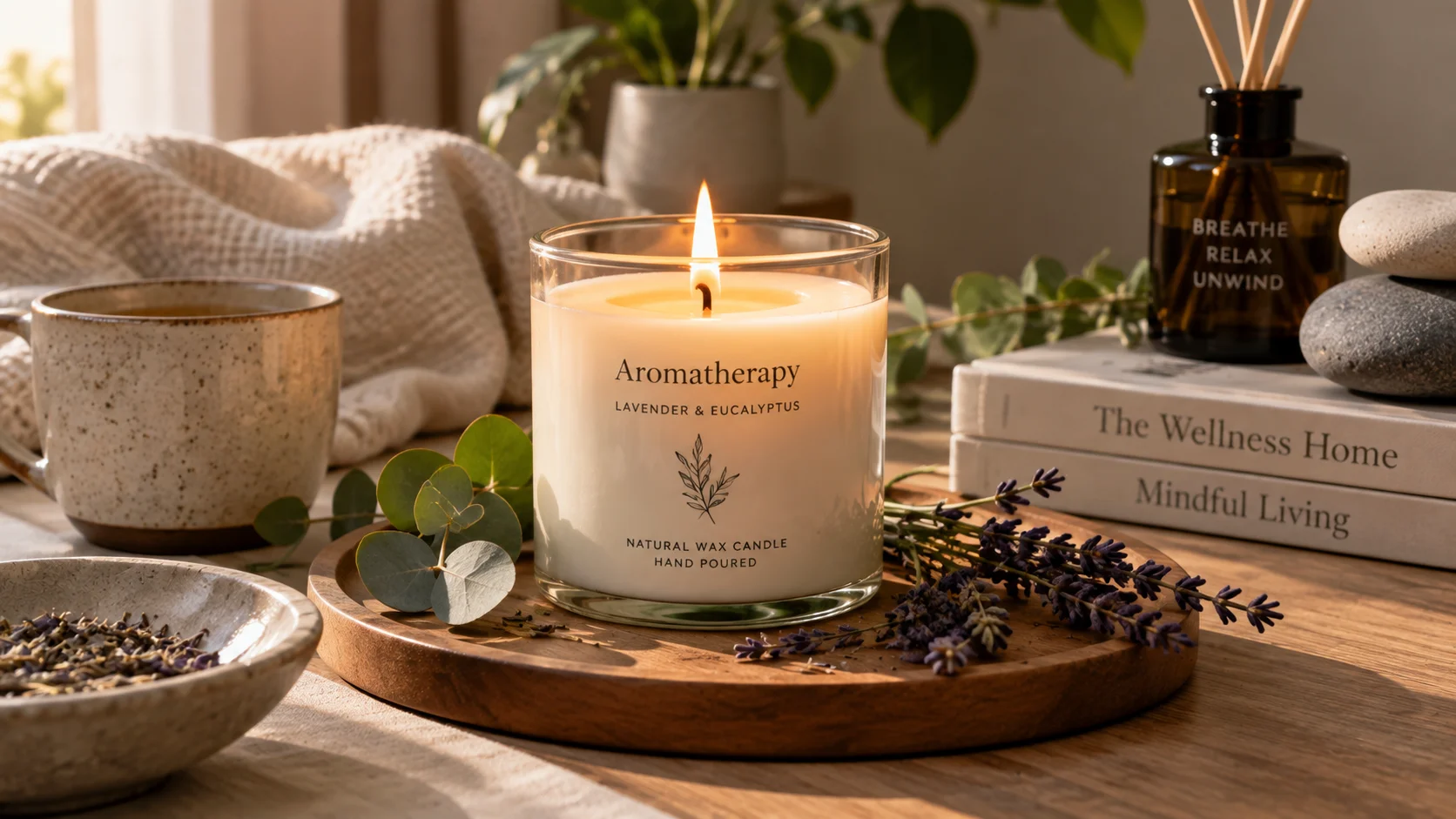
Scent selection has shifted from “what smells nice” to “what does this scent do.” Brands are building fragrance profiles around specific outcomes — winding down after work, softening a small space, supporting a slower evening routine — rather than simply naming a candle after a season or a place. This is one of the more functional luxury candle design trends 2026 has produced, because it gives buyers an actual reason to choose one candle over another beyond preference alone.
The wellness angle also affects burn behavior. A single, larger flame that burns slowly and evenly is being marketed as more “intentional” than a candle with multiple wicks that burns fast and bright. Whether or not that framing is purely marketing, it does track with how people are actually using candles — fewer scattered around the house, one well-chosen candle lit deliberately in the evening.
- Fragrance profiles built around relaxation, focus, or grounding rather than a season
- A move toward single, larger wicks over multi-wick designs
- Botanical and essential-oil-based notes replacing heavier synthetic blends
- Scents marketed around a specific moment (evening wind-down, morning reset)
- Reduced fragrance intensity in favor of a softer, more ambient throw
Layered, Story-Driven Fragrance Profiles
Where scent design used to mean one dominant note, this year’s releases lean into fragrances that change character as the candle burns — a top note that fades into something warmer underneath. It’s a technique borrowed from perfumery, and it makes the candle feel less like a single scent and more like an evolving experience across the burn.
This layering also plays into gifting. A candle that reveals a different note an hour in feels more considered than one that smells the same from the first light to the last, and that perception of craftsmanship is a big part of why layered profiles are commanding higher price points without necessarily costing more to produce.
What Layering Actually Means for the Burn
Practically, this means the wax itself may be poured in stages, with different fragrance concentrations at different depths of the vessel. It’s worth knowing this before buying, because a layered candle that gets moved around a lot or burned unevenly won’t deliver the intended sequence — even distribution depends on letting the wax pool fully across the surface during each burn.
Sustainable and Reusable Packaging Trends
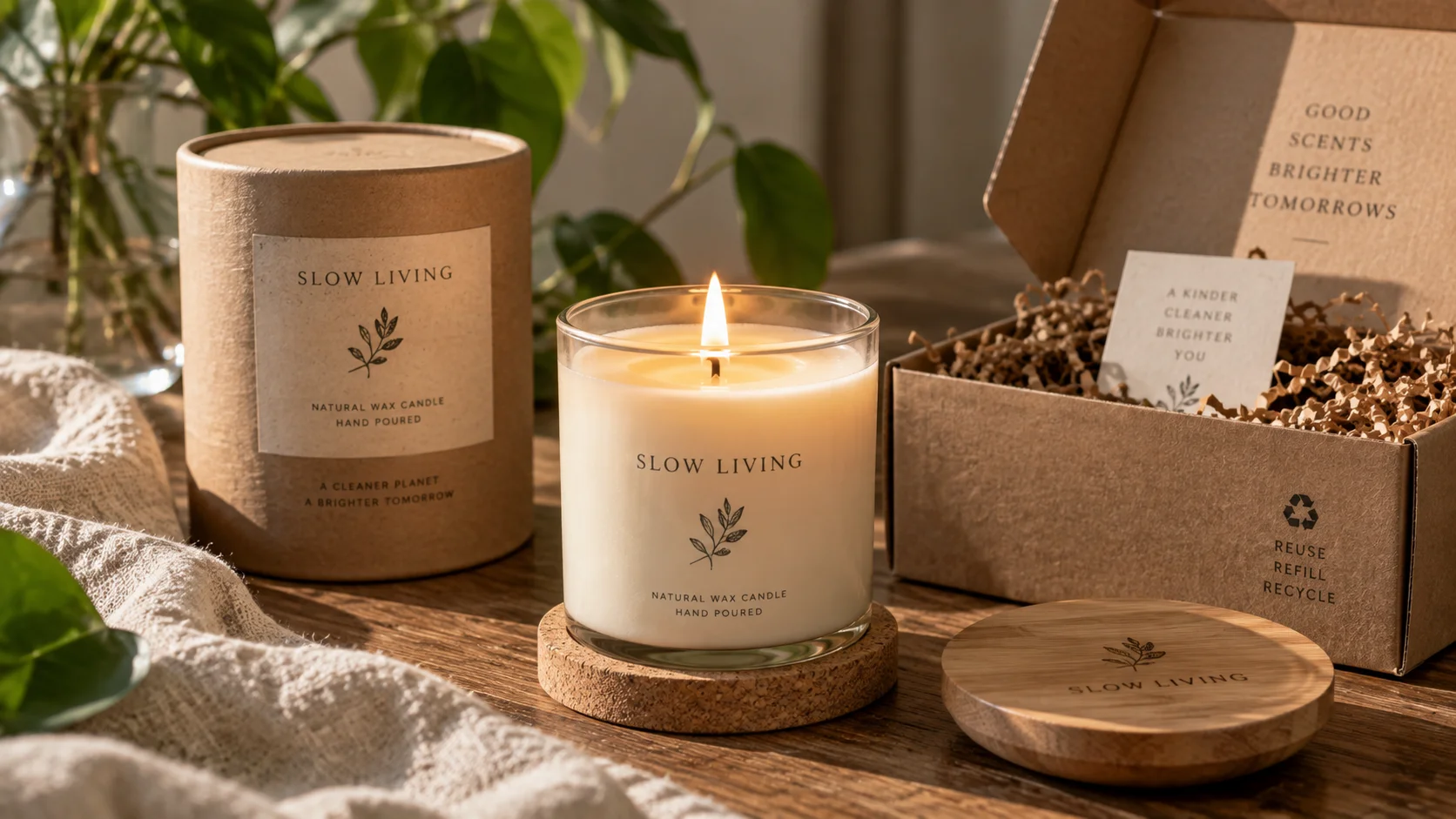
Packaging has become part of the design conversation rather than an afterthought wrapped around the finished candle. Brands are using recycled paperboard, plant-based inks, and minimal plastic in ways that still feel premium rather than stripped-down — the “eco” look of a few years ago, all beige and visibly recycled, has given way to packaging that just looks considered.
This matters because packaging is often the first thing a buyer or gift recipient actually touches, and it sets expectations before the candle is even lit. A brand that puts thought into unboxing without excess material waste is signaling the same attention to detail that shows up in the vessel and the wax.
- Recycled or FSC-certified paperboard boxes
- Plant-based or soy-based inks for printing
- Reduced use of cellophane and single-use plastic wrap
- Packaging designed to be reused as storage or gifting material
- Minimal branding in favor of texture and material quality
Color Palettes Anchoring Luxury Candle Design Trends 2026
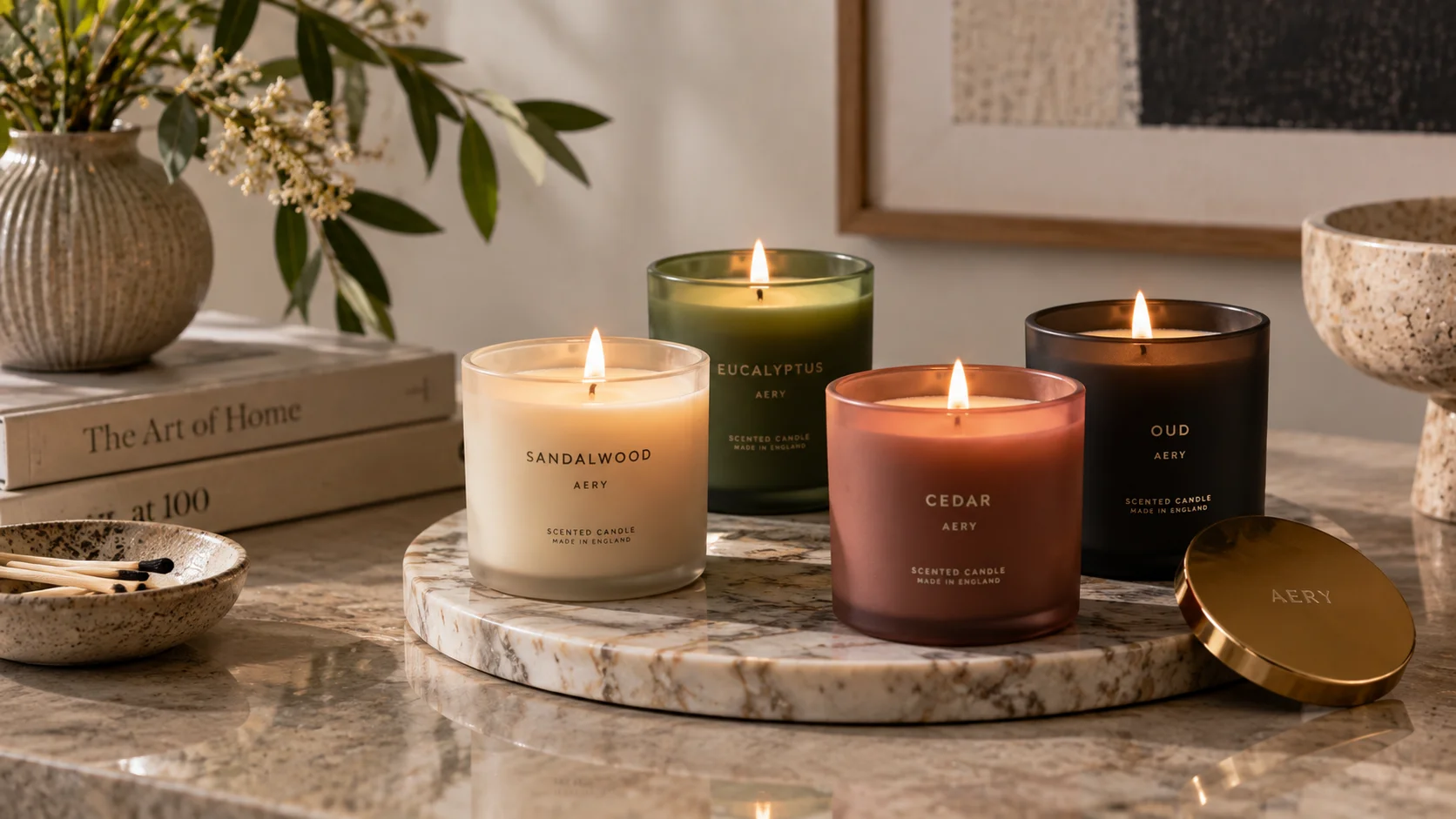
The color story running through this year’s releases is muted and warm rather than bright or seasonal. Charcoal, forest green, ochre, stone, and soft cream show up repeatedly, chosen specifically because they sit well against a wide range of interior palettes rather than demanding a themed room to match.
This restraint is deliberate. A candle in a loud, trend-driven color has a shorter shelf life stylistically — it looks dated once the next seasonal palette arrives. Neutral, muted tones extend how long a candle looks current on a shelf, which is part of why so many of the brands leading luxury candle design trends 2026 have narrowed their color range rather than expanded it.
- Charcoal and matte black for a grounded, modern base
- Forest green and ochre as occasional accent tones
- Soft stone, taupe, and unbleached cream as primary neutrals
- Muted finishes over bright, glossy, or metallic colorways
- Palettes chosen to complement existing decor rather than stand alone
Personalization and Gifting Rituals
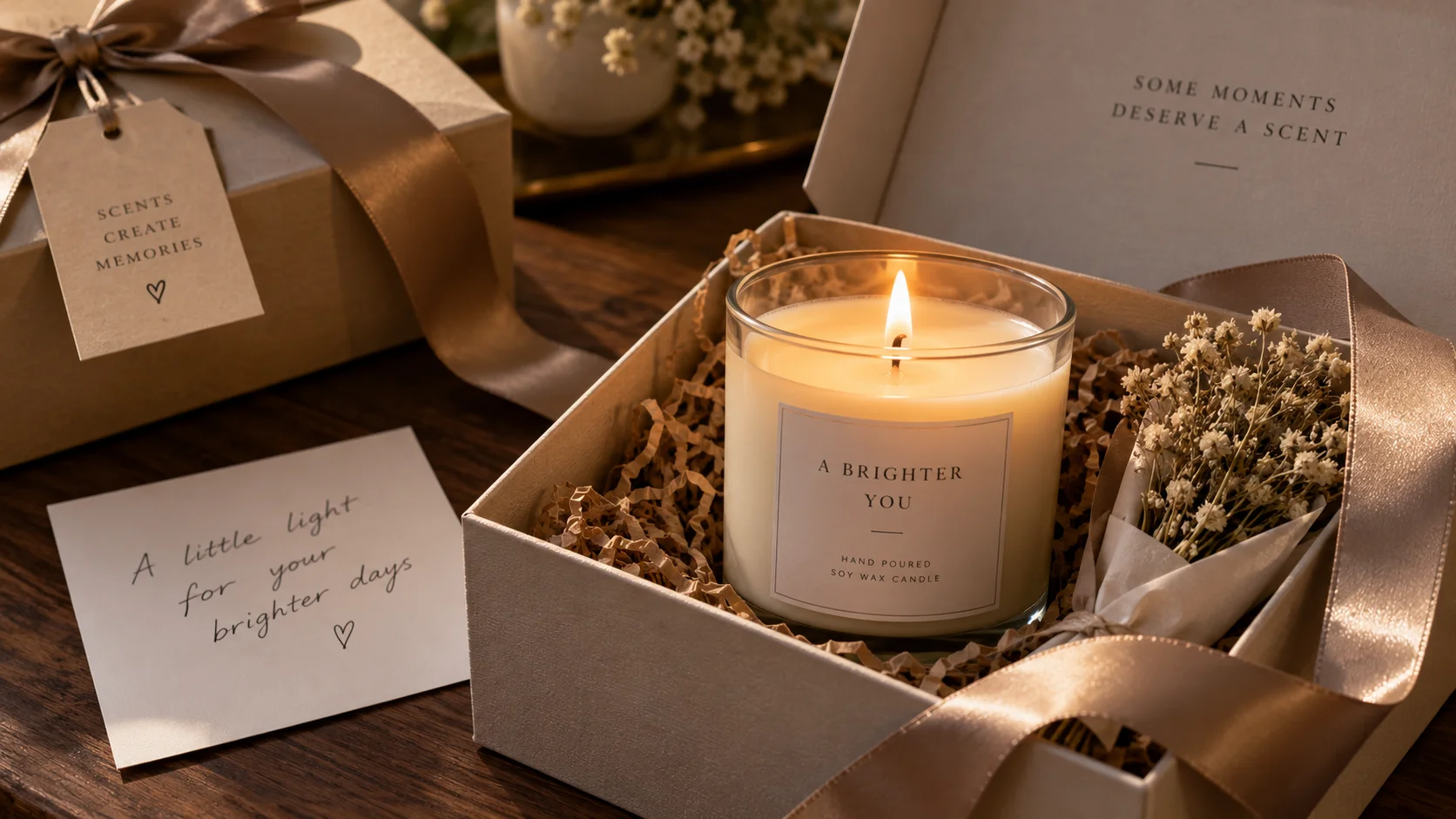
Luxury candle design trends 2026 have become one of the more common ways people give a “considered” gift without a huge budget, and brands are leaning into that with customizable labels, scent quizzes, and small-batch or limited releases. A candle that feels personally chosen — rather than grabbed off a shelf — carries more weight as a gift, and that perception is worth more to a buyer than an extra ingredient or fancier box.
This trend also connects back to how candles are used at home. Lighting a specific candle has become its own small ritual for a lot of people — the start of an evening wind-down, a signal that the workday is over — and gift-givers are increasingly choosing candles that support that habit rather than just smell good in the moment.
How to Choose a Candle That Reflects These Luxury Candle Design Trends
With so many brands claiming to follow the same handful of trends, the practical challenge is telling genuine craftsmanship from marketing language. Start with the vessel: does it look intentional enough to keep once the candle is finished, or is it a standard jar with a nicer label? Then check the wax and wick — a single, well-centered wick and a clean pour without sinkholes or frosting are better indicators of quality than the scent name alone.
It also helps to be honest about how you’ll actually use the luxury candle design trends 2026. A heavily layered, story-driven fragrance is wasted if you tend to blow a candle out after twenty minutes, and a large sculptural vessel might not suit a small side table. Buying into a trend only pays off if it fits how the luxury candle design trends 2026 will actually live in your space.
- Check for a centered wick and an even, sinkhole-free wax surface
- Look at the vessel’s material quality, not just its shape
- Match burn style (single vs. multi-wick) to how long you typically burn a candle
- Consider whether the packaging or vessel has a genuine second use
- Prioritize scent longevity and throw over an unusual or trendy fragrance name
Common Mistakes When Buying Into Candle Trends
One frequent mistake is choosing a candle purely for how the vessel photographs, without checking whether the fragrance suits the room it’s meant for — a heavy, warm scent can overwhelm a small bathroom just as easily as it can flatter a living room. Buyers also tend to assume a higher price automatically means cleaner ingredients or better construction, which isn’t always true; some of the pricing reflects packaging and branding rather than the wax or wick itself.
The other common misstep is treating every trend as something to adopt at once. A muted, sculptural candle and a bold, seasonal scent don’t always belong in the same room, and mixing too many trend elements can undercut the restrained look most of these designs are going for in the first place.
Frequently Asked Questions
It usually comes down to the combination of wax quality, wick construction, vessel material, and fragrance complexity — not the price tag alone. A candle can be expensive due to branding or packaging without meeting those quality markers.
Sculptural, reusable vessels, matte and natural-material finishes, wellness-oriented scent design, layered fragrance profiles, and more thoughtful, sustainable packaging are the trends showing up most consistently.
That depends on what you’re paying for. A well-made vessel, clean wax, and a longer, more even burn can justify a higher price, but it’s worth checking construction quality rather than assuming price and quality always match.
Soy, coconut, and coconut-soy blends are the most common choices in higher-end candles, largely because they burn cleaner and hold fragrance more evenly than paraffin.
Muted tones like taupe, charcoal, and cream are chosen because they blend into a wider range of interiors and don’t feel dated as quickly as bright, seasonal colors.
It means the wax is scented in stages so the fragrance shifts as it burns — often opening with a lighter top note and settling into a warmer base note later in the burn.
Look for a vessel made from a durable material like ceramic, glass, or stone-effect resin, with a shape that would work as a planter, organizer, or catchall once the wax is gone — not just a jar with a nice label.
No — packaging materials affect presentation and environmental impact, not the wax, scent, or burn quality inside.
Love inspiring interiors, practical design ideas, and beautiful spaces? Follow us on Facebook, Instagram, and Pinterest for more interior inspiration, home styling ideas, and everyday design tips.