
Table of Contents
The simplest way to understand the difference between a studio flat vs 1 bedroom is to look at how the sleeping area is arranged. A studio usually combines the bedroom, living area, and kitchen into one main open-plan space, while the bathroom remains separate. A one-bedroom flat has a dedicated bedroom enclosed by walls and normally a door, with the living room and kitchen occupying the remaining space. This difference may seem small on a floor plan, but it can significantly change how private, flexible, and comfortable the home feels.
The right choice is therefore not automatically the flat with more rooms. A studio can be the smarter option for someone who lives alone, wants to keep monthly costs manageable, owns relatively few possessions, and does not need much separation between sleeping and living. A one-bedroom can make more sense for someone who works from home, entertains guests, lives with a partner, needs additional storage, or simply values having a private room. Your daily routine matters just as much as the number of rooms.
What Is a Studio Flat?
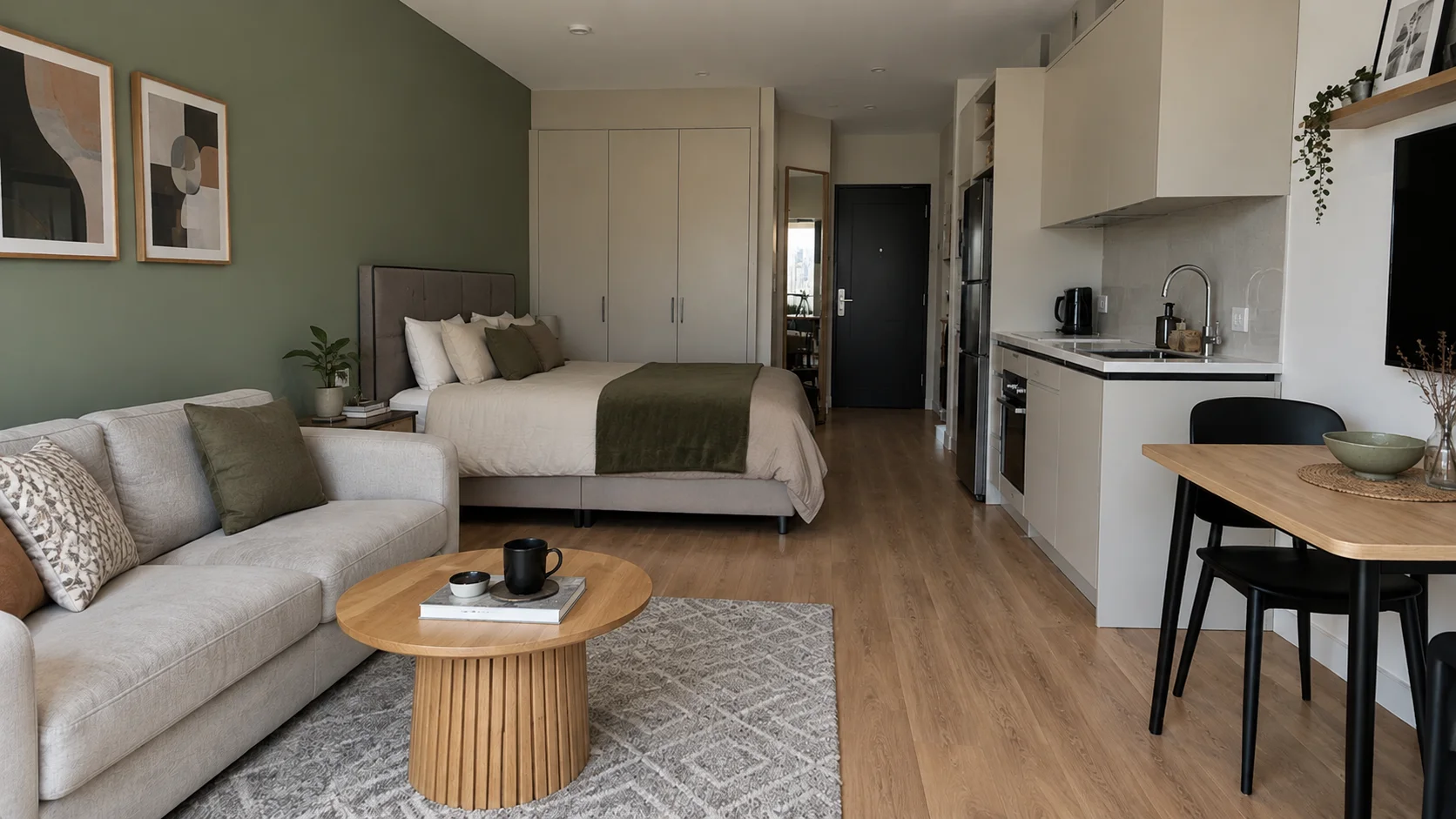
A studio flat is essentially one main living space designed to serve several purposes. Your bed, sofa, dining area, and often your kitchen occupy the same general room, although furniture, shelving, partial walls, or changes in flooring may create visual zones. The bathroom is normally separated from the main room. Because there are fewer internal divisions, studios can make relatively compact floor plans feel open rather than chopped into several tiny rooms.
The open arrangement is both the main attraction and the main limitation. You can move easily between different parts of the flat, and cleaning may be straightforward because most of your everyday activities happen in one room. However, the same openness means your bed is usually visible from the living area, guests may see most of the flat when they visit, and a messy kitchen or workspace can affect the appearance of the entire room. Good zoning becomes particularly important in a studio.
What Is a One-Bedroom Flat?
A one-bedroom flat has a separate bedroom in addition to the living and kitchen areas. The bedroom provides a dedicated place for sleeping and can usually be closed off from the rest of the home. Depending on the property, the kitchen may be open to the living room or located in its own separate area. The exact layout varies considerably, so the label “one bedroom” should not be treated as a guarantee of a particular floor plan or amount of space.
The extra room gives the flat greater functional separation. You can keep the bedroom primarily for sleeping while using the living room for relaxing, eating, working, or entertaining. It also gives you somewhere to put away visual clutter when guests arrive. That separation can be especially useful for couples, remote workers, or anyone who wants their sleeping environment to feel distinct from the rest of their daily activities.
Studio Flat vs 1 Bedroom: Cost and Monthly Expenses
Cost is one of the first reasons people consider a studio. A smaller property often requires less furniture and may have lower rent and utility expenses, although the actual difference depends heavily on location, building, amenities, property condition, and local demand. A studio in a desirable central area can sometimes cost more than a larger flat in a less convenient location, so comparing the advertised rent alone is not enough.
A one-bedroom generally asks you to pay for additional space, but that space can provide genuine value if you will use it regularly. Before choosing the cheaper option, consider the total monthly housing cost and what you receive in return. Think about rent, utilities, parking where applicable, internet, furnishing, storage requirements, and commuting costs. A studio that forces you to rent external storage or buy specialized space-saving furniture may not be as economical as it initially appears.
What Makes a Studio Flat More Affordable?
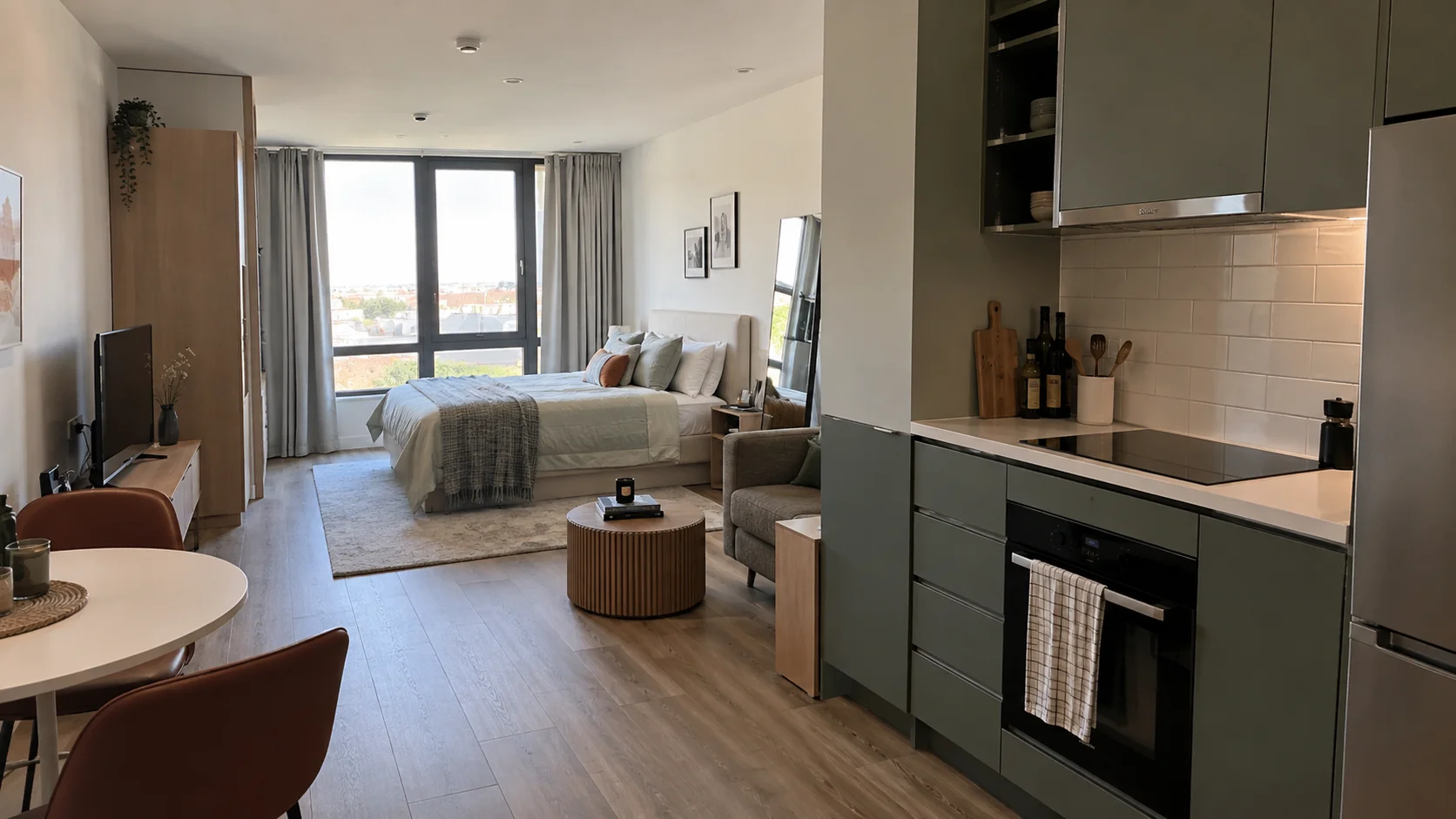
The financial advantage of a studio is usually connected to its compact footprint and simpler furnishing requirements. You may need fewer large furniture pieces, fewer window coverings, and less equipment to furnish the main living space. The smaller area can also make routine cleaning and maintenance easier. For someone whose priority is keeping housing costs controlled, these advantages can add up.
When comparing options, consider these potential advantages:
- Lower rent in many markets
- Less furniture needed to furnish the home
- Potentially lower heating or cooling requirements
- Less space to clean and maintain
- Lower initial furnishing costs
These benefits are not universal, however. Rent is determined by the local property market rather than size alone, and some studios in premium locations can command substantial prices. A better comparison is to look at the complete monthly cost of each property and decide whether the additional space in a one-bedroom would actually improve your everyday life.
How Much More Space Does a One-Bedroom Give You?
The extra space in a one-bedroom is valuable because it is not simply additional floor area; it is separated floor area. A bedroom gives you another functional zone that can remain dedicated to sleeping, dressing, or personal belongings. Even when the total size difference is modest, the wall and door separating the bedroom can make the home feel considerably more flexible.
However, floor area varies so much between buildings that you should never assume every one-bedroom is spacious. A poorly planned one-bedroom can feel cramped, while a well-designed studio can feel surprisingly comfortable. When viewing properties, look at usable space rather than the room count alone. Check whether furniture can fit comfortably, whether doors open without blocking movement, and whether there is enough storage for the belongings you actually own.
Studio Flat vs 1 Bedroom for Privacy
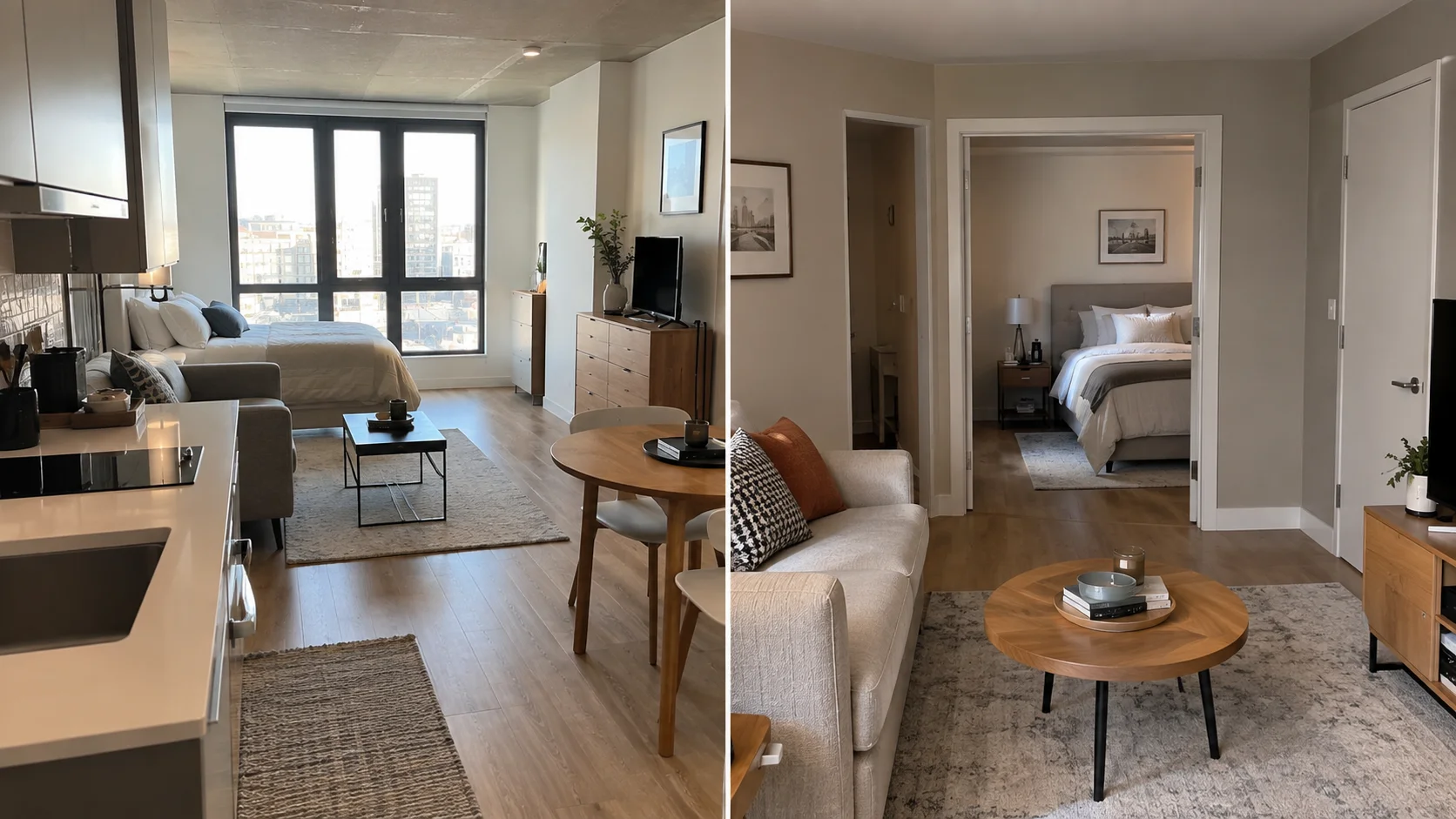
Privacy is one of the clearest advantages of a one-bedroom. In a studio, the sleeping area is normally part of the same open room as the living area. If a friend visits, your bed remains part of the visible environment. If you live with a partner, there is also no separate room where one person can retreat while the other watches television, works, or receives a visitor.
A one-bedroom creates a physical boundary between activities. You can close the bedroom door, leave work equipment outside the sleeping area, or use the living room while someone else rests. This does not mean a studio lacks privacy altogether; clever furniture placement, curtains, shelving, or room dividers can create visual separation. They simply cannot provide the same level of acoustic and physical separation as a proper enclosed bedroom.
Which Is Better for Working From Home?
Your work routine can completely change the studio flat vs 1 bedroom decision. Someone who works remotely for only a few hours a week may be perfectly comfortable placing a compact desk against a wall or using part of the dining area. A person who works from home every day may find it much harder to maintain a psychological boundary between work and personal time when the desk is positioned beside the bed.
A one-bedroom gives you more options. You could place a desk in the living room while keeping the bedroom free from work equipment, or potentially use part of the bedroom for another purpose depending on its size. The important point is not that every remote worker needs a one-bedroom. It is that frequent home working increases the value of separation, particularly if you attend video meetings, need quiet, or work irregular hours.
Storage and Organization Differences
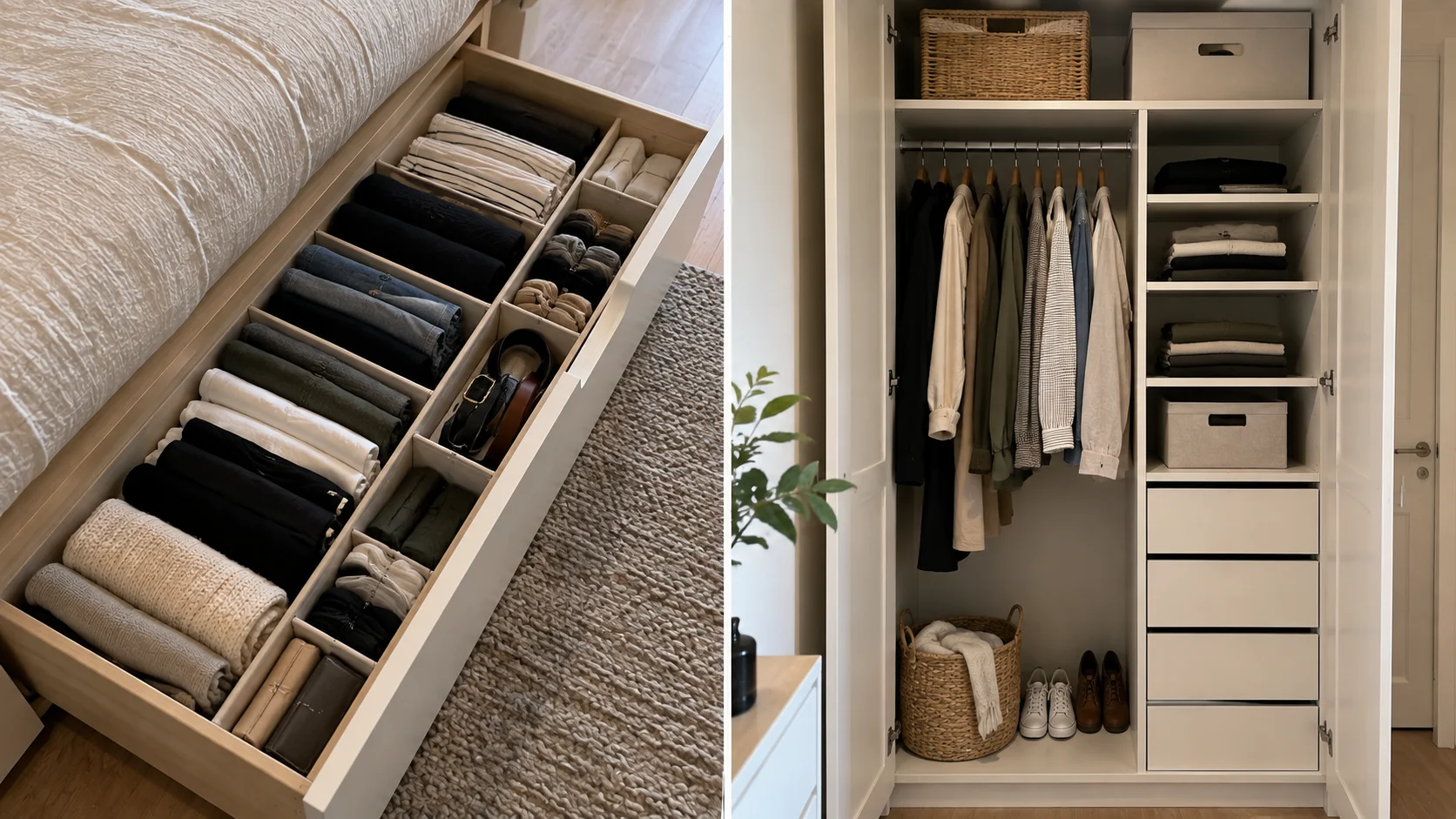
Storage is often an overlooked issue when comparing these two layouts. A studio has fewer areas where belongings can disappear from view, so every wardrobe, shelf, cabinet, and drawer has to work efficiently. Clothes, bedding, electronics, kitchen equipment, cleaning supplies, and personal items can quickly compete for the same limited storage space. If you already own a lot of belongings, the open layout may expose the problem rather than hide it.
A one-bedroom can provide additional storage opportunities, particularly if the bedroom includes a built-in wardrobe or if the layout has additional cupboards. More importantly, you can distribute possessions between functional zones instead of keeping everything in one room. Before choosing either property, make a realistic inventory of what you own. Do not choose a studio because it looks affordable if you already know that your belongings will make the room difficult to use.
Furnishing a Studio Flat vs 1 Bedroom
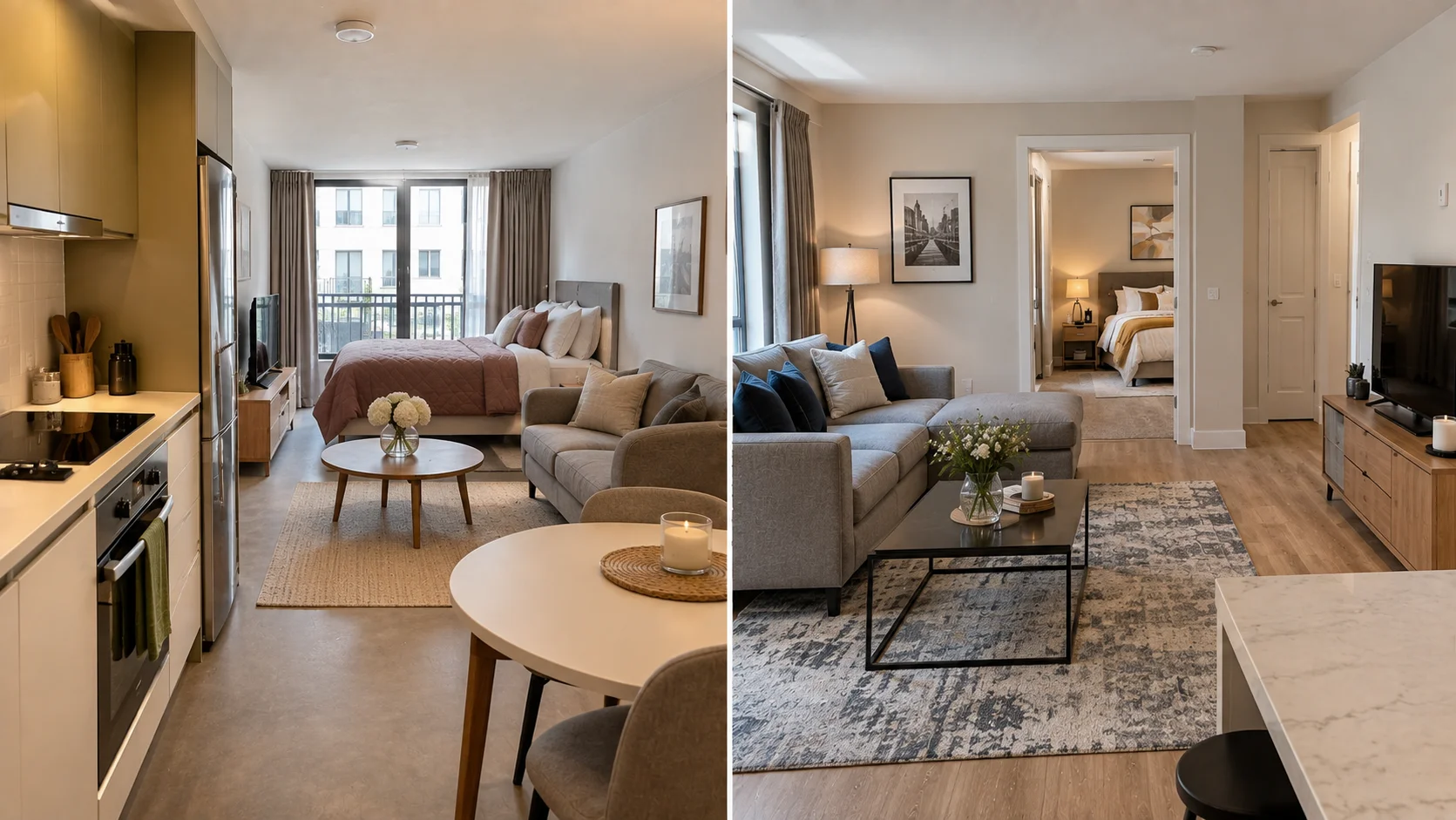
Furnishing a studio requires more planning because every large item affects several functions at once. A sofa, bed, dining table, wardrobe, or desk can easily make the room feel crowded if its position interferes with circulation. Multi-purpose furniture can help, but the goal should not be to fill every available corner with clever storage. Too many pieces can make an already compact room feel smaller.
A one-bedroom gives you more freedom to separate furniture by purpose. The bedroom can hold the bed and clothing storage while the living room handles seating, entertainment, and possibly dining or work. Even so, additional space can encourage unnecessary purchases. A larger flat works best when the furniture supports the way you actually live rather than simply filling empty floor area.
Cleaning and Everyday Maintenance
A studio can be easier to clean because most of the home is concentrated in one main room. Vacuuming, dusting, and tidying can often be completed quickly, particularly when the resident owns relatively few belongings. There is also less furniture and fewer separate areas to maintain. For someone who spends little time at home or prefers a simple routine, this can be a meaningful advantage.
A one-bedroom requires more maintenance because there are additional surfaces, furniture arrangements, and areas to clean. The difference may not be dramatic, but it becomes noticeable over time. On the other hand, the separate bedroom can make organization easier because you can keep certain belongings within their appropriate zone. A bedroom wardrobe, living-room storage, and kitchen cabinets can prevent different categories of possessions from competing for the same space.
Studio Flat vs 1 Bedroom for Couples
A studio can work for a couple if both people are comfortable sharing the same space and have compatible routines. It can be an attractive choice for couples who spend most of their time together, own relatively few belongings, and want to keep housing expenses down. The open arrangement can also make a compact property feel social and connected.
The difficulty appears when one person needs privacy, quiet, or a different schedule. A one-bedroom allows one person to remain in the living room while the other sleeps or relaxes in the bedroom. It also gives couples somewhere to temporarily separate activities without leaving the home. For long-term couples, that flexibility can be worth considerably more than the additional room initially suggests.
When a Studio Flat Makes More Sense
A studio is often a practical choice when your lifestyle naturally fits a compact home. Someone living alone who spends much of the day outside, owns limited furniture, and prioritizes saving money may gain more from a studio than from paying for unused space. The open floor plan can also be appealing if you prefer having everything within easy reach.
A studio may be especially suitable if several of these statements describe you:
- You live alone
- You own relatively few possessions
- You rarely host overnight guests
- You do not need a permanent home office
- Keeping housing costs low is a major priority
The important qualification is that affordability should not come at the expense of basic comfort. Visit the property in person if possible and imagine your normal day rather than judging it only from photographs. Picture where you will sleep, work, eat, store clothes, relax, and entertain. If all those activities can coexist comfortably, the studio may be a very efficient home.
When a One-Bedroom Flat Is Worth the Extra Cost
A one-bedroom becomes more attractive when separation solves a problem you regularly experience. If you work from home, entertain friends, live with a partner, own more belongings, or simply want a door between your sleeping area and the rest of your home, the extra room can provide genuine practical value. You are not just paying for more floor space; you are paying for additional ways to use the home.
Consider a one-bedroom particularly if:
- You work from home frequently
- You live with a partner
- You regularly host guests
- You need more storage
- You want a dedicated sleeping environment
The additional monthly cost still needs to fit your budget. A separate bedroom is useful only if you can comfortably afford the property without creating financial pressure elsewhere. Compare the difference in rent against the actual benefits you will use every week rather than assuming that more space is automatically better.
Studio Flat vs 1 Bedroom: Which Is Better for Long-Term Living?
Long-term suitability depends heavily on whether your circumstances are likely to change. A studio may be ideal at the beginning of your career when you live alone, travel frequently, and want to prioritize saving. Several years later, the same layout may feel restrictive if you begin working remotely, acquire more belongings, move in with a partner, or spend more time at home.
A one-bedroom offers greater flexibility, but flexibility comes with a price. If you expect to remain in the property for several years, consider how your needs could change rather than evaluating only your current situation. You do not need to predict your entire future; simply consider whether the extra room would prevent a likely problem from becoming a reason to move again.
Common Mistakes When Choosing Between the Two
One of the biggest mistakes is choosing entirely on monthly rent. A cheaper studio may look attractive until you realize that it lacks adequate storage, cannot accommodate your desk, or makes your everyday routine uncomfortable. Another mistake is assuming that every one-bedroom offers substantially more usable space. Floor plans differ, and an inefficient layout can waste the benefit of an additional room.
Before signing a lease or purchasing a property, avoid these common errors:
- Comparing rent without considering total housing costs
- Ignoring storage until after moving in
- Choosing based only on photographs
- Assuming more rooms automatically means better design
- Forgetting how your lifestyle may change
Another common mistake is buying furniture before understanding the floor plan. This is particularly problematic in studios, where a single oversized sofa, bed, or wardrobe can dominate the entire room. Measure the important areas, understand the circulation path, and think about your daily routine first. The best layout is the one that supports how you actually live.
How to Decide Between a Studio Flat and 1 Bedroom
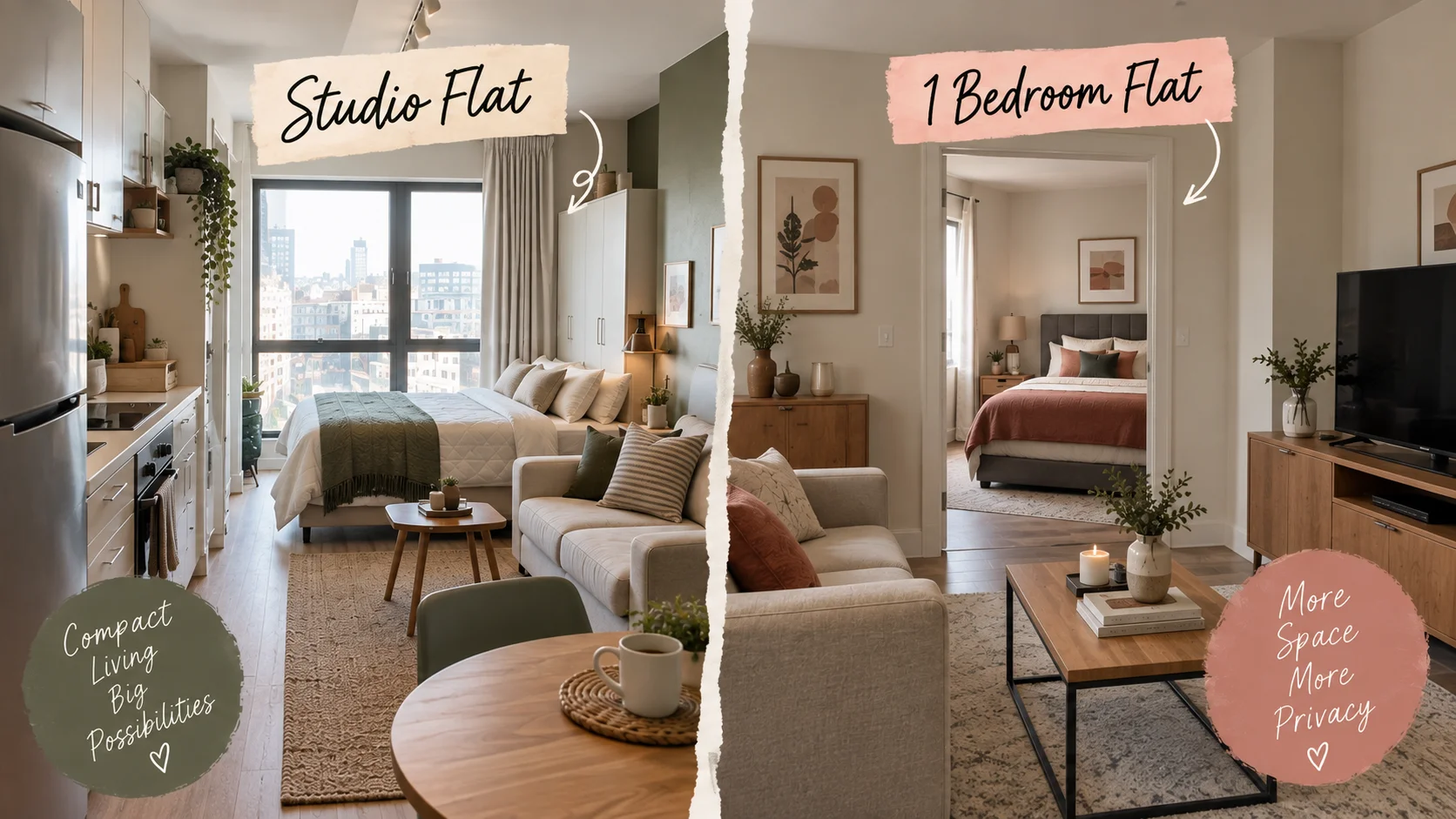
Start with your budget, but do not stop there. Write down the activities you perform at home during a normal week: sleeping, cooking, working, exercising, entertaining, relaxing, studying, and storing personal belongings. Then identify which activities genuinely need separate space. If almost everything can happen comfortably within one open room, a studio may be enough. If several activities compete for the same space, the one-bedroom option becomes more valuable.
Next, compare actual properties rather than apartment categories in the abstract. Look at the floor plan, storage, natural light, kitchen arrangement, bathroom location, furniture possibilities, noise levels, and access to transport or amenities. A well-designed studio in a convenient location may be a better home than a poorly designed one-bedroom far from everything you need. The label tells you the basic layout; the property itself tells you whether that layout works for you.
Studio Flat vs 1 Bedroom: The Final Decision
The best choice in the studio flat vs 1 bedroom comparison depends on what you need your home to do. A studio generally prioritizes compact living, simpler furnishing, easier upkeep, and potentially lower housing costs. A one-bedroom prioritizes separation, privacy, storage, and flexibility. Neither layout is universally superior, and the better option can change as your circumstances change.
If you live alone, own relatively little, rarely work from home, and want to keep expenses controlled, a studio can be a highly practical choice. If privacy, remote work, entertaining, storage, or long-term flexibility matters more, paying extra for a one-bedroom may be justified. Instead of asking which apartment is objectively better, ask which layout removes the biggest problems from your everyday life. That is usually the more useful way to make the decision.
Frequently Asked Questions About Studio Flat vs 1 Bedroom
A studio is often cheaper, but this is not guaranteed. Location, building quality, amenities, demand, and property size can all affect rent. Compare the complete cost rather than assuming the studio will always be less expensive.
Yes. A studio can work very well for a single person who is comfortable with an open layout, owns relatively few belongings, and does not need a separate workspace or bedroom. Its suitability depends on the individual floor plan and lifestyle.
In many situations, yes, because the separate bedroom creates more opportunities to separate work from rest. However, a well-planned studio can still accommodate remote work if there is enough room for a dedicated desk and adequate visual separation.
Some couples can, particularly when they have compatible routines and limited possessions. The main issue is the lack of a separate room. Couples who value individual privacy or have different schedules may find a one-bedroom more comfortable.
Not necessarily. One-bedrooms often provide additional storage opportunities, but the actual amount depends on the floor plan. Always inspect wardrobes, cupboards, kitchen storage, and available space before making a decision.
A studio will generally require less cleaning because there is less space and fewer separate areas. However, studios can require more frequent tidying because clutter remains visible within the main living area.
Saving money can be a good reason to choose a studio, provided the layout meets your needs. If the smaller space creates problems that lead to additional storage, furniture, or moving costs, the initial saving may be less valuable than expected.
It can be if you regularly use the additional privacy, workspace, storage, or living area. The extra cost is easier to justify when the separate bedroom solves a real problem rather than simply providing unused space.
Love inspiring interiors, practical design ideas, and beautiful spaces? Follow us on Facebook, Instagram, and Pinterest for more interior inspiration, home styling ideas, and everyday design tips.