
Table of Contents
A sculpture can change the feel of a room without replacing furniture, repainting walls, or making a major investment. The right piece adds shape, texture, contrast, and a focal point to an otherwise ordinary space.
The key is choosing a sculpture that suits the room, placing it where its form can be appreciated, and leaving enough space around it. From abstract pieces on coffee tables to statement sculptures in empty corners, these eight ideas show how to decorate with sculptural objects in a way that feels considered rather than cluttered.
1. Style an Abstract Sculpture on the Coffee Table
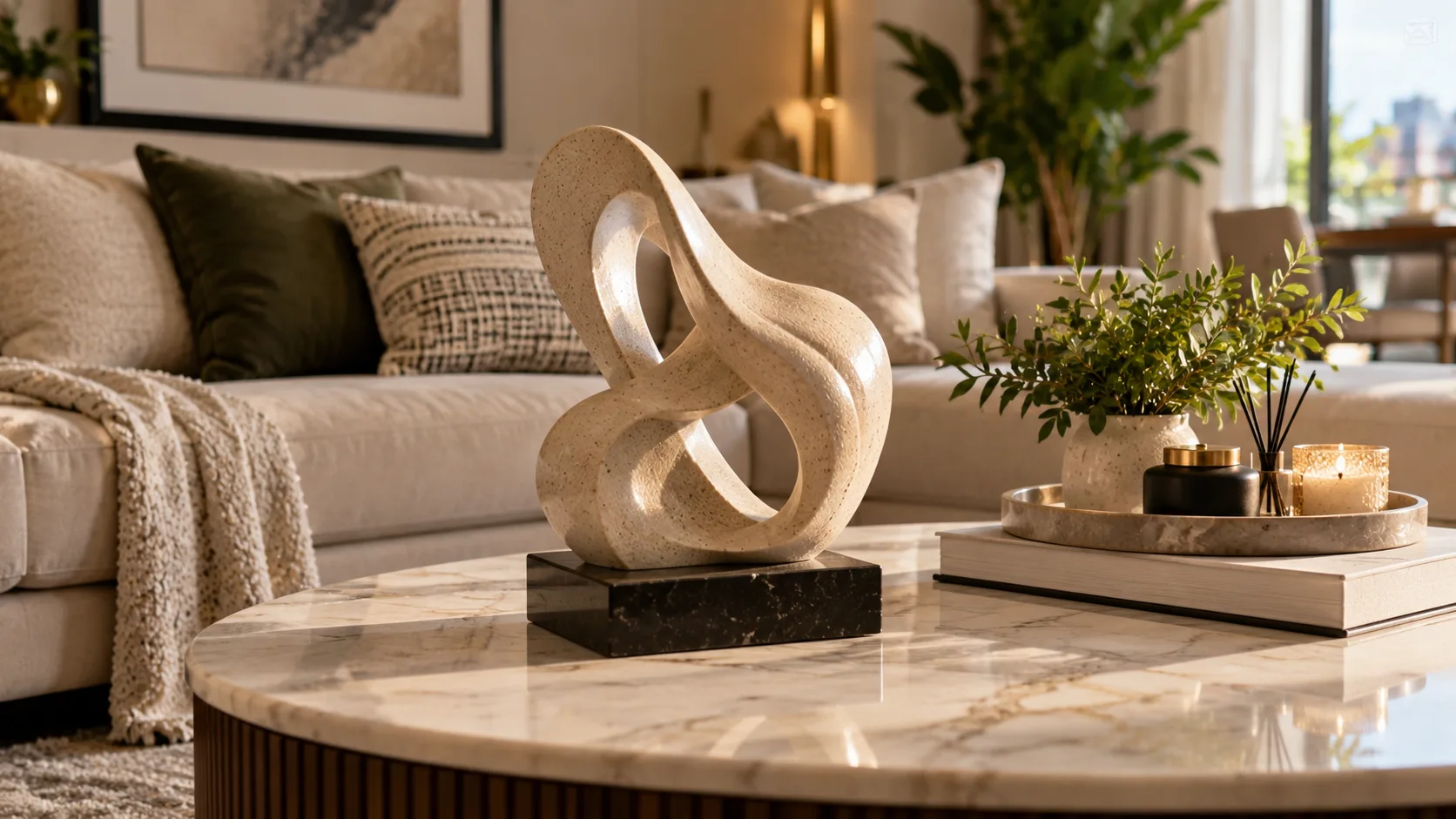
An abstract sculpture is an easy way to introduce visual interest into a modern or minimalist living room. Curved, geometric, or irregular forms can soften the straight lines of a sofa, coffee table, and shelving without introducing another busy pattern.
Choose a low, stable piece that remains visible without blocking conversation across the table. Cream ceramic, natural stone, dark metal, and wood can all work, depending on the finishes already present in the room.
For a balanced arrangement, place the sculpture on a clear section of the table and pair it with one or two supporting objects, such as a small tray or a simple book stack. Leave enough open surface for everyday use.
A sculpture should complement the furniture around it. Our guide to choosing the best furniture for a living room can help you create a balanced setup.
Styling tip: Repeat one color or material from the surrounding furniture to connect the sculpture to the rest of the room. If the table is already visually busy, choose a simple silhouette rather than a highly detailed object.
2. Make an Entryway Console More Interesting
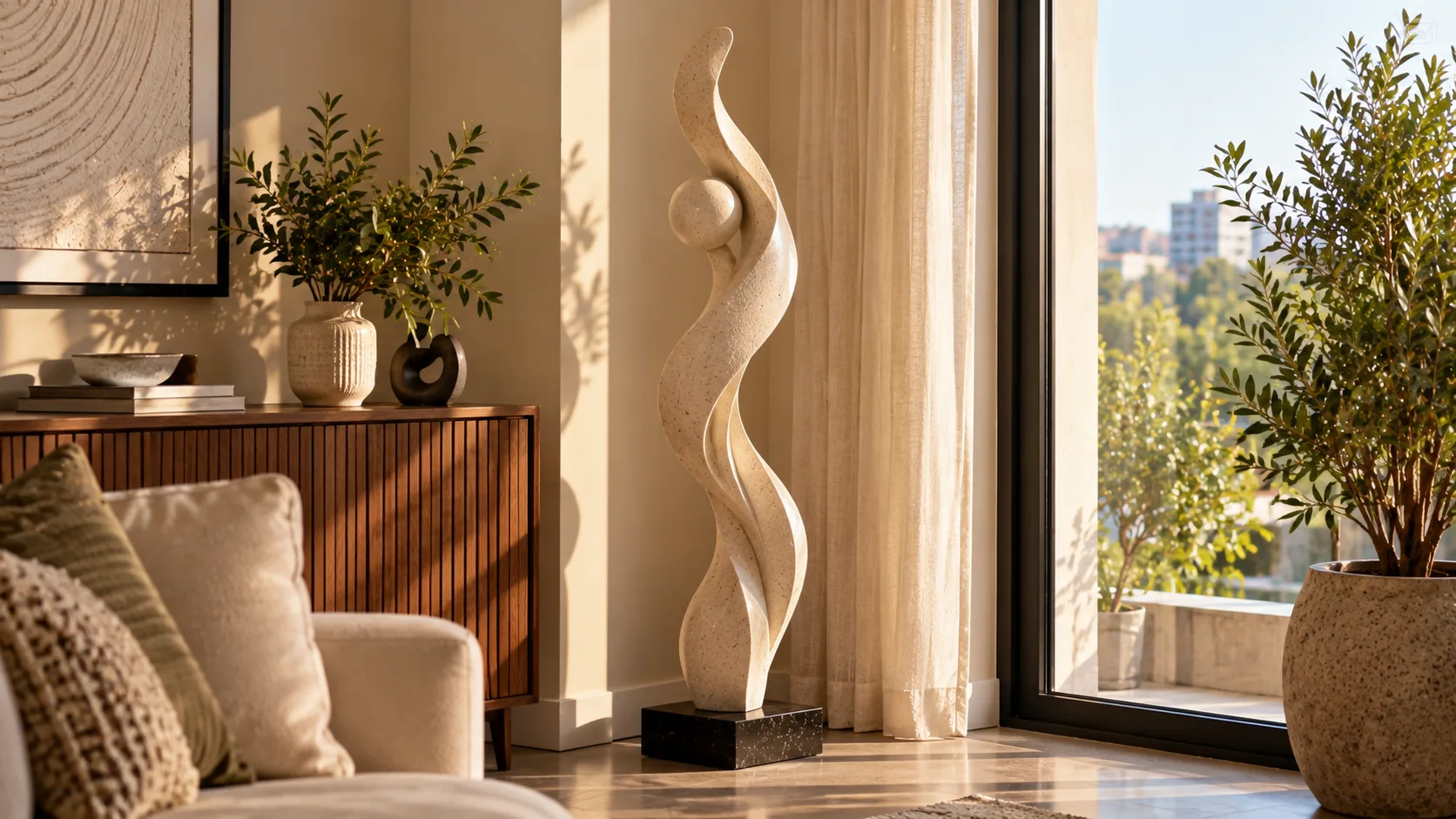
An entryway console is a natural place for a figurative sculpture, decorative bust, or distinctive handmade object. It creates a focal point near the entrance while allowing smaller everyday items to remain organized.
Start with the background. A dark sculpture can stand out against a light wall, while a pale ceramic piece may be more visible against a darker or textured surface. A mirror or framed artwork can complete the arrangement, provided the display does not become overcrowded.
Keep practical space available for keys, mail, or a small catchall tray. On a narrow console, one well-chosen piece often looks more intentional than several unrelated ornaments.
If the console sits in a busy hallway, choose a sculpture with a stable base and enough clearance from the edge to prevent accidental knocks.
3. Fill an Empty Corner With a Floor Sculpture
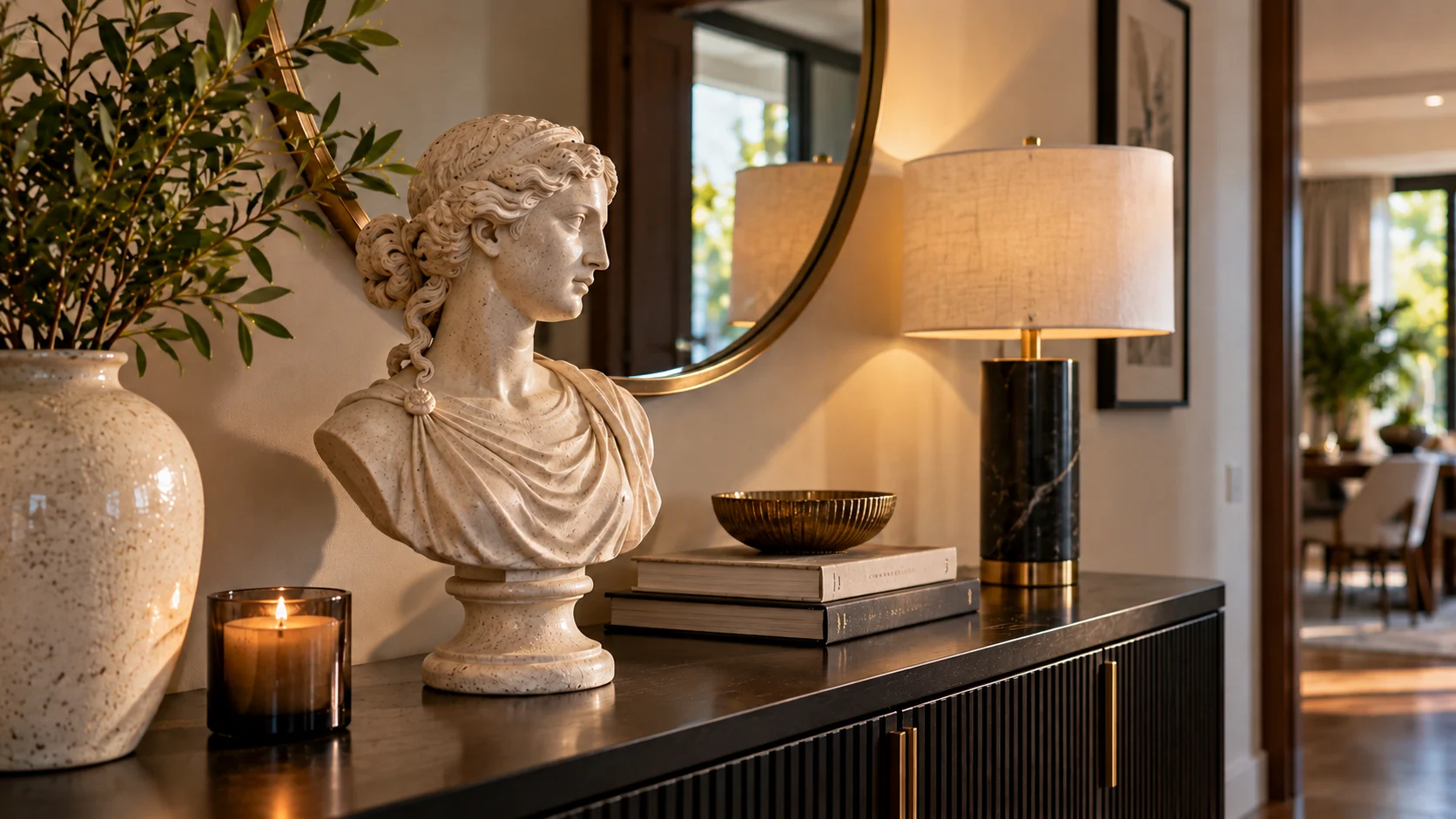
A tall floor sculpture can make an empty corner feel like a deliberate part of the room rather than unused space. This works particularly well beside a reading chair, near a wide window, or at the end of a large living room where a small tabletop object might disappear.
Consider the sculpture’s silhouette from several viewpoints. An open, curved form may look elegant against a plain wall, while a solid geometric piece can provide contrast in a room with soft upholstery and rounded furniture.
Lighting also affects the result. Light arriving from one side creates shadows that reveal the sculpture’s shape and texture. However, prolonged direct sunlight can fade some painted or dyed finishes, so check the material and care instructions before positioning a piece beside a sunny window.
Keep the sculpture outside the main walking route, particularly in narrow rooms. Tall or top-heavy pieces should be stable and secured appropriately for their surroundings.
4. Add Sculptural Objects to a Bookshelf
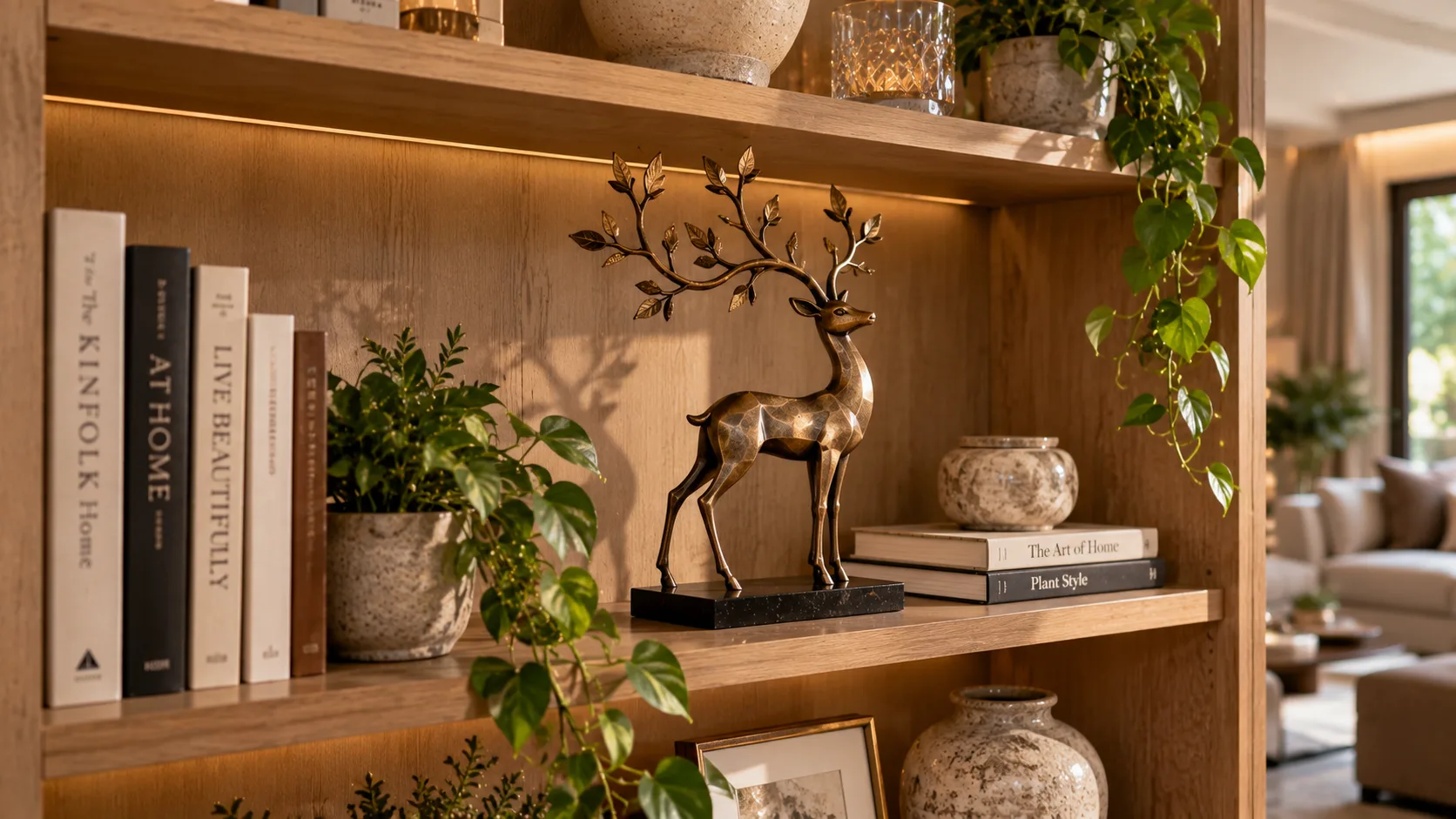
A sculpture breaks up the repeated lines of books and gives an open shelf a more collected appearance. Animal figures, abstract forms, carved wooden objects, and small ceramic pieces can all work, depending on the style of the room.
Instead of placing a decorative object between every group of books, create a few intentional arrangements. Position one sculpture beside a horizontal stack of books, leave another shelf relatively open, and vary the heights of the objects across the bookcase.
Small pieces can benefit from a low, stable riser when additional height helps them stand out. Make sure the object remains secure and does not overhang the shelf.
For a calm appearance, repeat a limited palette of materials or colors. Wood, cream ceramic, black metal, and natural stone can complement books and furniture without competing with every other detail.
Styling tip: Step back and look at the bookshelf as a whole. The display should feel balanced across the shelves, rather than placing all the largest or darkest objects in one area.
If you are styling a shelf in your bedroom, explore our bedroom bookshelf ideas for space-saving layouts and placement tips.
5. Use Wall Relief Sculpture in a Narrow Hallway
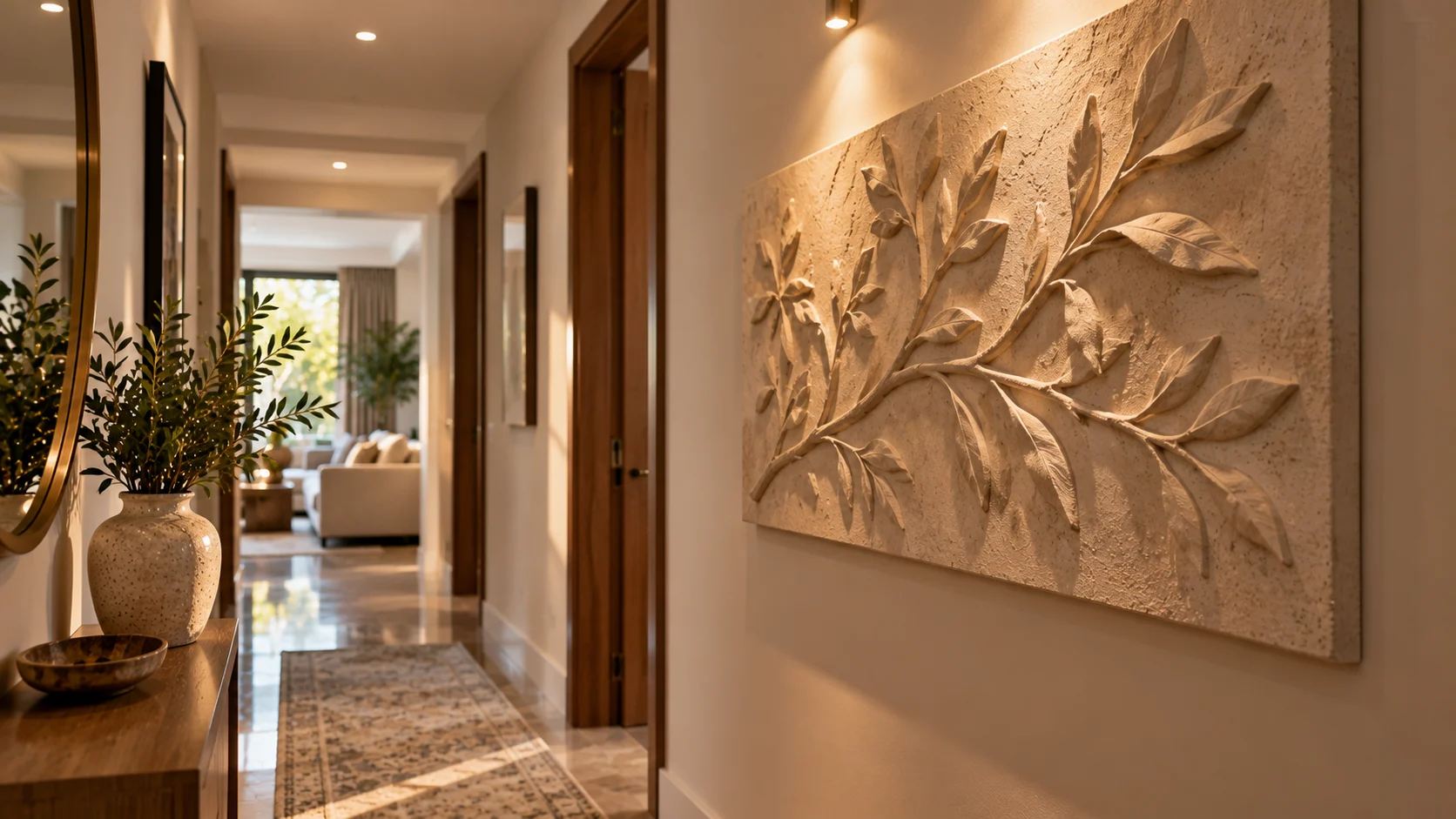
A wall relief adds three-dimensional interest without occupying the floor or a console table. Because it projects from the wall, it can be particularly useful in a narrow hallway, stair landing, or small entrance.
Choose a relief whose depth and overall size suit the available wall space. A textured or carved surface creates stronger shadows when light comes from the side, while a flatter, simpler design suits a more understated interior.
Before hanging a heavy piece, check its weight and use mounting hardware appropriate for both the wall type and the object. Do not assume that adhesive strips are suitable simply because a piece appears small; follow the hardware manufacturer’s load limits and installation instructions.
Keep the surrounding wall relatively uncluttered so the texture and shape remain visible. One larger relief may make a stronger statement than several small pieces crowded together.
6. Create a Balanced Sculpture Group on a Sideboard
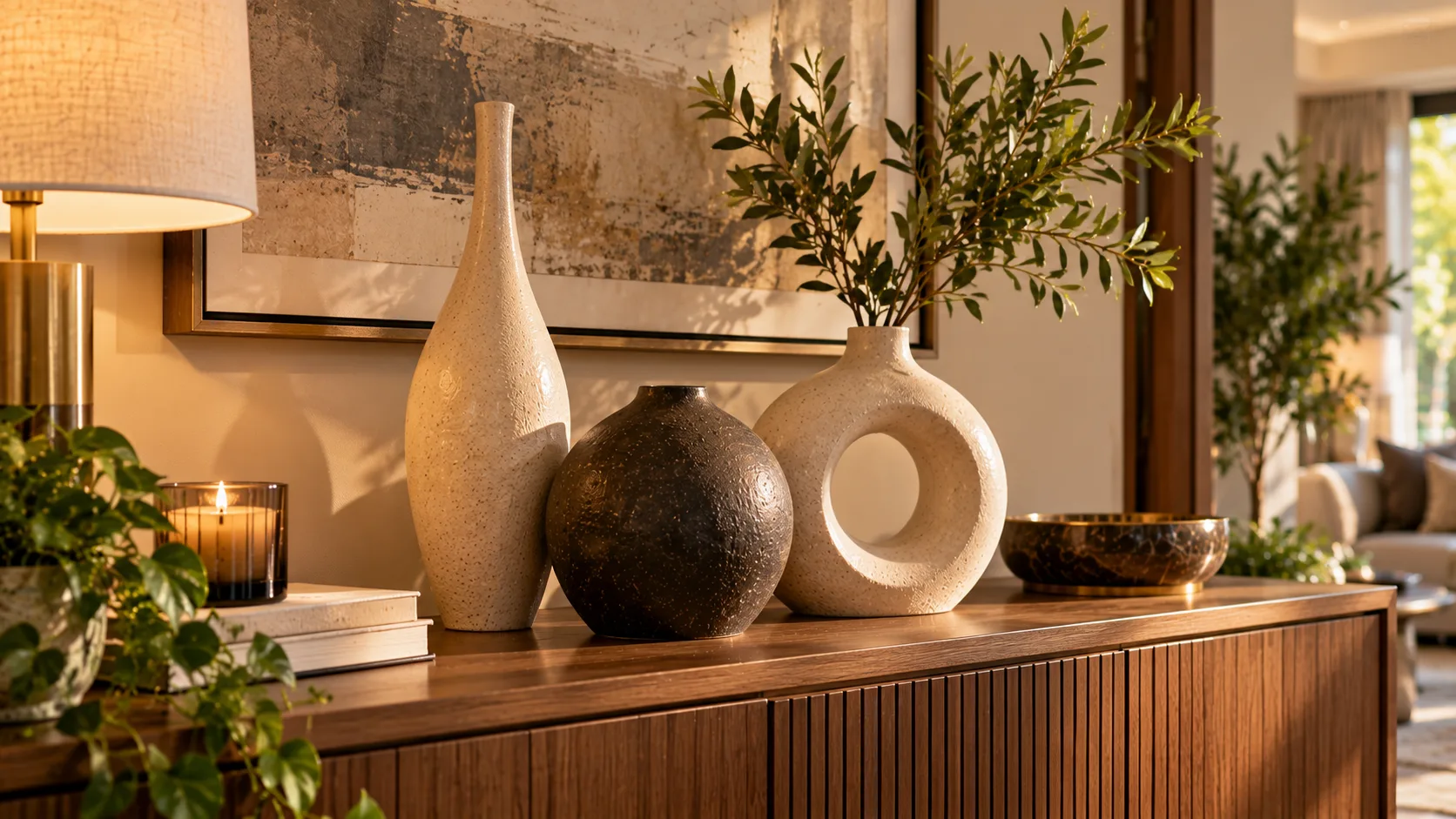
A sideboard or long console provides space to arrange a small collection of sculptures. This approach works well when individual objects are modest in size but share a common material, color, theme, or visual character.
Begin with the largest object, then introduce one or two smaller pieces. Vary their heights and forms so the arrangement has movement without looking random. A lamp or a simple vase can provide additional height, provided the display still feels cohesive.
For example, a rounded ceramic object, a smaller dark sculpture, and a simple framed artwork can create contrast through shape and finish rather than relying on multiple bright colors.
Leave visible gaps between the objects. If every part of the surface is covered, the individual forms lose their impact.
A mantel can also be used for sculptural decor, but account for the heat produced by a working fireplace. Check whether the materials and finishes are suitable for that location.
7. Bring a Sculptural Accent Into the Bedroom
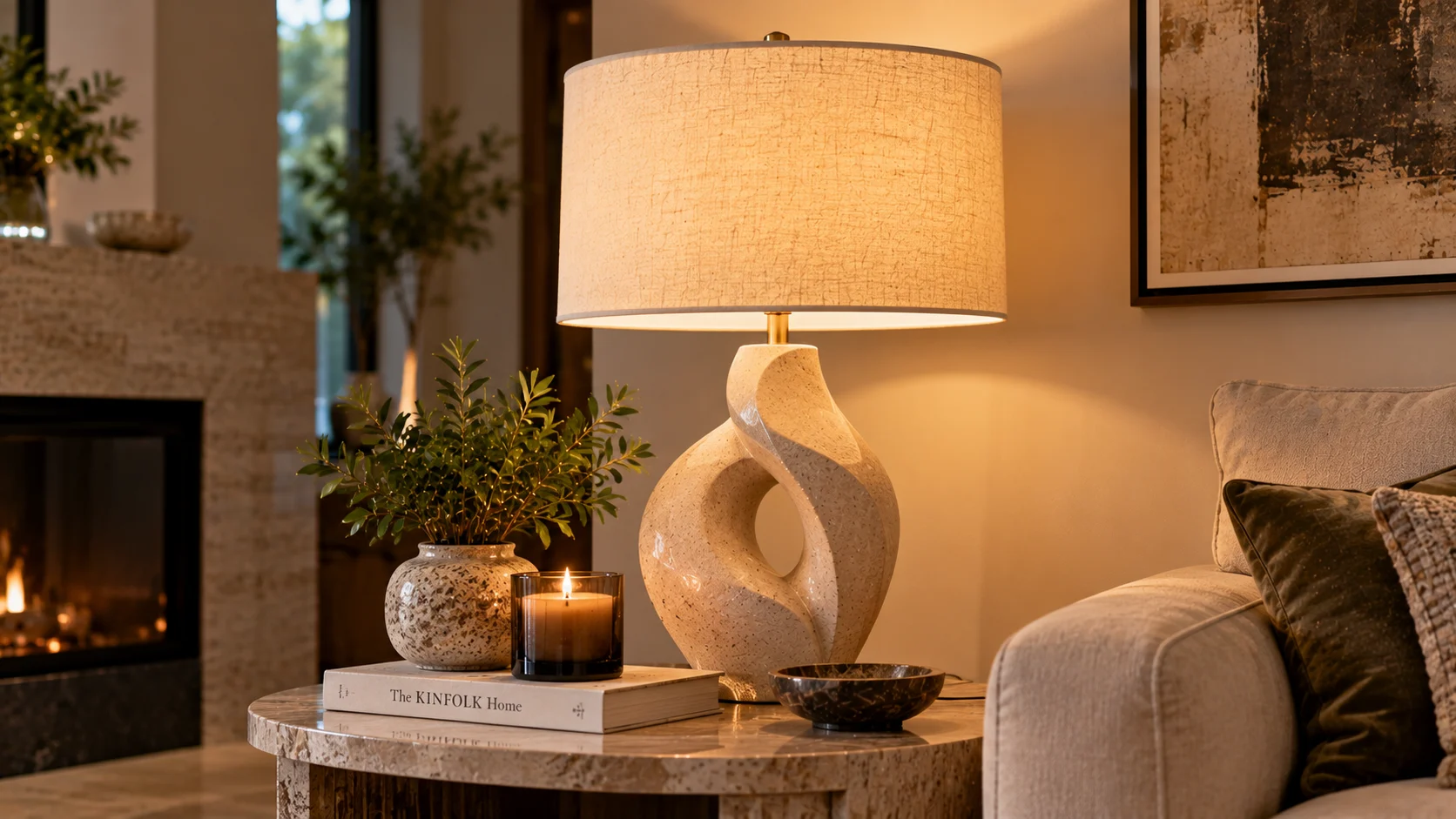
Sculptural decor can work in a bedroom without making the space feel formal or crowded. A small abstract object on a dresser, a carved wooden piece on a shelf, or a simple ceramic form on a bedside table can introduce texture while preserving a restful atmosphere.
Choose the object according to the furniture and the amount of available space. A bedside table that already holds a lamp, alarm clock, and books may not have room for another large decorative item. A dresser or open shelf often offers more flexibility.
Natural wood, matte ceramic, and softly textured finishes can suit a quiet bedroom palette. If the room already contains patterned bedding, a decorative rug, or prominent wall art, a relatively simple sculpture can provide balance.
Keep fragile or heavy pieces away from places where they might be knocked over during daily use. In a small bedroom, a single well-positioned object can be enough.
8. Choose Functional Decor With Sculptural Form
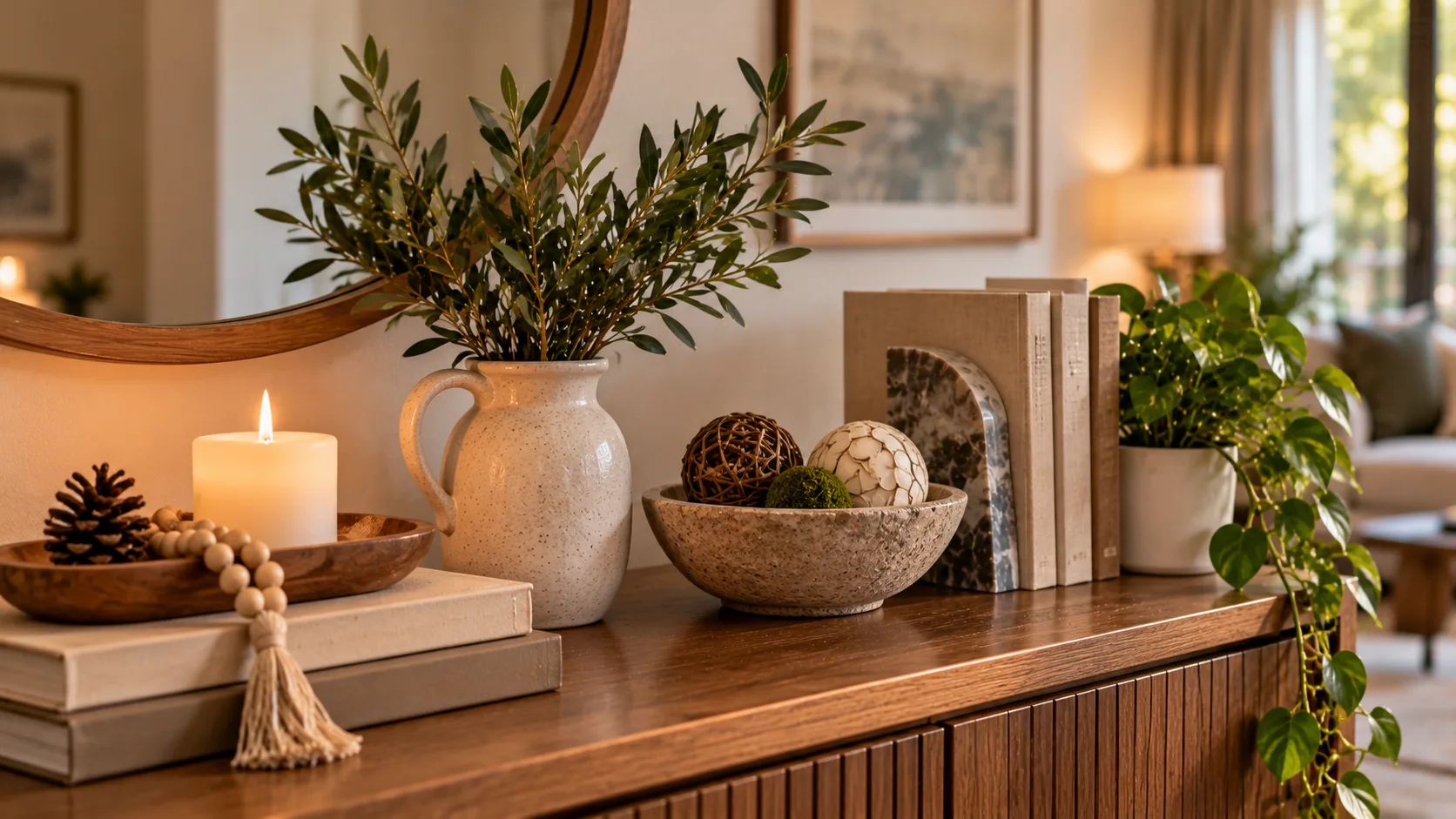
Decorative objects do not always need to be purely ornamental. A sculptural table lamp, a distinctive ceramic vessel, or a carved wooden bowl can introduce an artistic shape while serving a practical purpose.
This is particularly useful in smaller homes, where every surface needs to remain functional. A lamp with an interesting base, for example, can provide illumination and visual interest without requiring a separate sculpture.
Look for a shape that complements the surrounding furniture rather than competing with it. Rounded forms can soften a room dominated by straight edges, while angular or geometric designs can add definition to a softer arrangement.
Check stability, ease of cleaning, and practical requirements before choosing a functional piece. For lamps, follow the manufacturer’s electrical and bulb-safety instructions and keep cords clear of walking paths.
How to Choose the Right Sculpture for Your Home
Consider the material
The material affects the appearance, weight, maintenance, and durability of a sculpture.
- Ceramic: Offers glazed or matte finishes and works well on shelves, consoles, and side tables. Ceramic pieces can chip or break if dropped.
- Wood: Adds warmth and natural texture, making it a good fit for relaxed, rustic, Scandinavian, and contemporary interiors.
- Metal: Can introduce a crisp, reflective, or industrial accent. Polished finishes may need more frequent cleaning to remove fingerprints.
- Resin: Often offers lighter-weight alternatives to stone or metal and can reproduce a range of shapes and finishes. Suitability for sunlight and heat depends on the product.
- Stone: Provides a substantial, natural appearance but can be heavy. Check the supporting surface and the object’s stability before placing it on a shelf or table.
Choose material for both its appearance and the conditions in which the object will be displayed.
Match the size to the surface
A sculpture should be large enough to be noticed but not so large that it overwhelms the furniture around it. A tiny figure on a long sideboard may disappear, while an oversized object on a small coffee table can leave little usable space.
Measure the surface before buying. If possible, make a simple cardboard outline of the intended footprint and height, then place it in position to judge the proportions.
View the proposed location from where people will normally see the sculpture. A coffee-table piece should work from a seated position, while an entryway object should look balanced when viewed from the doorway.
Pay attention to lighting and background
Light brings out the curves, edges, and texture of a three-dimensional object. Side lighting is often useful because it produces visible highlights and shadows.
Background contrast matters too. A dark object may disappear against dark shelving, while a pale sculpture may lose its outline against a cream wall. Adjust the position, background, or lighting so the form remains clearly visible.
Avoid prolonged direct sunlight on finishes that may fade or deteriorate. The American Museum of Natural History’s preventive conservation guidance on light exposure explains how light can damage collection materials over time.
Common Mistakes to Avoid
Crowding several objects together: Leave enough negative space for each silhouette to remain visible.
Ignoring scale: Measure the furniture surface and consider the viewing distance before choosing a piece.
Choosing a sculpture only because it looks good in a product photo: Check its actual dimensions, weight, finish, and stability.
Blocking a walkway: Avoid placing floor sculptures or protruding decorative objects where people regularly pass.
Mixing too many competing styles: Different materials can work together, but a shared color, shape, or theme helps connect the arrangement.
Ignoring safety and maintenance: Secure unstable pieces where appropriate, dust them gently, and follow the manufacturer’s care instructions. In earthquake-prone areas, the Earthquake Country Alliance’s guidance on securing objects offers additional precautions for reducing the risk of falling household items.
Frequently Asked Questions
What is the best sculpture for a living room?
The best sculpture depends on the available space and the room’s style. A low abstract piece can work on a coffee table, a figurative object can suit an entryway console, and a tall sculpture can anchor an otherwise empty corner. Choose a piece that complements the furniture without obstructing everyday use.
Where should I place a sculpture at home?
Useful locations include coffee tables, consoles, bookshelves, sideboards, bedroom dressers, and suitable floor spaces. Consider visibility, lighting, stability, and walking clearance before deciding where it belongs.
How many sculptures should I display in one room?
There is no fixed number. Start with one focal piece and add smaller objects only where there is enough space to keep the arrangement clear. The size of the room, the furniture, and the sculptures themselves matter more than following a strict count.
How do I make a small sculpture stand out?
Place it against a contrasting background, give it space around its outline, and consider a stable riser if additional height helps it become visible. Grouping a small sculpture with a few related objects can also make the arrangement feel intentional.
Can sculptures work in a minimalist home?
Yes. A minimalist interior can benefit from a single sculptural object because its form becomes more noticeable when the surrounding decor is restrained. Choose a simple silhouette and let its material, shape, or texture provide the visual interest.
Final Thoughts
Sculptures can make a home feel more personal when their placement, scale, and material suit the room. Start with one object and give it enough space to stand out. Consider how it looks from the doorway or sofa, how light falls across its surface, and whether the location remains practical for everyday use.
The aim is not to fill every shelf or empty corner. It is to choose a few meaningful forms that work naturally with the furniture, colors, and character of your home.
Love inspiring interiors, practical design ideas, and beautiful spaces? Follow us on Facebook, Instagram, and Pinterest for more interior inspiration, home styling ideas, and everyday design tips.