
Table of Contents
What Is the Best Furniture for a Living Room?
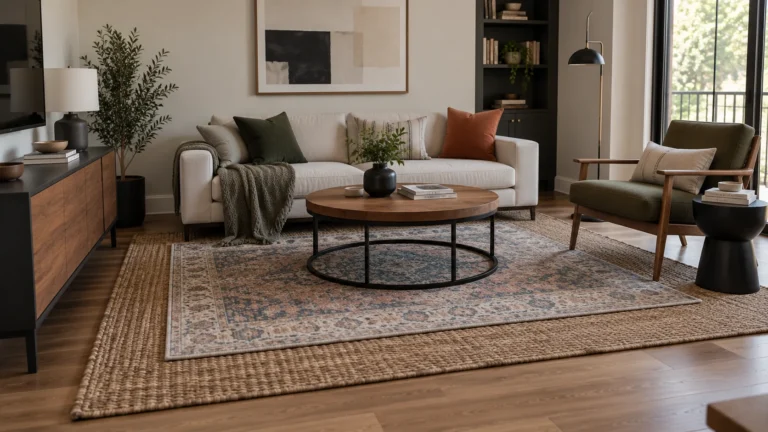
The honest answer is that there is no single piece of furniture that works for every living room, but there is a reliable way to figure out what is the best furniture for a living room like yours. It comes down to matching a short list of essential pieces — seating, a surface for everyday use, storage, and a media or display area — to your room’s size, your household’s habits, and how much upkeep you’re willing to do.
That’s really what this article helps you work out. Instead of pointing you toward a generic furniture set, it breaks down each category of living room furniture on its own, explains what actually matters when you’re choosing it, and flags the mistakes that make a living room feel cramped or disorganized instead of comfortable.
The Furniture Pieces Every Living Room Actually Needs
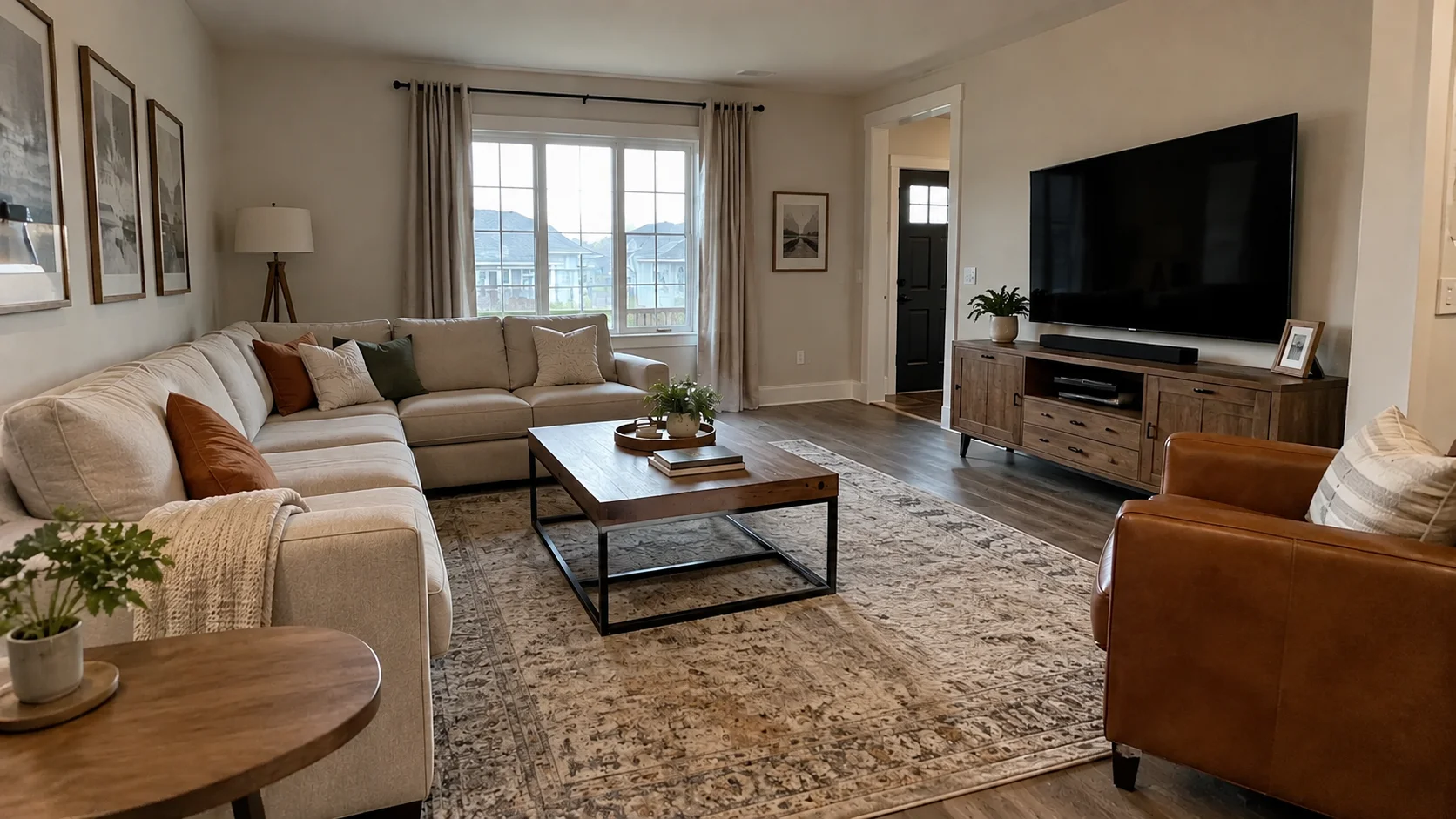
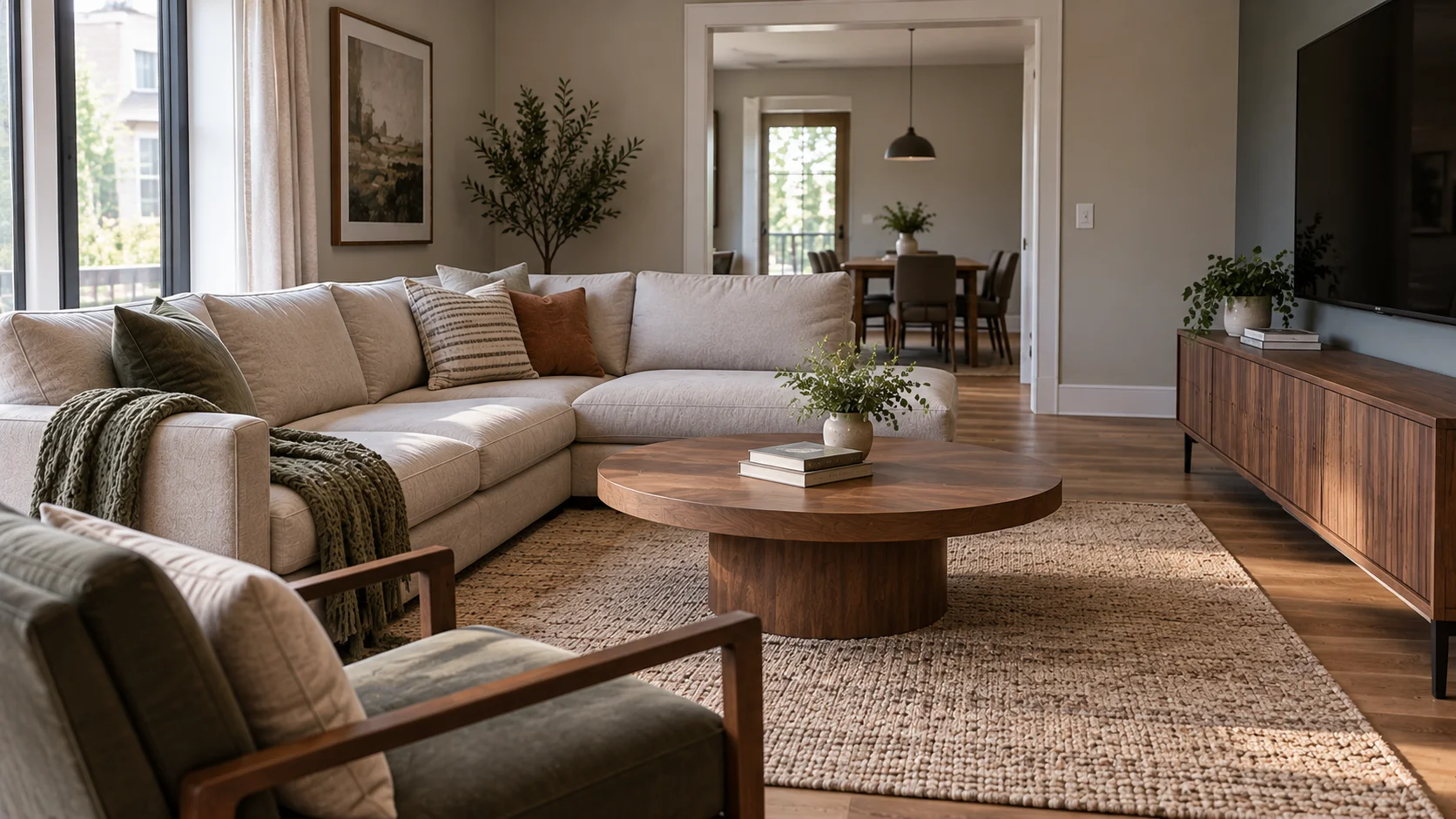
Answering what is the best furniture for a living room starts with knowing which pieces genuinely earn their place in the room and which ones are optional extras. Most living rooms function well with a small core of furniture types, and everything beyond that should be added only if it solves a real problem you have, such as needing more seating for guests or somewhere to hide cables and remotes.
Trying to fill a room with every furniture category available is one of the fastest ways to create clutter rather than comfort. A room with fewer, well-chosen pieces almost always feels more organized and easier to move through than one packed with furniture that has no clear job.
- A main seating piece, such as a sofa or sectional
- A central surface, typically a coffee table
- A media or display unit for the television or decor
- At least one side table within reach of seating
- A storage piece for media, books, or everyday items
How to Choose the Best Sofa for Your Living Room
The sofa is usually the largest and most expensive item in the room, so it makes sense to choose it before anything else and build the rest of the layout around it. Everything from where you place the coffee table to how much walking space remains depends on the sofa’s footprint.
Comfort matters as much as appearance here, since this is the piece your household will use daily. Sitting on a sofa for several minutes in a showroom, or checking cushion fill and seat depth on product listings, tells you far more than photos alone about whether it will suit how you actually relax.
Sofa Size and Shape
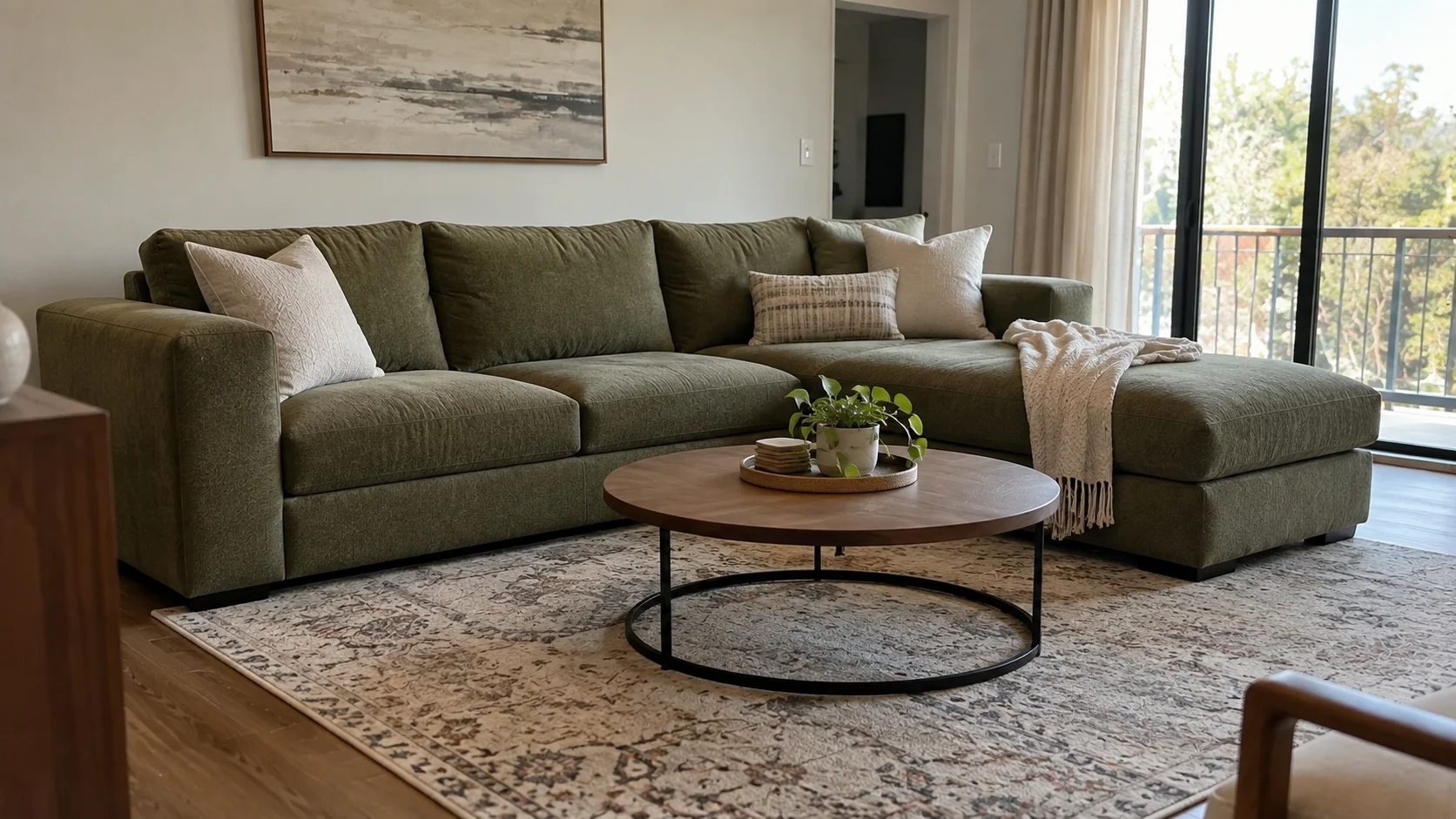
Measure your available wall space and the width of doorways or hallways the sofa needs to pass through before buying anything. A sectional can maximize seating in an open-plan room, while a smaller sofa or loveseat paired with an accent chair often works better in a room with limited square footage or multiple doorways.
Shape matters for traffic flow as well as seating capacity. An L-shaped sectional tucked into a corner frees up the center of the room, while a straight sofa placed against a single wall leaves more open floor space for movement in narrower rooms.
Sofa Material and Upholstery
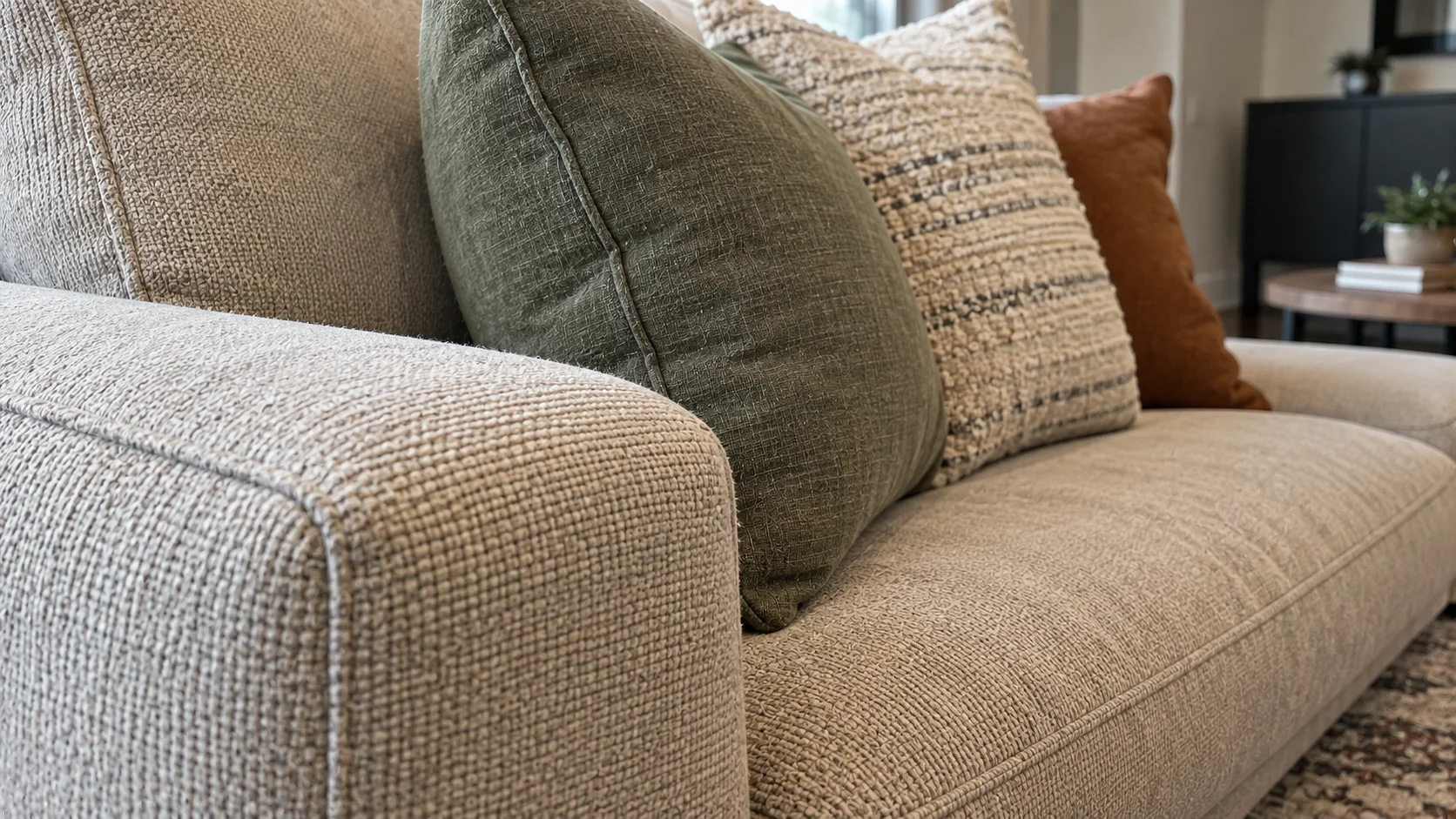
Upholstery choice affects both how the sofa looks and how much maintenance it needs. Performance fabrics and leather resist stains and wear better than delicate weaves, which makes them a practical choice for households with children, pets, or frequent guests.
Color and texture influence the whole room’s feel more than most people expect. A neutral upholstery color keeps the sofa flexible if you change your decor later, while patterned or bold fabric works better as an accent piece than as the largest item in the room.
Choosing a Coffee Table That Fits Your Space
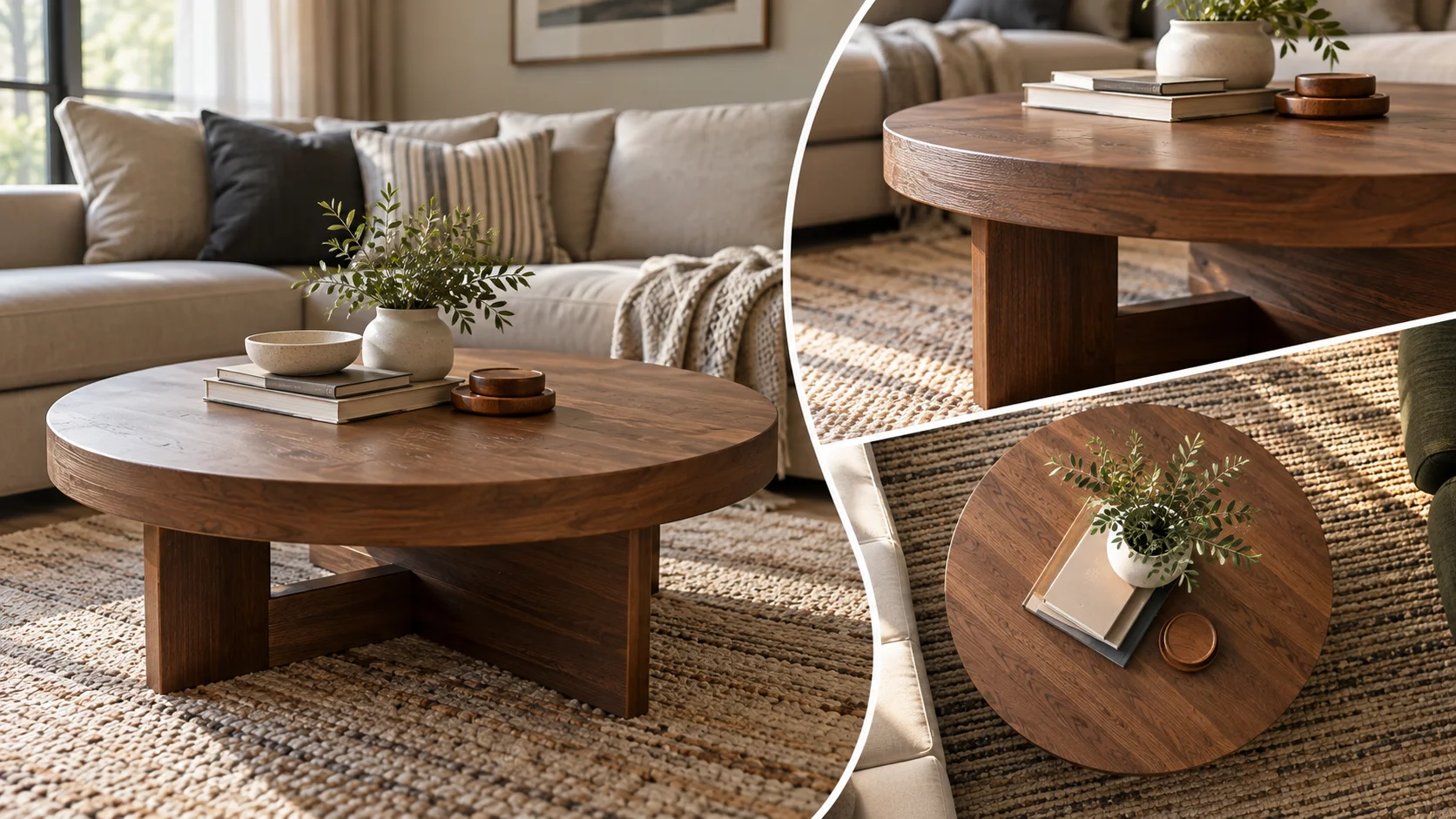
A coffee table needs to be proportional to the seating around it, not chosen on its own. As a general starting point, the tabletop should sit roughly at the same height as your sofa cushions or slightly lower, and there should be enough space around it to walk past comfortably.
Shape can solve specific problems. An oval or round coffee table softens a small room’s corners and reduces bumped shins in tight walkways, while a rectangular table suits a longer sofa or sectional and gives more surface area for everyday use, such as trays, books, or remotes.
TV Consoles and Media Storage
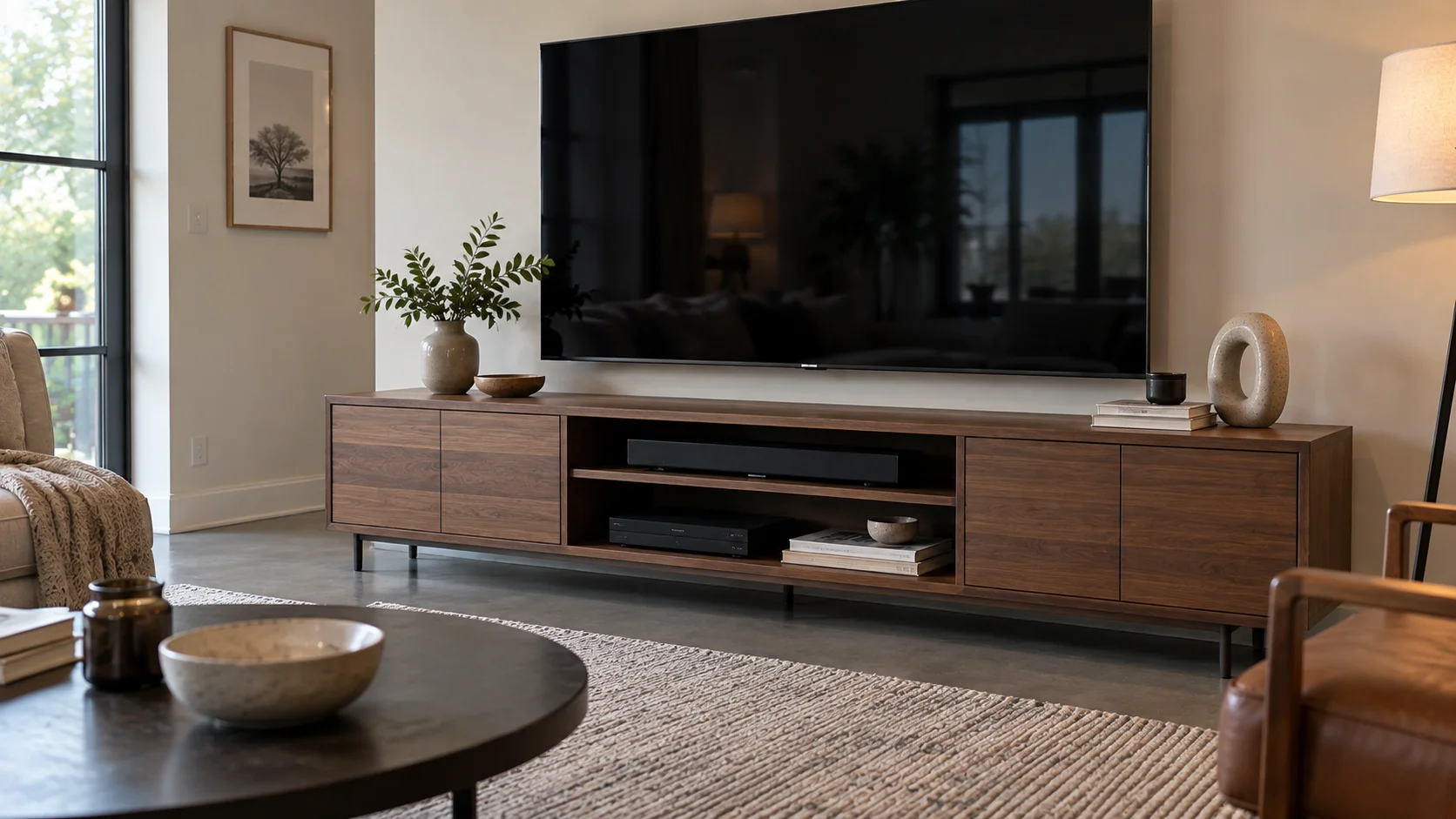
A media console does more than hold a television; it’s one of the few living room pieces that also manages cables, remotes, and electronics that would otherwise sit in plain sight. Choosing one with closed storage, rather than only open shelving, keeps that clutter out of view.
Size the console to the wall and the seating distance, not just the television. A unit that’s too wide for the wall throws off the room’s proportions, while one that’s too narrow for the screen looks unbalanced and can leave the TV unsupported at the edges.
Tall media units and freestanding TVs are also a tip-over risk, particularly in homes with young children, so anchoring straps or wall brackets are worth using on taller consoles and bookshelves. The U.S. Consumer Product Safety Commission recommends securing tall or top-heavy furniture to the wall as a standard safety precaution.
Side Tables, Accent Chairs, and Extra Seating
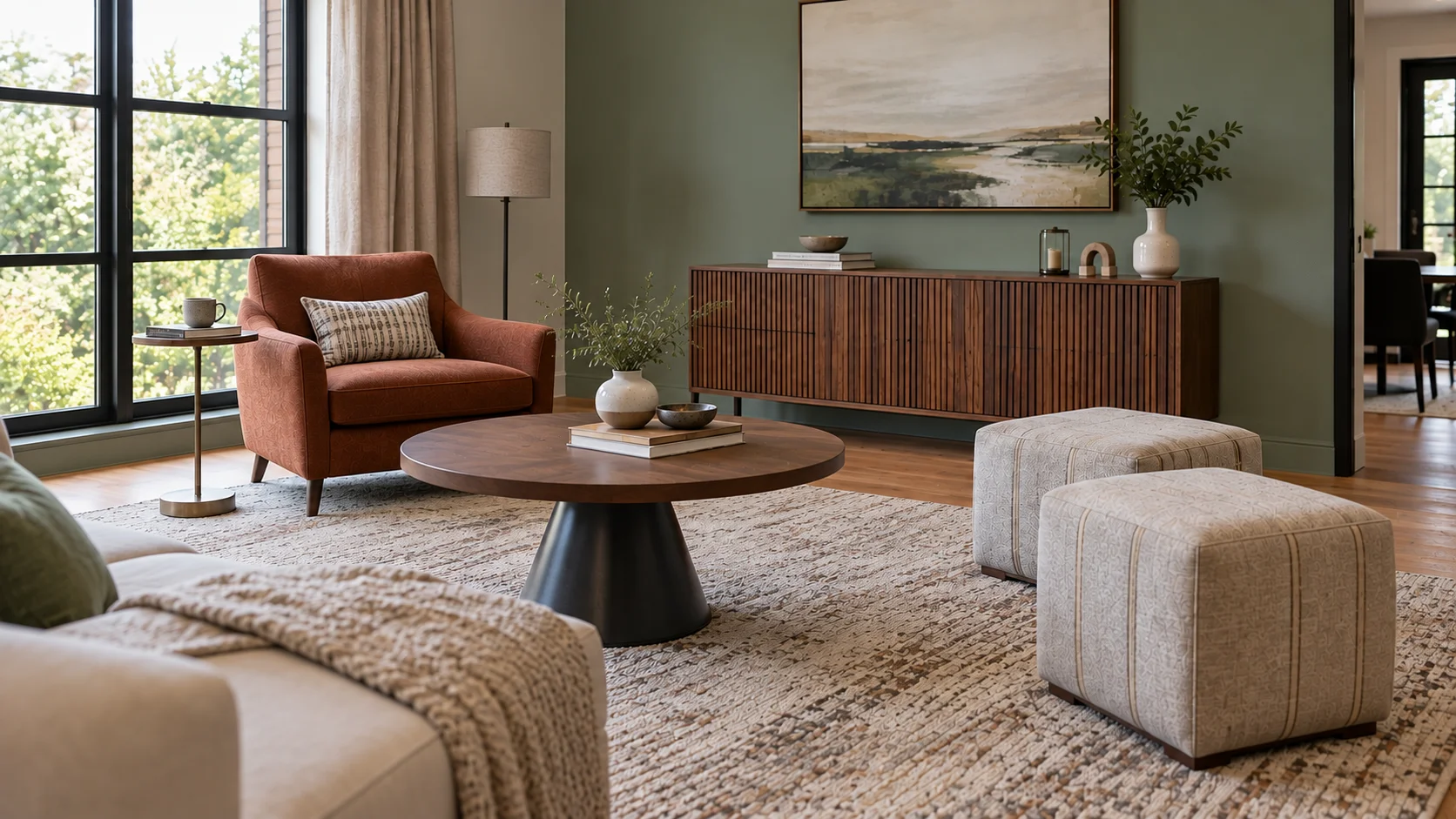
Side tables and accent seating fill in the gaps a sofa and coffee table leave behind, giving people a place to set down a drink or an extra spot to sit without crowding the main seating area. These pieces work best when they’re added to solve a specific need rather than to fill empty floor space.
Extra seating is especially useful for households that regularly host guests, since a single sofa rarely seats everyone comfortably. An accent chair or bench can double as additional seating during gatherings and blend into the room as a decorative piece the rest of the time.
- A side table within arm’s reach of each main seat
- An accent chair for extra seating or a reading nook
- A storage ottoman that doubles as a footrest
- A bench for flexible or overflow seating
- A console table behind a sofa that floats in the room
Storage Furniture for a Clutter-Free Living Room
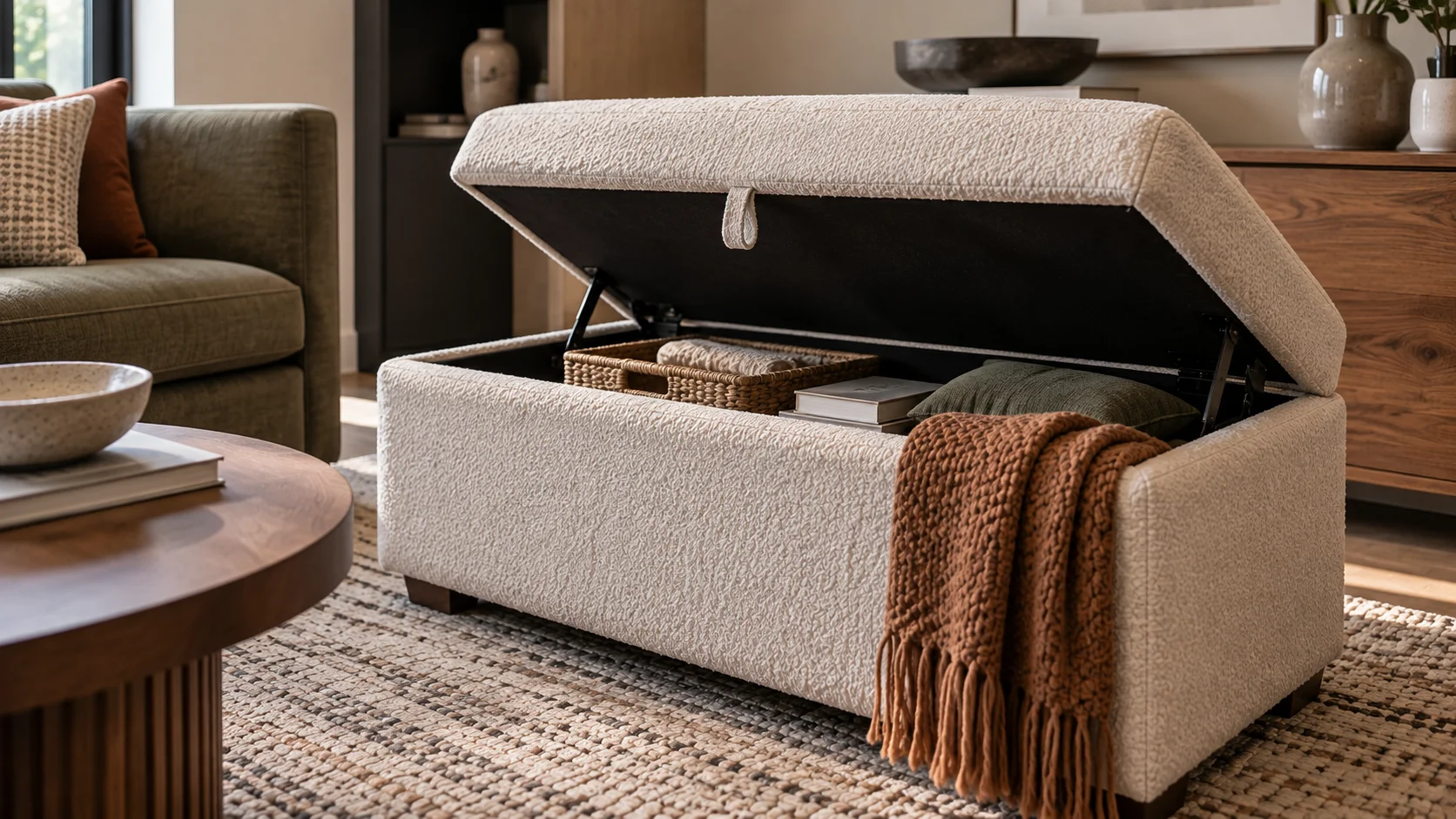
Storage is often the piece people forget to plan for, which is why living rooms end up with baskets of remotes, chargers, and mail with nowhere designated to go. Building in storage from the start, rather than adding it later, keeps the room easier to maintain long term.
The right amount of storage depends on what actually needs a home. Households with board games, extensive media collections, or young children generally need more closed storage than a household that mainly uses the room for conversation and reading.
- A bookshelf or open shelving unit for books and decor
- A media cabinet with doors for electronics and cables
- A storage ottoman for blankets or small items
- A console table with drawers for remotes and odds and ends
- A trunk or chest that doubles as a coffee table
Best Furniture for a Small Living Room
Furnishing a small living room comes down to choosing pieces that do more than one job and avoiding anything oversized just because it looks impressive in a showroom. Every item should either provide seating, storage, or a surface, and ideally more than one of those at once.
Vertical space is one of the most underused resources in small rooms. Wall-mounted shelving and tall, narrow storage pieces free up floor space that a low, wide unit would otherwise take up, which makes the room feel less crowded even with the same amount of storage.
- A loveseat or apartment-size sofa instead of a full sectional
- Nesting tables that tuck away when not needed
- Wall-mounted shelves instead of freestanding bookcases
- A drop-leaf or fold-down table for occasional extra surface space
- A storage ottoman that replaces both a coffee table and a chest
Matching Furniture Style to Your Home
Style is often where people get stuck when working out what is the best furniture for a living room, but it should follow the rest of your home rather than being chosen in isolation, since a living room that clashes with an adjoining kitchen or hallway tends to feel disjointed. Traditional furniture with detailed woodwork generally reads well in a more classic home, while cleaner lines and simpler silhouettes suit contemporary spaces.
Mixing styles isn’t a mistake as long as there’s some repeated element tying the pieces together, whether that’s a consistent wood tone, a repeated color, or a shared level of formality. A single mismatched piece with no connection to anything else in the room is usually what makes a space feel unplanned rather than intentionally eclectic.
Budget Considerations When Choosing Living Room Furniture
Furnishing a living room well doesn’t require replacing everything at once, and starting with what you already own is often the most cost-effective first step. Rearranging existing pieces or reupholstering a sofa you already like can solve more problems than buying new furniture outright.
Spreading purchases across different budget levels lets you prioritize the pieces that matter most, such as a comfortable sofa, while saving on items that see less daily use. A higher-quality investment piece paired with a few budget-friendly accents usually looks and functions better than a full set purchased at the lowest possible price.
- No-cost: rearrange current furniture to improve flow
- Low-cost: add secondhand or thrifted side tables and accent pieces
- Moderate: refresh with a new coffee table or accent chair
- Higher-investment: prioritize a durable, well-made sofa
- Mixed approach: pair one investment piece with budget accents
Common Mistakes When Choosing Living Room Furniture
Buying furniture before measuring the room is one of the most common and costly mistakes, since a sofa or sectional that looks reasonably sized in a store can overwhelm a smaller space or leave awkward gaps in a larger one. Measuring twice, including doorway widths for delivery, avoids this entirely.
Another frequent mistake is choosing every piece to match perfectly, which can make a room feel more like a showroom display than a lived-in space. Slight variation in wood tone, fabric, or style across pieces usually reads as more comfortable and personal than an exactly matched set.
How to Arrange Furniture for the Best Layout
A living room layout works best when it’s built around a clear focal point, whether that’s a fireplace, a television, or a window with a view, with seating arranged to face or angle toward it. This creates a natural conversation area rather than furniture scattered without a clear purpose.
Leaving enough walking space between pieces matters as much as the furniture itself. As a rough guide, keeping at least a couple of feet of clearance around major pathways prevents a room from feeling obstructed, even when it’s furnished with everything it needs.
Living Room Furniture Sets vs. Buying Pieces Individually
A matching set can be the faster route to a finished-looking room, since the sofa, loveseat, and chair are already designed to coordinate in fabric, wood tone, and proportion. This works well for a first apartment or a full room refresh, where consistency matters more than sourcing each piece separately.
Buying pieces individually takes more time but gives you more control over comfort and fit, since you can choose the sofa that suits your body and household while sourcing the coffee table, storage, and accent seating separately to match your room’s exact size. For most homes, a hybrid approach — a matched sofa and loveseat with individually chosen accent pieces — balances convenience with a room that doesn’t look pulled straight from a catalog.
Bringing It All Together
There isn’t a universal answer to what is the best furniture for a living room, because the right combination depends on your room’s size, how your household actually uses the space, and how much maintenance you’re willing to take on. What stays consistent is the process: start with seating, add a proportional coffee table, plan for storage before clutter builds up, and only add extra pieces that solve a real need.
Working through the categories in this order — sofa, coffee table, media storage, seating extras, and storage — gives you a living room that functions well before it’s judged on looks alone. Once those pieces are in place, style, color, and decor are far easier to adjust than the underlying furniture choices.
FAQ
The sofa. It’s the largest, most expensive, and most-used piece, and it determines the size and placement of nearly everything else in the room.
Multi-purpose, space-efficient pieces: a loveseat or apartment-size sofa, nesting tables, wall-mounted shelving, and a storage ottoman that can double as a coffee table.
It depends on the room. Sectionals suit open-plan or larger rooms and maximize seating; straight sofas work better in narrower rooms where floor space needs to stay open.
Performance fabrics and leather are generally more stain- and wear-resistant than delicate natural weaves, making them easier to maintain in busy households.
Not necessarily. A fully matched set can look finished quickly, but slight variation in wood tone or fabric across pieces, tied together by one repeated color or material, often feels more lived-in.
There’s no fixed amount — prioritize the sofa as your highest-quality purchase, and use lower-cost or secondhand pieces for side tables and accents you’ll use less.
One built around a clear focal point (a fireplace, TV, or window) with seating angled toward it, and enough clearance left in major walking paths.
A set is faster and guarantees a coordinated look; individual pieces take more effort but let you match comfort and size to your exact space. Many homes do well with a hybrid of both.
Love inspiring interiors, practical design ideas, and beautiful spaces? Follow us on Facebook, Instagram, and Pinterest for more interior inspiration, home styling ideas, and everyday design tips.