
Table of Contents
A bedroom bookshelf solves a problem most other rooms don’t have to deal with: books need to be close enough to reach before you turn off the light, but a bedroom also needs to stay calm enough to fall asleep in. That balance is why so many people end up with a stack of paperbacks on the nightstand instead of a proper shelf — there’s rarely an obvious spot that does both jobs well.
This article walks through the bedroom bookshelf styles that actually work in real rooms, from floating shelves and corner units to headboard and under-bed storage, along with the placement and sizing decisions that determine whether a bookshelf feels like part of the room or like clutter shoved against a wall.
What to Consider Before Choosing a Bedroom Bookshelf
Before choosing a bedroom bookshelf, it helps to count and sort what you’re actually storing. A collection of mass-market paperbacks needs a shallower, more closely spaced shelf than a mix of hardcovers, oversized art books, and magazines — buying a single standard-depth bookcase without checking this first is one of the most common reasons a bedroom bookshelf ends up looking half-empty or overcrowded.
Room size and layout matter just as much as the books themselves. A small bedroom bookshelf works best when it follows the shape of the room rather than fighting it — using a corner, a recessed wall, or vertical space above furniture instead of eating into floor space needed for walking around the bed. Deciding this early prevents buying a bookshelf that has to be returned or squeezed in somewhere it was never meant to go.
Floating Bedroom Bookshelf Ideas for Small Rooms
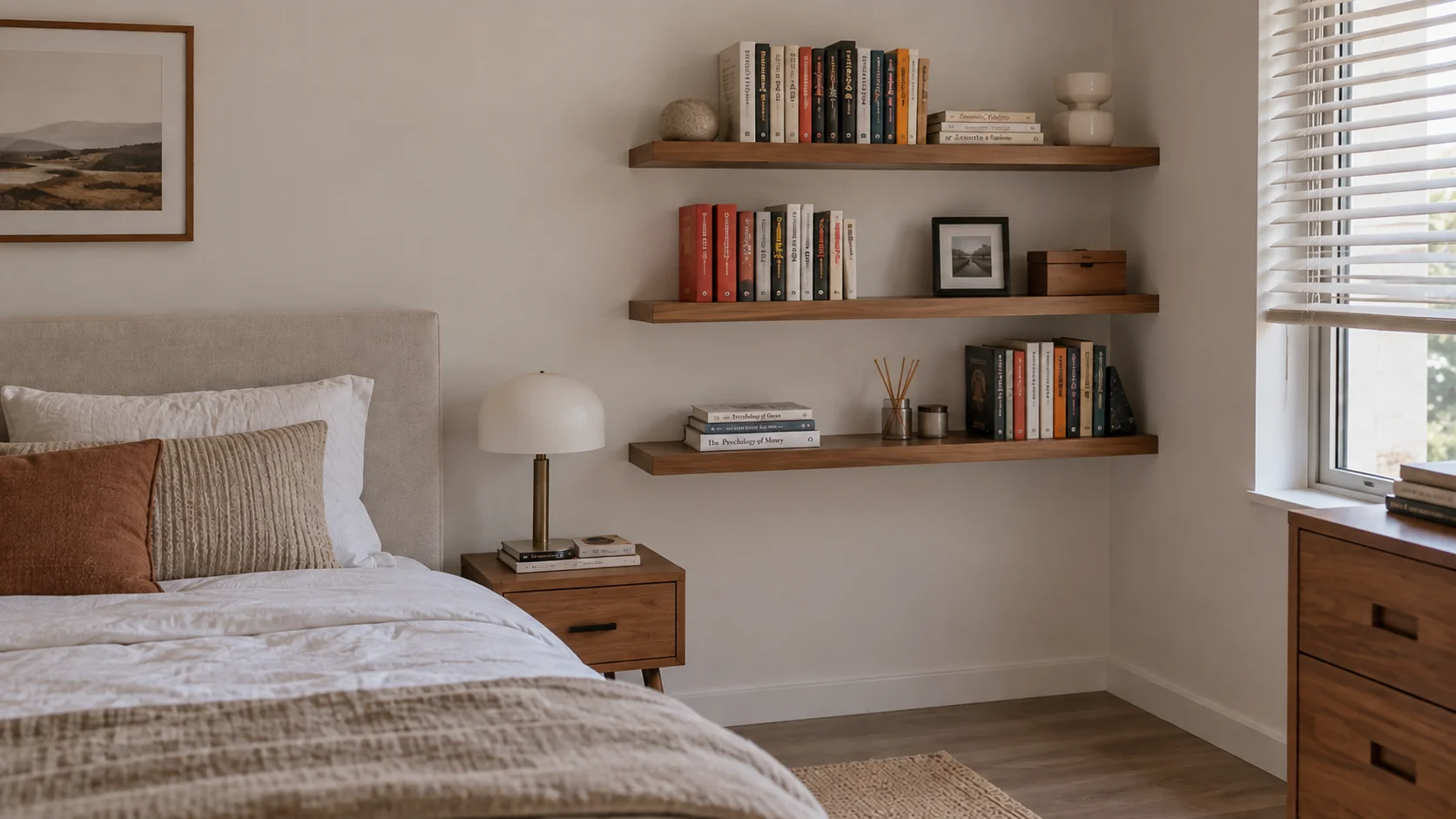
Floating shelves are one of the most space-efficient bedroom bookshelf options because they use wall space without adding any floor footprint. Mounted above a desk, beside a bed, or along an empty wall, a few staggered floating shelves can hold a working rotation of books without visually shrinking the room the way a tall, freestanding bookcase can.
They also suit renters and smaller bedrooms particularly well, since most floating shelf brackets can be installed with a handful of screws and removed without major wall damage when it’s time to move. A few practical points make the difference between a floating bedroom bookshelf that looks styled and one that looks unfinished:
- Check the weight rating before loading a shelf with hardcovers, since books are heavier than most people expect
- Stagger shelf heights slightly instead of lining them up perfectly even, which reads as more intentional
- Leave a few inches of empty space at each end rather than filling the shelf edge to edge
- Mount into wall studs where possible, especially for shelves near a bed
- Keep the heaviest books toward the wall-mounted bracket, not hanging off the front edge
Corner Bookshelf Ideas for an Awkward Bedroom Wall
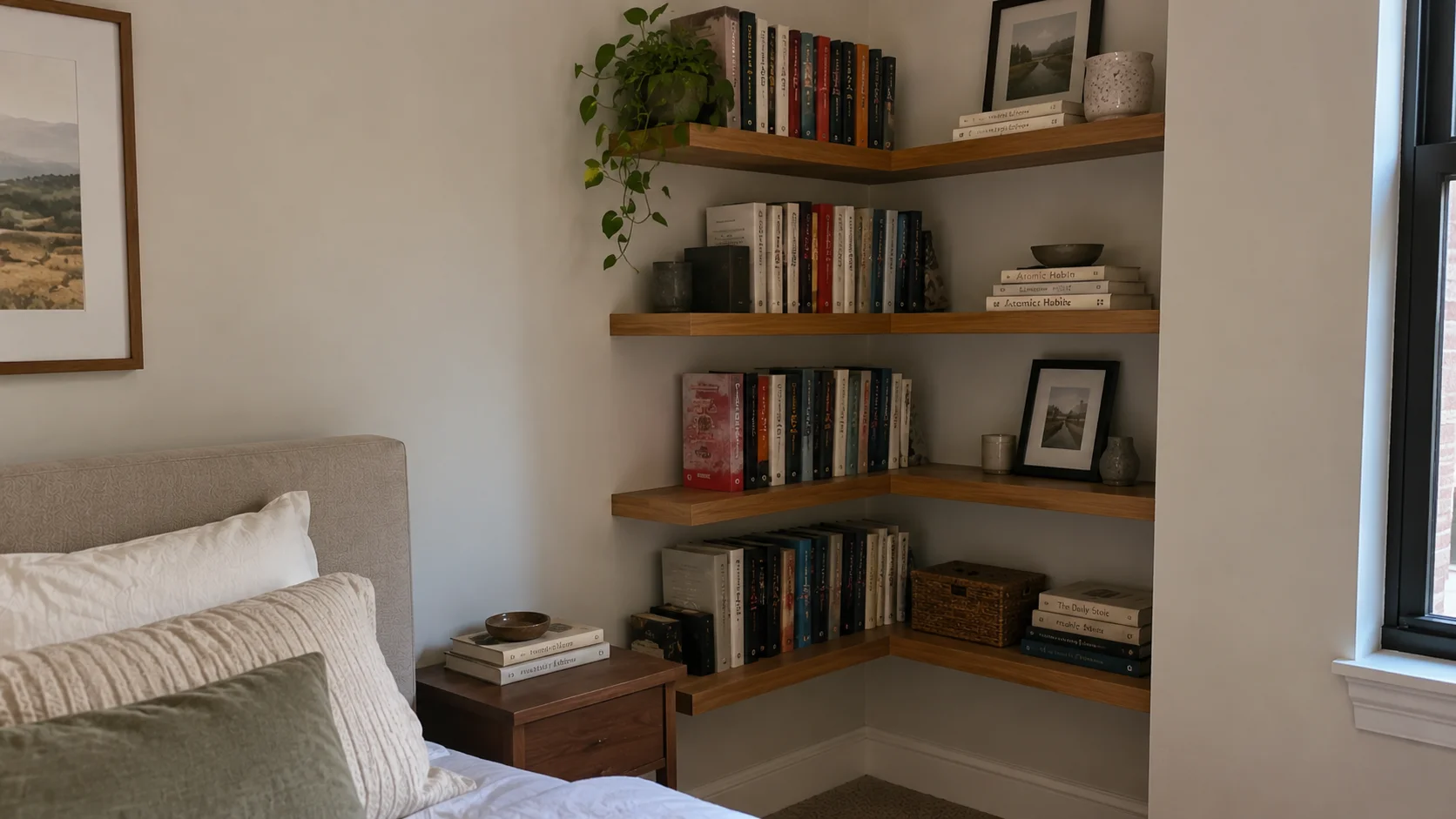
Most bedrooms have at least one corner that furniture never quite fits into, which makes a corner-shaped bedroom bookshelf one of the more useful small-space solutions available. A tall, narrow corner unit uses vertical space that would otherwise sit empty, and because it tucks into an angle rather than sitting flush against a flat wall, it rarely blocks walking paths the way a standard bookcase can.
Corner bookshelves also work well as a visual anchor near a reading chair or window seat, giving the bedroom a defined spot for reading rather than books scattered across multiple surfaces. The main trade-off is capacity — a corner unit typically holds less than a flat-wall bookcase of the same height, so it suits smaller collections or households that plan to keep the shelf edited rather than constantly expanding.
Headboard Bookshelf Ideas for Bedtime Reading
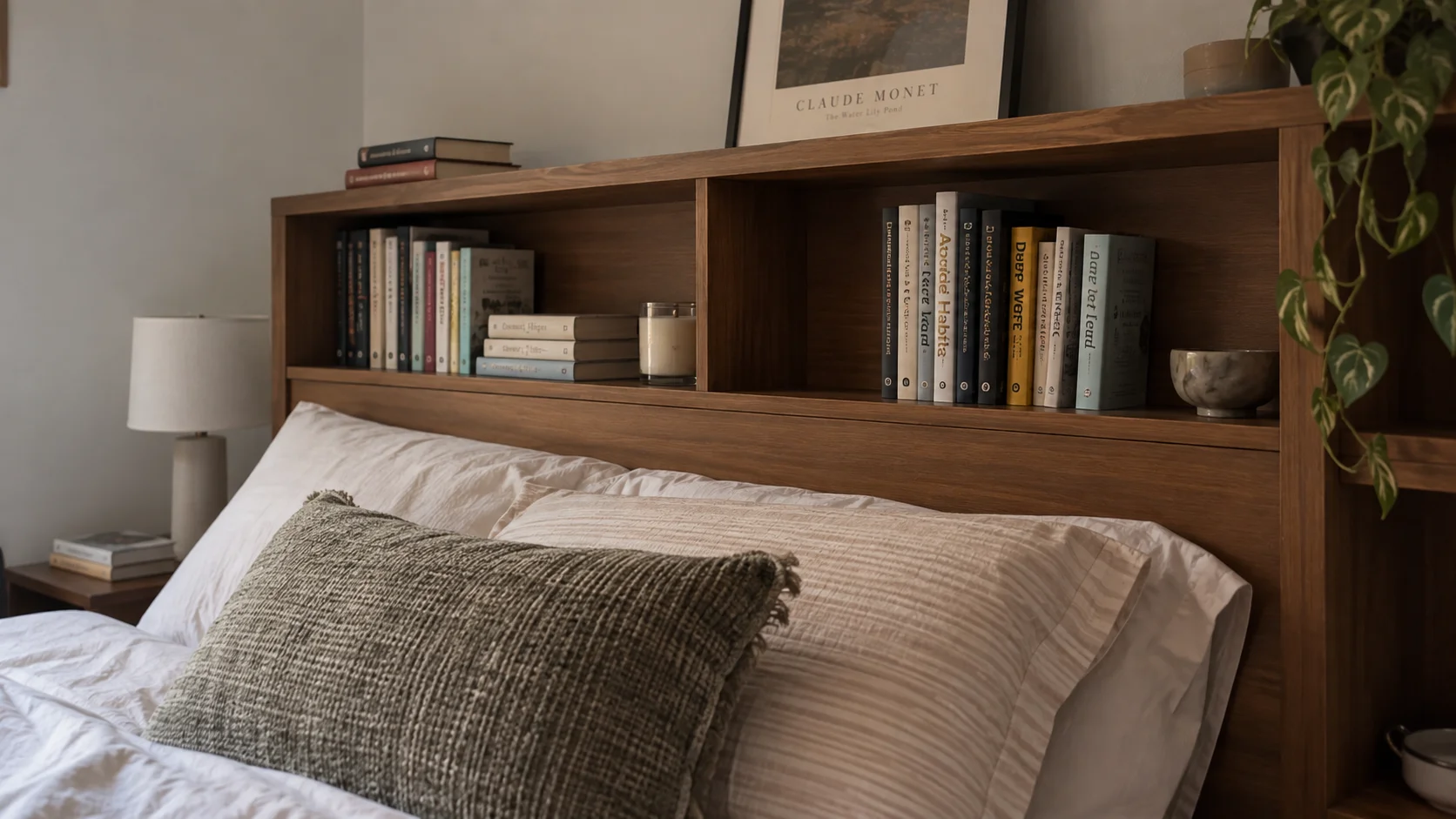
A headboard with built-in shelving solves the reach problem directly, putting books at arm’s length from the pillow without needing a separate nightstand shelf or a freestanding bookcase nearby. This bedroom bookshelf style is especially useful in small rooms where there isn’t space for both a bed and a full bookcase.
The trade-off is that headboard shelving holds fewer books than a dedicated unit, so it works best as a rotating “currently reading” shelf rather than a full collection. A few things are worth checking before choosing this option:
- Confirm shelf depth is enough for the books you actually own, not just paperbacks
- Look for enclosed or lipped edges if you tend to move around while sleeping
- Avoid stacking books high enough to be within reach of a small child’s hands, if relevant
- Check that the shelving doesn’t reduce usable pillow space
- Choose a design with rounded edges if the bed is low to the floor
Under-Bed Bookshelf Storage for Limited Floor Space
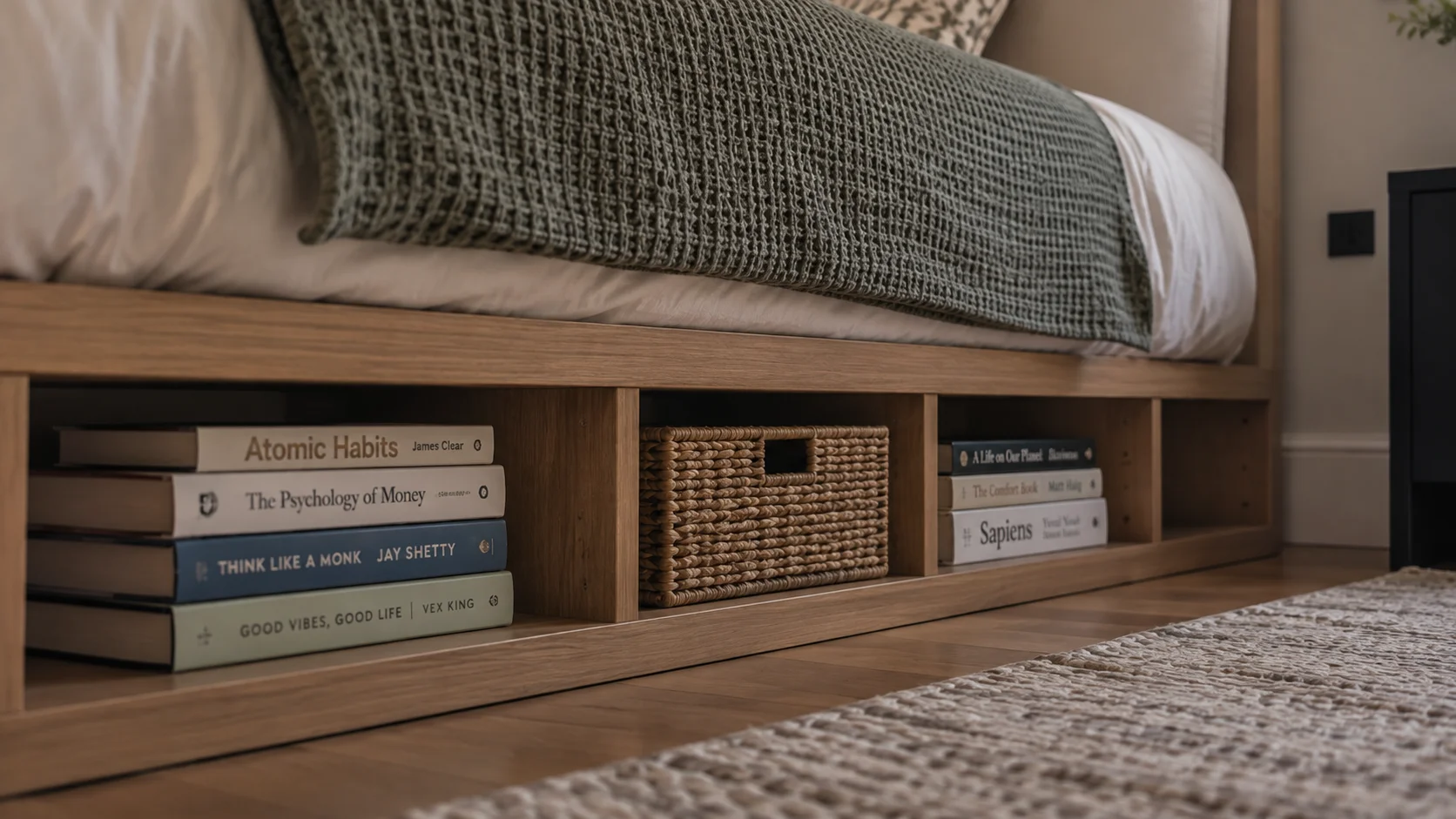
Under-bed storage is one of the most overlooked bedroom bookshelf alternatives for anyone dealing with genuinely limited floor space. Bed frames with built-in drawers or shelving sized for books keep a collection accessible without taking up any wall or floor area beyond the bed itself, which matters in studio apartments or shared rooms where every square foot is already accounted for.
The main limitation is visibility and ease of browsing — books stored under a bed are harder to flip through casually than books on an open shelf, so this option suits people who know what they’re looking for rather than those who like to browse a shelf before choosing a book. It works best as backup storage for a rotating collection rather than the only place books live in the room.
Built-In Bedroom Bookshelf Ideas for a Custom Look
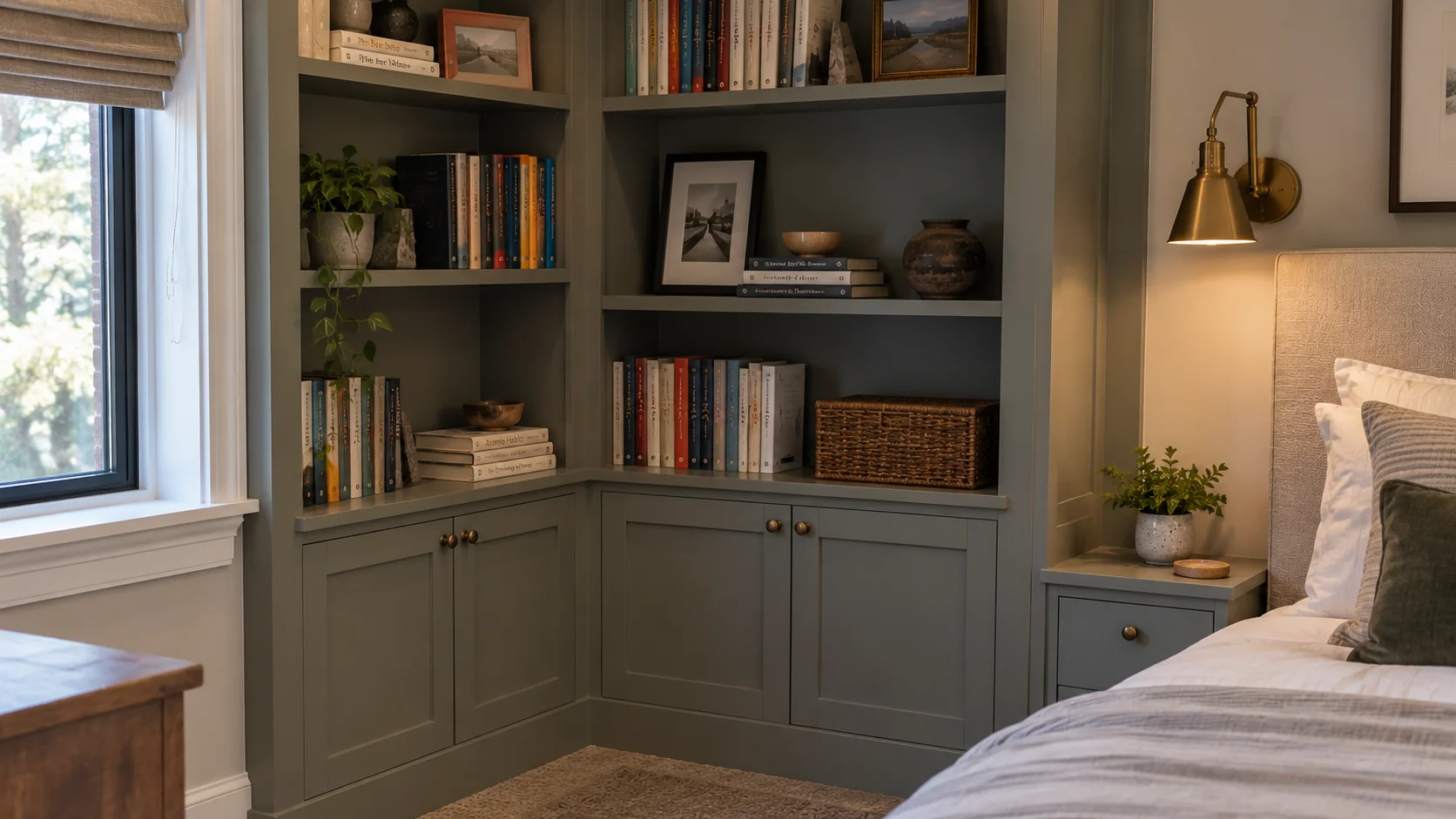
Built-in shelving, whether it wraps a doorway, frames a window, or lines an entire wall, turns a bedroom bookshelf into part of the room’s architecture rather than a separate piece of furniture. Because built-ins are designed to fit the exact wall and ceiling height, they use space more efficiently than a standalone bookcase and can be sized precisely around windows, outlets, or an existing closet.
This approach requires more planning and a larger budget than a freestanding shelf, and it’s a commitment that’s harder to undo than moving a bookcase to another room. It tends to make the most sense for a bedroom the household plans to stay in for several years, rather than a short-term rental.
DIY vs. Custom-Built Bedroom Bookshelves
A DIY approach — using modular shelving units, ready-made brackets, or stock lumber — costs less and can be adjusted or removed later, which suits renters or anyone still figuring out how much shelving they actually need. It generally takes more hands-on time and produces a less seamless finish than professionally built shelving.
A custom-built bookshelf, planned and installed by a carpenter, fits the wall exactly and can incorporate details like hidden lighting or flush trim that DIY shelving usually can’t match. The higher cost and longer lead time make it better suited to a long-term home than a temporary living situation.
Ladder and Leaning Bedroom Bookshelf Ideas
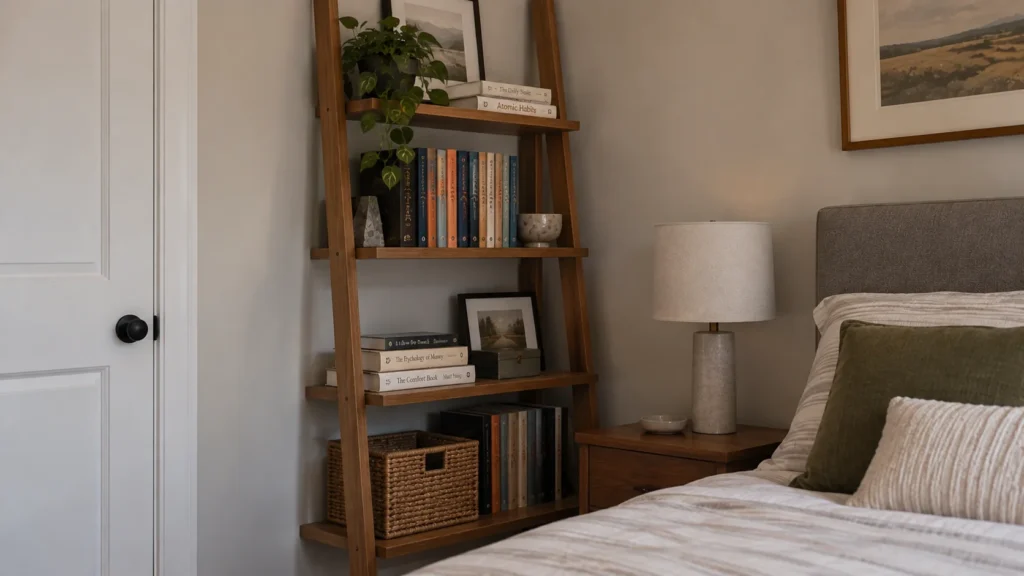
A ladder-style bookshelf leans against the wall rather than being mounted or freestanding on all four sides, which makes it one of the easiest bedroom bookshelf options to move, reposition, or take along when relocating. Its narrow footprint suits bedrooms where floor space is tight but a few feet of wall are available.
Because ladder shelves taper toward the top, the upper shelves hold fewer or smaller items than the base, so heavier books are best kept on the lower rungs both for stability and easier reach. This style tends to read as more casual and decorative than a boxy bookcase, which makes it a natural fit for rooms already leaning toward a relaxed, lived-in look.
Nightstand Bookshelf Ideas for Reaching Books at Night
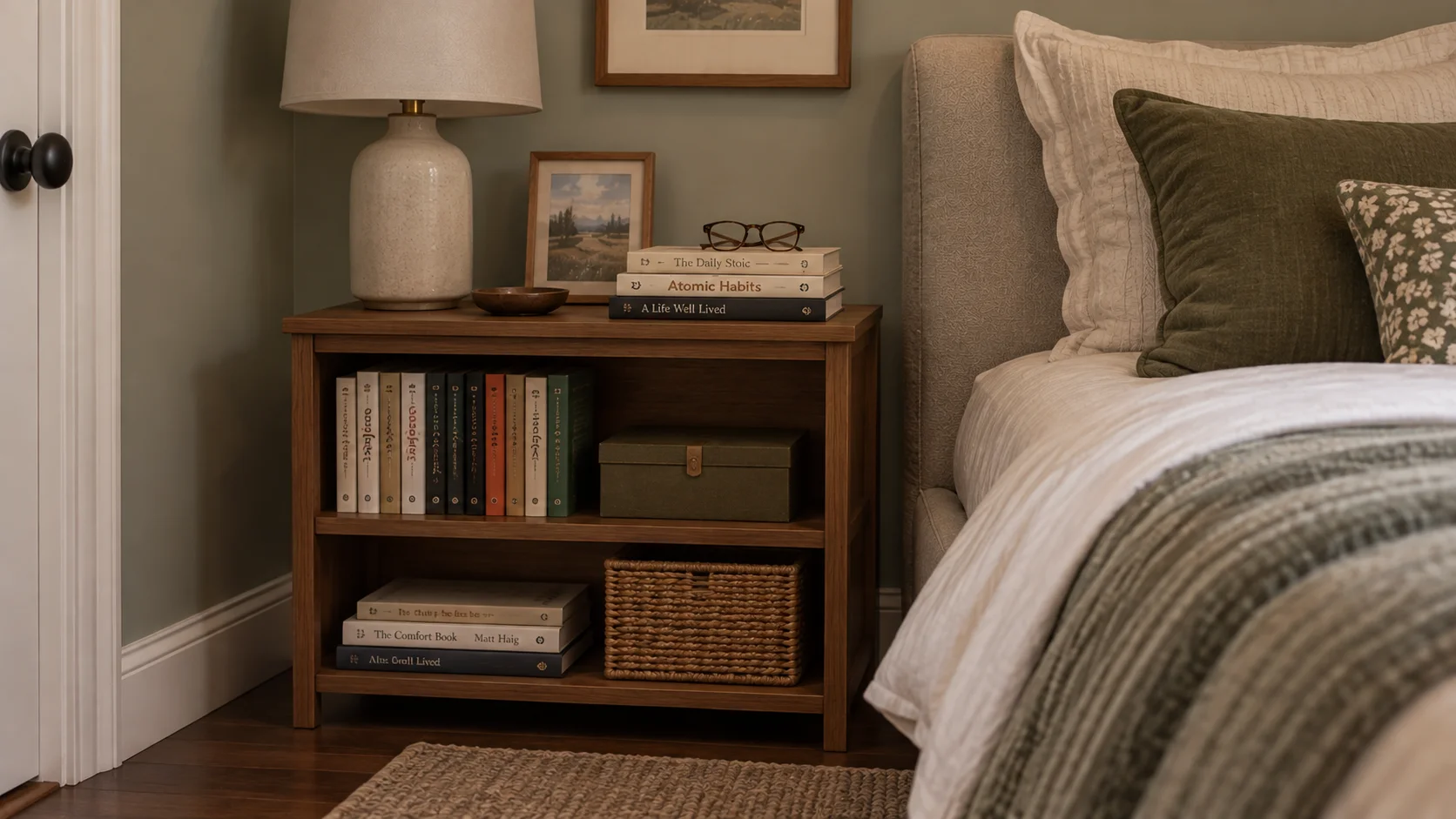
A nightstand with an open shelf or short bookcase built into its base keeps a small, rotating selection of books within reach without requiring any additional furniture. This is one of the simplest bedroom bookshelf ideas to implement, since many nightstands already include at least one open shelf that just needs to be used intentionally instead of catching loose items.
It only holds a handful of books at a time, so it works best paired with a larger shelf elsewhere in the room rather than as the only storage for a full collection. A few adjustments make this option more functional:
- Keep only the books currently being read or next in line, not the full collection
- Add a small tray or bookend so titles don’t slide around when a drawer opens
- Leave room for a lamp or glass of water rather than filling the entire surface
- Choose a nightstand with a lipped shelf edge if the books tend to shift
- Swap titles out regularly so the shelf doesn’t become a permanent stack
How to Style a Bedroom Bookshelf So It Looks Intentional
Styling makes the difference between a bedroom bookshelf that looks curated and one that looks like an overflow storage spot. Mixing upright and stacked books, leaving small gaps rather than packing every inch, and adding a few non-book objects — a small plant, a framed photo, a ceramic piece — breaks up the visual repetition of spines lined up in a row.
Lighting also changes how a bookshelf reads in the room. A small clip lamp, a plug-in sconce, or even ambient light from a nearby window can turn a plain shelf into a focal point instead of a flat wall of color. A few styling habits apply across almost any bedroom bookshelf style:
- Group books loosely by color or size rather than alphabetically for a calmer visual effect
- Use bookends on shelves that are only partially full
- Leave the top or bottom shelf lighter than the others to avoid a boxed-in look
- Add one or two decorative objects per shelf, not on every single one
- Rotate a few titles to the front cover occasionally instead of always showing spines
Common Bedroom Bookshelf Mistakes to Avoid
The most common mistake is buying a bookshelf before measuring both the books and the wall space it needs to fit. A shelf that’s too deep wastes space behind the books, while one that’s too shallow lets paperbacks tip forward and look messy no matter how they’re arranged.
Overfilling is the second recurring issue — packing every shelf edge to edge makes even a well-chosen bookshelf look cluttered and makes it harder to pull a single book out without disturbing the rest. A few other issues come up often enough to flag directly:
- Placing a tall, heavy bookshelf without securing it to the wall
- Choosing open shelving for a bedroom shared with a toddler who can reach it
- Ignoring shelf weight limits when loading hardcovers or coffee-table books
- Positioning the shelf where it blocks a closet door or walking path
- Forgetting to leave clearance for a shelf door or drawer to open fully
Where to Place a Bookshelf in a Bedroom for Better Sleep
Placement affects more than convenience — a bookshelf positioned directly facing the foot of the bed can feel visually heavy to some people, especially a tall unit with sharp corners at eye level while lying down. Positioning a bedroom bookshelf along a side wall, rather than directly opposite the bed, tends to feel calmer and avoids that sense of something looming over the sleeping area.
Practical safety matters as much as visual comfort. Tall, freestanding bookshelves are a documented tip-over risk, particularly in rooms where children sleep or play, and securing any shelf over about three feet tall to the wall with an anti-tip strap is a straightforward step that removes that risk entirely. This applies regardless of how the shelf is styled or how few books are on it at any given time.
Budget-Friendly Bedroom Bookshelf Ideas
Before buying anything new, an existing dresser top, a windowsill, or a shallow closet shelf can often hold a small rotating book collection at no cost at all. This works especially well for renters who don’t want to commit to permanent shelving or drill into walls.
For a low-cost upgrade, a single floating shelf or a small secondhand bookcase covers most of what a dedicated bedroom bookshelf needs to do without a large purchase. Moving up in budget, a modular shelving system that can expand over time offers more flexibility than committing to one large piece upfront, while built-in or custom carpentry sits at the higher end and makes sense mainly for a long-term home rather than a short-term rental.
Keeping a Bedroom Bookshelf Organized Long-Term
A bedroom bookshelf tends to drift back into clutter without a simple maintenance habit, since new books arrive faster than old ones get removed. Setting a rough limit — one book off the shelf for every new one added, for example — keeps the collection at a size the shelf can actually hold without overflow onto the floor or nightstand.
Periodically reviewing the shelf for books that haven’t been picked up in a year or more also keeps it functional rather than decorative-only. Donating, relocating to a shared household shelf, or passing books along to someone else frees up space for what’s actually being read, which keeps a bedroom bookshelf useful instead of turning into another surface that just collects dust.
FAQ
Opinions vary, but the general concern is that open shelving with exposed corners can feel visually active in a space meant for rest. Many feng shui practitioners suggest a closed-door bookcase or placing the shelf away from direct line of sight from the bed if this is a concern for you.
Along a side wall, in a corner, or above a desk generally works better than directly facing the foot of the bed. Keep walking paths and closet doors clear, and avoid placing a bookshelf where it blocks natural light from a window.
Floating shelves, a corner unit, or a headboard with built-in shelving tend to work best in small bedrooms because none of them add much floor footprint. The right choice depends on how many books you’re storing and how much wall space is available.
It’s not required, but positioning a tall bookshelf directly facing the bed can feel visually heavy to some people. A side wall placement is a common alternative that keeps the shelf accessible without it being the first thing you see lying down.
Depth should match what you’re storing — shallow shelves around 6 to 8 inches suit paperbacks, while hardcovers and oversized books typically need 10 to 12 inches or more. Measuring your actual books before buying prevents a shelf that’s too deep or too shallow.
Yes, for a moderate collection. A few staggered floating shelves can hold a working rotation of books, though a very large collection may outgrow them faster than a dedicated bookcase.
It’s generally fine as long as the shelf is stable and secured if it’s tall, and books are arranged so nothing can fall onto the bed. A low, short bookshelf or nightstand shelf is often the most practical option for bedside placement.
There’s no fixed number — it depends on the shelf size and how the household reads. As a general guide, leaving some breathing room on each shelf rather than filling it completely makes the bookshelf easier to use and better to look at.
Love inspiring interiors, practical design ideas, and beautiful spaces? Follow us on Facebook, Instagram, and Pinterest for more interior inspiration, home styling ideas, and everyday design tips.