
Table of Contents
Picking a bedroom carpet often starts with color and ends there, but color is only one small piece of what actually determines how a bedroom carpet performs over the years. Pile height, fiber type, density, and how the room gets used every day all affect whether a bedroom carpet stays comfortable, holds up to daily traffic, and still looks presentable after the first few winters. Skipping these factors is why some bedroom carpet purchases feel disappointing within a year, even when the carpet looked perfect in the showroom.
This guide breaks down the practical decisions behind choosing bedroom carpet, from pile style and fiber to color, density, and long-term care. Rather than treating bedroom carpet as a single category, it walks through how bedroom size, who uses the room, and your maintenance habits should shape the final choice, so the bedroom carpet you install matches how the room is actually lived in.
What to Know Before Choosing a Bedroom Carpet
Before comparing carpet samples, it helps to separate the decisions that affect comfort from the ones that affect durability. Bedroom carpet only has to handle bare feet, light foot traffic, and the occasional dropped drink, which is very different from carpet chosen for a hallway or living room. That lower traffic load means a bedroom carpet can prioritize softness and warmth without sacrificing as much durability as carpet used elsewhere in the house.
The main variables worth understanding upfront are pile type, fiber material, density, and color, because each one interacts with the others. A soft, high-pile bedroom carpet in a light color will show footprints and require more frequent vacuuming than a textured, mid-density carpet in a muted tone. Working through these variables in order, rather than picking color first, tends to produce a bedroom carpet that still looks and feels right several years after installation.
Understanding Carpet Pile Types for a Bedroom
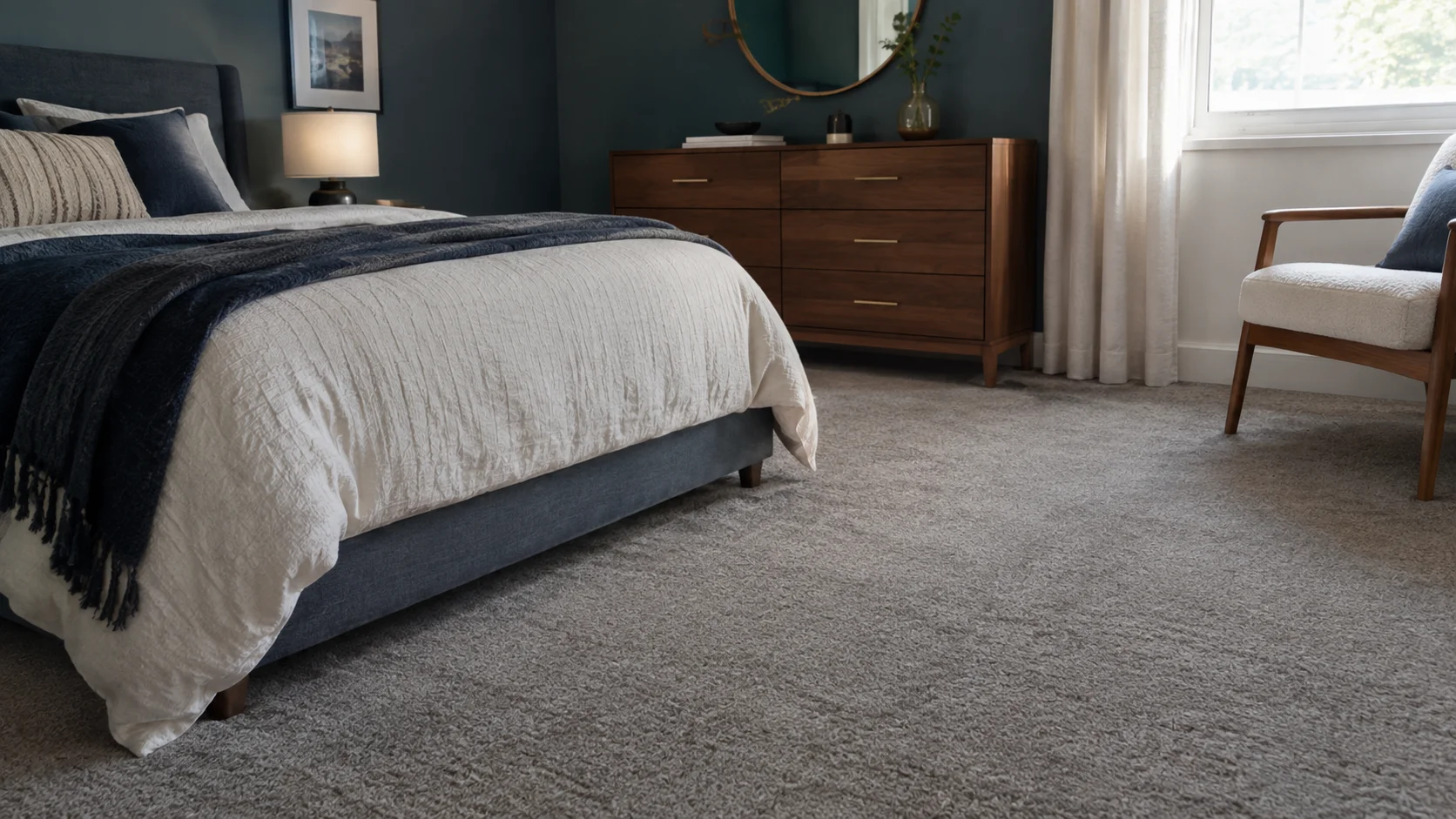
Pile refers to how the carpet fibers are constructed, and it affects comfort more than most buyers expect. Cut pile carpet has fibers sheared at the top so each strand stands upright, which is what gives many carpet options their soft, plush feel underfoot. Loop pile, by contrast, keeps the fiber loops intact, producing a firmer, more hardwearing surface that is more common in carpet built for heavier traffic than for bedrooms.
Within cut pile, a few styles come up repeatedly when comparing carpet:
- Plush pile: dense and even, giving the most luxurious underfoot feel but showing footprints and vacuum lines easily
- Textured pile: fibers twisted at different heights, which hides footprints and everyday wear better than plush
- Frieze pile: tightly twisted, curly fibers with a casual look that conceals dirt and matting well
- Saxony pile: smooth, straight fibers similar to plush but with a slightly more formal, refined appearance
Textured and frieze styles tend to suit bedrooms that see daily use, while plush and Saxony work well in guest rooms or primary bedrooms with lighter traffic.
Choosing the Best Fiber for Bedroom Carpet
Fiber material determines how a bedroom carpet feels, how long it lasts, and how it responds to stains and spills. Wool is a natural fiber known for softness, warmth, and natural stain resistance, but it typically costs more than synthetic options. Nylon is a synthetic fiber prized for durability and resilience, meaning it resists crushing and matting even after years of use, which makes it a common choice when a carpet also needs to withstand kids or pets.
Polyester has become one of the more popular fibers for bedroom carpet in recent years because it offers a soft feel at a lower price point than wool or nylon, along with good color retention and resistance to water-based stains. Its main tradeoff is that it does not spring back from crushing as well as nylon, so heavy furniture can leave lasting indentations unless furniture cups are used. Triexta, sometimes sold under the name SmartStrand, is a newer synthetic fiber that combines built-in stain resistance with strong durability, worth considering for a carpet that needs to handle spills without losing its appearance.
Wool, Nylon, or Polyester: Which Fits Your Bedroom
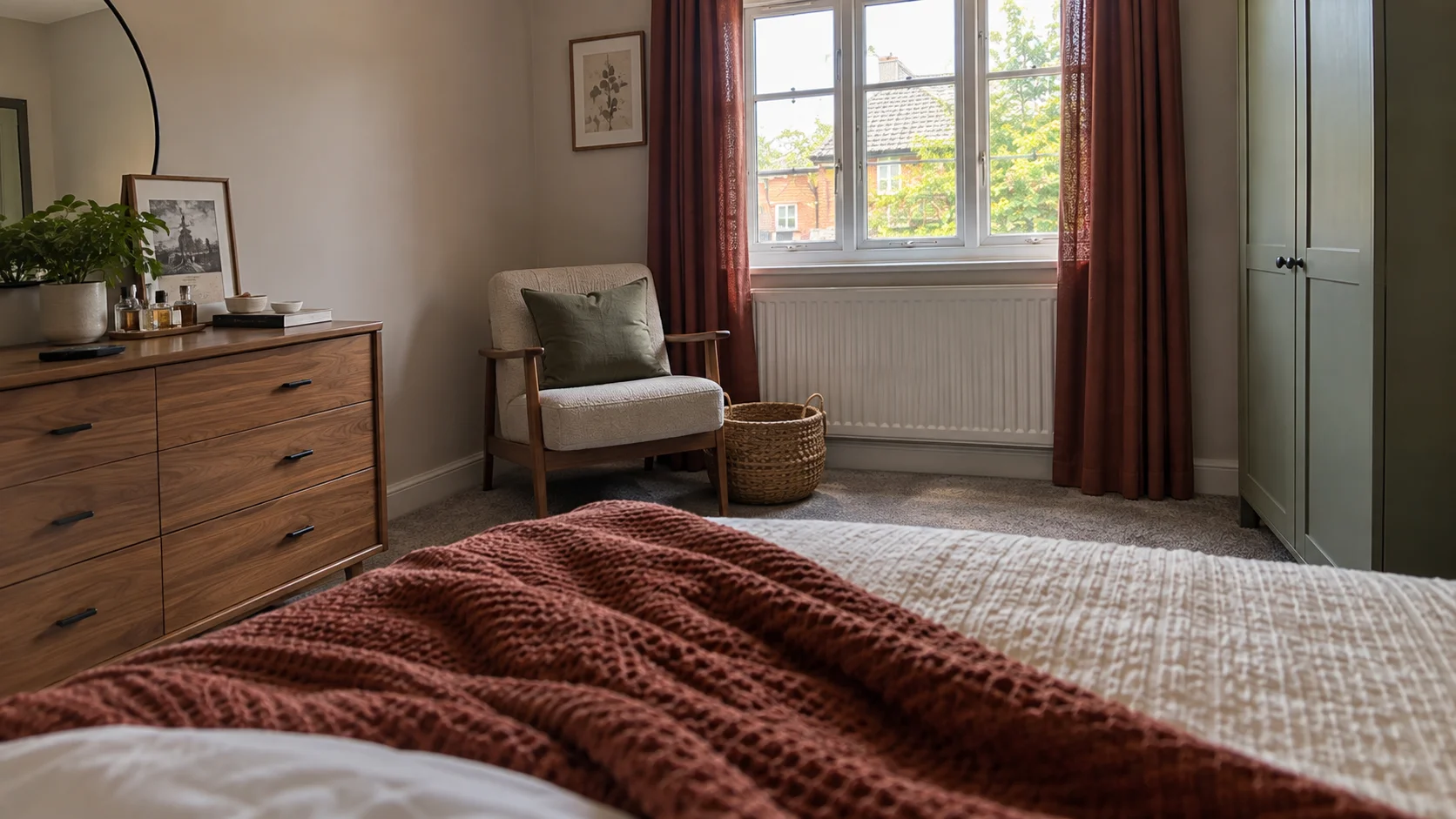
For a primary bedroom with light daily traffic, wool or a wool blend offers a comfortable, temperature-regulating surface, and its natural stain resistance suits a room used mainly for sleeping rather than eating or heavy play. Nylon makes sense for a carpet that needs to survive kids, pets, or frequent furniture rearranging, since it holds its shape and resists wear better than either wool or polyester over the long term.
Polyester is the practical middle choice for anyone who wants a soft bedroom carpet without the cost of wool or the firmer feel of nylon, particularly in guest rooms or bedrooms with lower long-term durability requirements. Budget matters here too: polyester is generally the least expensive of the three, nylon sits in the middle, and wool tends to command the highest price per square yard, so the right fiber often comes down to balancing feel, durability, and what the room actually needs to withstand.
Bedroom Carpet Density and Why It Matters
Density describes how tightly the fibers are packed together, and it affects comfort and durability more than pile height alone. A bedroom carpet with low density will feel thin underfoot and flatten out quickly, even if the pile itself is tall, because there are not enough fibers supporting the weight of foot traffic and furniture. Higher density carpet tends to hold its shape longer and feels more substantial, even at a shorter pile height.
The Carpet and Rug Institute calculates this using a formula that combines pile weight and pile height into a single density score, with higher scores generally indicating longer-lasting carpet. Because bedrooms see lighter foot traffic than hallways or living rooms, bedroom carpet can perform well at a lower density than high-traffic carpet requires, which is also why bedrooms can typically pair with a thicker, softer carpet pad than rooms that see heavier daily use.
Best Bedroom Carpet Colors for Different Rooms
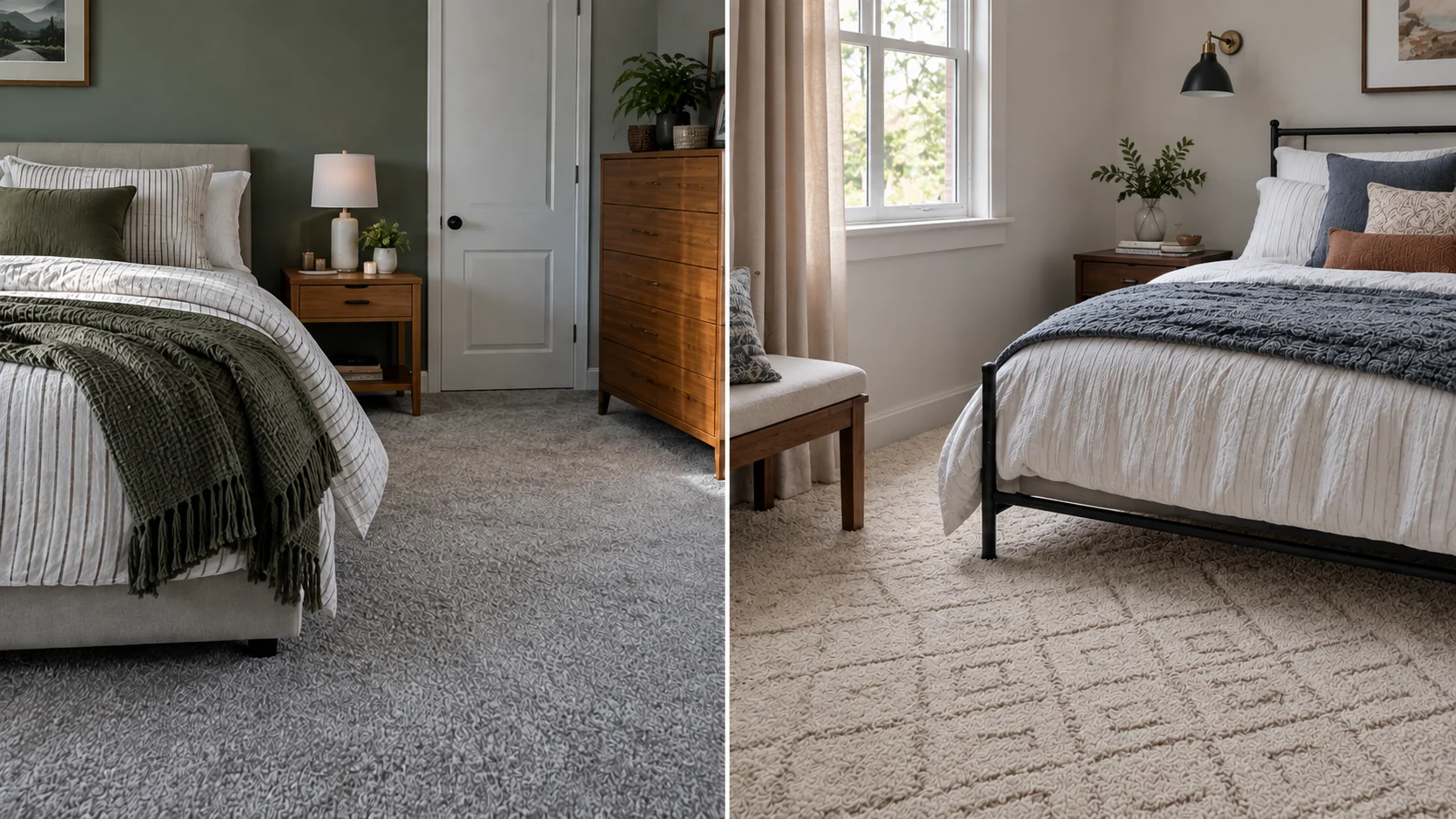
Color affects how a bedroom feels day to day, but it also has practical consequences for how much a carpet shows dirt, footprints, and pet hair. Neutral shades such as beige, warm gray, and greige tend to hide everyday wear better than very light or very dark colors, while also giving more flexibility to change wall paint or bedding without clashing with the floor.
Beyond neutrals, color choice can support specific goals for the room:
- Warm tones like taupe or soft terracotta add coziness to bedrooms with limited natural light
- Cool grays and blues suit bedrooms aiming for a calm, restful atmosphere
- Mid-tone colors hide footprints and vacuum marks better than very light or very dark carpet
- Patterned or textured bedroom carpet can disguise stains and wear in high-use rooms
- Solid, light-colored carpet can make a small bedroom feel more open when paired with darker furniture for contrast
Choosing a color that matches how the room is used, rather than only what looks best in a showroom, tends to hold up better over time.
Light vs Dark Bedroom Carpet
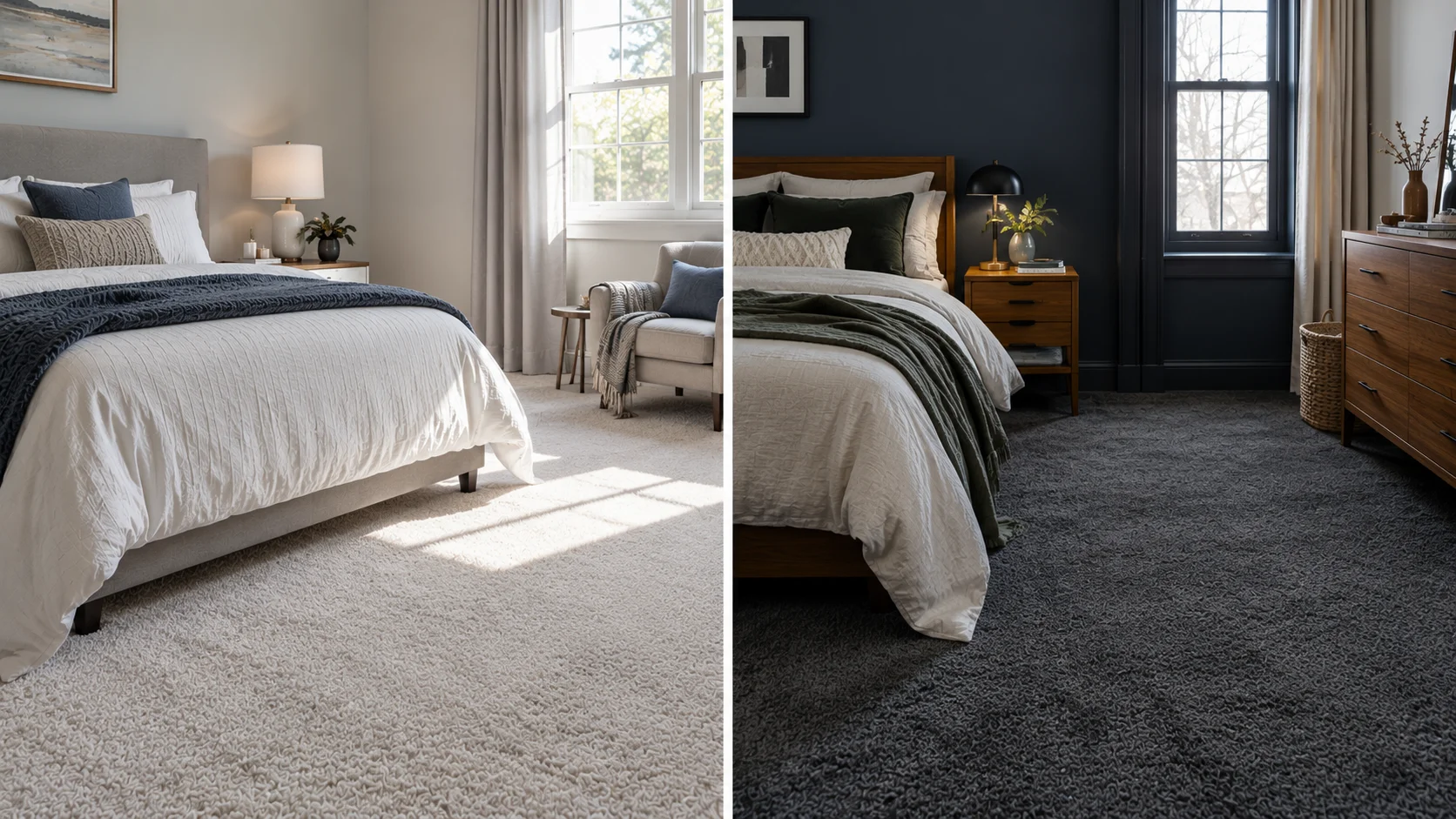
Light-colored carpet makes a room feel larger and brighter, which is useful in smaller bedrooms or rooms with limited windows, but it also shows stains, pet hair, and foot traffic patterns more readily than darker shades. Dark carpet hides everyday marks and wear better, making it a practical choice for bedrooms with kids or pets, though it can make a small or dim room feel more closed in.
A middle path that many bedrooms benefit from is a mid-tone or textured carpet, which offers some of the visual openness of light colors while concealing daily wear closer to the level of darker carpet. If natural light is already limited in the room, leaning toward a warmer mid-tone bedroom carpet rather than a true dark shade usually keeps the space feeling comfortable rather than heavy.
Bedroom Carpet for Kids, Pets, and Allergies
Bedrooms shared with kids or pets need a carpet built to handle spills, accidents, and regular wear without showing every mark. Nylon and Triexta fibers are generally the most resilient choices for these rooms, since both resist staining and hold their shape under the kind of repeated stress that comes with active kids or clawed paws.
For allergy concerns, low-pile carpet is often easier to keep allergen-free than high-pile styles, since shorter fibers trap less dust, pet dander, and pollen and are easier to vacuum thoroughly. A few features worth prioritizing when choosing bedroom carpet for a shared or high-traffic room:
- Built-in stain resistance rather than a topical treatment that wears off over time
- Low to medium pile height for easier, more thorough vacuuming
- Manufacturer warranties covering matting, crushing, or staining
- Synthetic fibers like nylon or Triexta over delicate natural fibers for rooms with heavy use
Combining a resilient fiber with a manageable pile height covers most of what a family- or pet-friendly bedroom carpet needs to hold up.
Bedroom Carpet Ideas for Small Bedrooms
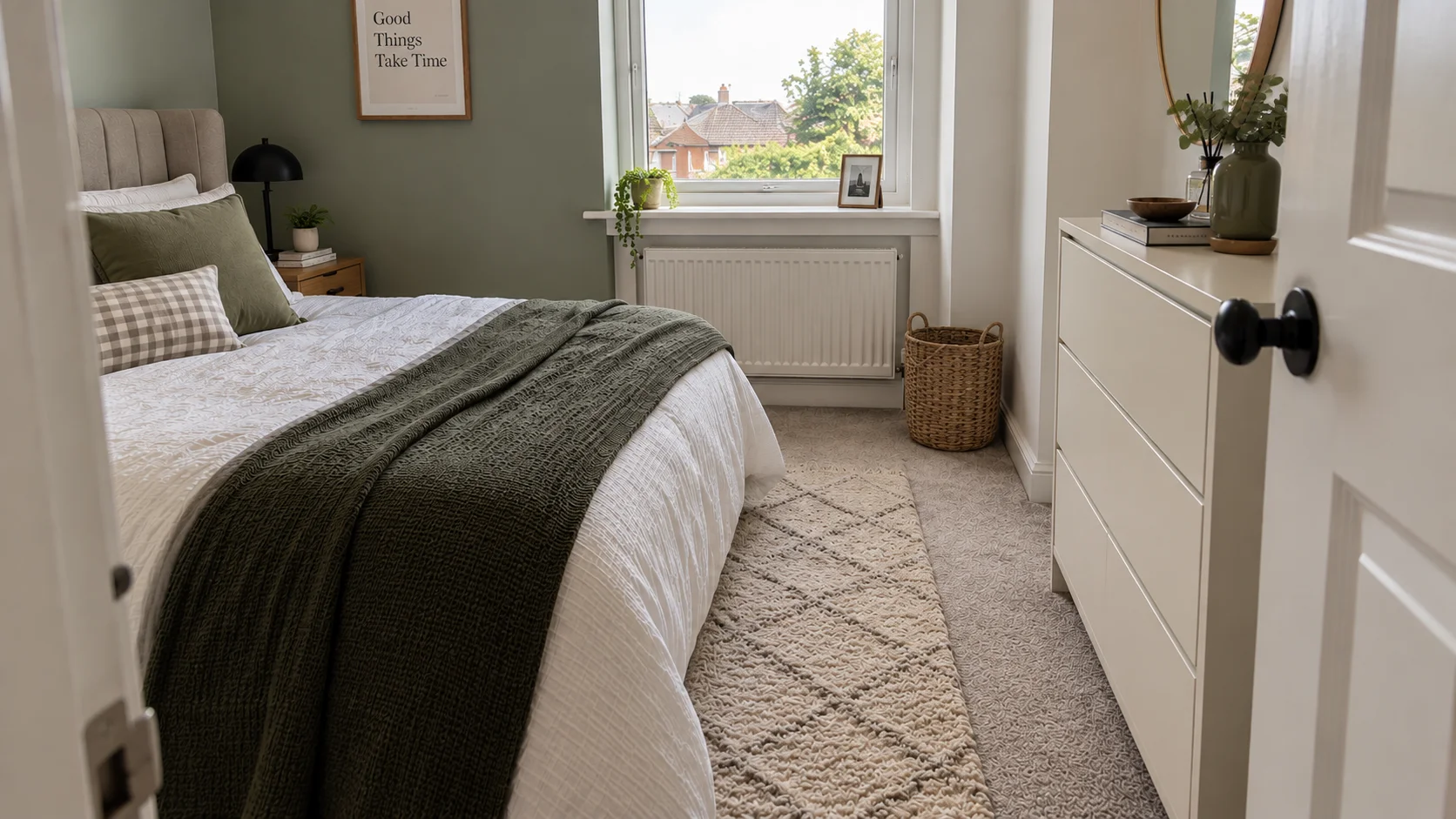
In a small bedroom, carpet choice can either reinforce the cramped feeling or help the room read as more open. Wall-to-wall carpet in a single, light or mid-toned color creates a continuous visual field with no breaks, which tends to make a small room feel larger than the same room with a rug that stops well short of the walls.
Low pile carpet also suits small bedrooms better than plush or high pile, since it does not visually compete with furniture or make the floor feel like it is competing for space. If wall-to-wall carpet is not an option, a large area rug that leaves only a small, even border of visible flooring around the edges achieves a similar effect to bedroom carpet without the same installation commitment, which is worth considering in rentals or rooms where flooring cannot be permanently changed.
Bedroom Carpet Maintenance That Actually Extends Its Life
Regular vacuuming is the single most effective way to extend the life of a bedroom carpet, since dirt and grit trapped at the base of the fibers act like sandpaper every time the carpet is walked on. Most bedroom carpet only needs vacuuming once or twice a week given the lower foot traffic compared to other rooms, though homes with pets may need more frequent attention.
A short list of habits keeps carpet looking newer for longer:
- Vacuum in more than one direction occasionally to lift fibers evenly, not just in one pass
- Address spills immediately by blotting rather than rubbing, which pushes stains deeper
- Use furniture cups under heavy items to reduce permanent indentations
- Rotate furniture periodically so wear patterns do not concentrate in the same spots
- Schedule professional deep cleaning every 12 to 18 months depending on use
None of these steps require special products, but skipping them is one of the main reasons carpet wears out faster than it should.
Common Bedroom Carpet Mistakes to Avoid
One of the most frequent mistakes is choosing bedroom carpet based purely on how a small sample looks under store lighting, without considering how the color will read across an entire room under the bedroom’s actual lighting conditions. A carpet that looks neutral in a showroom can read distinctly warm, cool, pink, or green once it covers an entire floor in natural or lamp light.
Another common error is prioritizing pile height and softness while ignoring density, which results in a bedroom carpet that feels plush in the store but flattens within months. Skipping padding, or choosing a low-quality pad to save money, is a similar mistake: the Carpet and Rug Institute notes that bedrooms can generally use a thicker, softer cushion than high-traffic rooms, and using the wrong pad can affect appearance, cause wrinkling, and even void manufacturer warranties.
Bedroom Carpet Cost and Budget Planning
Carpet pricing varies by fiber, pile, and brand, but general patterns hold across most retailers. Polyester tends to be the most budget-friendly fiber, nylon sits in the middle price range, and wool is typically the most expensive due to the cost of natural fiber production. These figures usually cover material only, so installation, padding, and removal of old flooring should be budgeted separately.
Setting a budget before browsing bedroom carpet samples narrows the decision considerably and helps rule out fibers the budget cannot support before falling in love with a sample. As a general guide, most retailers group carpet into rough price tiers by fiber:
- Budget-friendly: polyester carpet, generally the lowest cost per square yard
- Mid-range: nylon carpet, priced above polyester but below wool
- Premium: wool carpet, typically the highest cost due to natural fiber production
- Additional costs: padding, installation labor, and removal of old flooring, usually priced separately from the carpet itself
For a lower-traffic guest room, a mid-range polyester carpet may perform perfectly well, while a primary bedroom used daily for years may justify the higher upfront cost of nylon or wool.
Choosing the Right Bedroom Carpet for Your Room
The right bedroom carpet is less about finding a single best option and more about matching pile, fiber, density, and color to how the room is actually used. A primary bedroom with light traffic can prioritize the comfort of wool or a high pile, while a shared kids’ room or pet-friendly space benefits more from a durable, stain-resistant nylon or Triexta option in a low-to-medium pile.
Working through these decisions in order, rather than choosing by color alone, results in a bedroom carpet that still looks presentable and feels comfortable years after installation, not just on the day it is laid. Taking the time to compare samples under the room’s actual lighting and confirming density alongside pile height are the two steps most likely to prevent regret after the purchase is made.
FAQ
Yes. Carpet adds warmth, sound absorption, and a soft surface for bare feet, which suits a room used mainly for sleeping and low-impact activity. The main tradeoffs are that it holds onto dust and allergens more than hard flooring and needs regular vacuuming to stay fresh.
There is no single best pile for every bedroom. Plush and Saxony piles offer the softest feel for low-traffic primary bedrooms, while textured and frieze piles hide footprints and wear better in bedrooms used daily by kids or pets.
This depends heavily on fiber, density, and how the room is used, so there is no fixed timeline that applies to every home. Carpet that starts matting, staining permanently, or visibly thinning despite regular care and cleaning is generally a sign it’s due for replacement.
Wool offers superior softness, warmth, and natural stain resistance but costs more. Nylon is more resilient against crushing, matting, and heavy use, making it a stronger choice for bedrooms with kids, pets, or frequent furniture moves.
Light or mid-toned, solid-colored carpet tends to make a small bedroom feel larger, especially when installed wall-to-wall so there are no visual breaks in the flooring. Pairing it with darker furniture helps create contrast without making the room feel busy.
It doesn’t have to. Many homes use one flooring type in shared spaces and a different, softer carpet in bedrooms specifically for comfort, so matching is a style preference rather than a requirement.
Bedrooms are considered lighter-traffic areas, so they can generally use a thicker, softer pad than hallways or living rooms, within the range recommended by the carpet and pad manufacturer. Always check the manufacturer’s specification, since exceeding recommended pad thickness can void the carpet warranty.
Carpet can trap dust, pet dander, and pollen more than hard flooring, which may affect people with allergies or asthma. Choosing a low pile bedroom carpet and vacuuming regularly with a good filter reduces this effect for most households.
Love inspiring interiors, practical design ideas, and beautiful spaces? Follow us on Facebook, Instagram, and Pinterest for more interior inspiration, home styling ideas, and everyday design tips.