

Table of Contents
Designing a small bedroom is about making the available space work for your daily routine. A bed, wardrobe, bedside table, and other essentials can quickly make a compact room feel crowded when they are not arranged carefully. The solution is not always to buy smaller furniture or remove everything you own. It starts with understanding the room, choosing pieces that fit, and deciding where everyday belongings should go.
A well-planned small bedroom should provide comfortable access to the bed, usable storage, appropriate lighting, and enough open space to move around. These practical ideas will help you plan the layout, use overlooked storage areas, and make better decisions before spending money on a makeover.
1. Measure the Room Before Moving Furniture
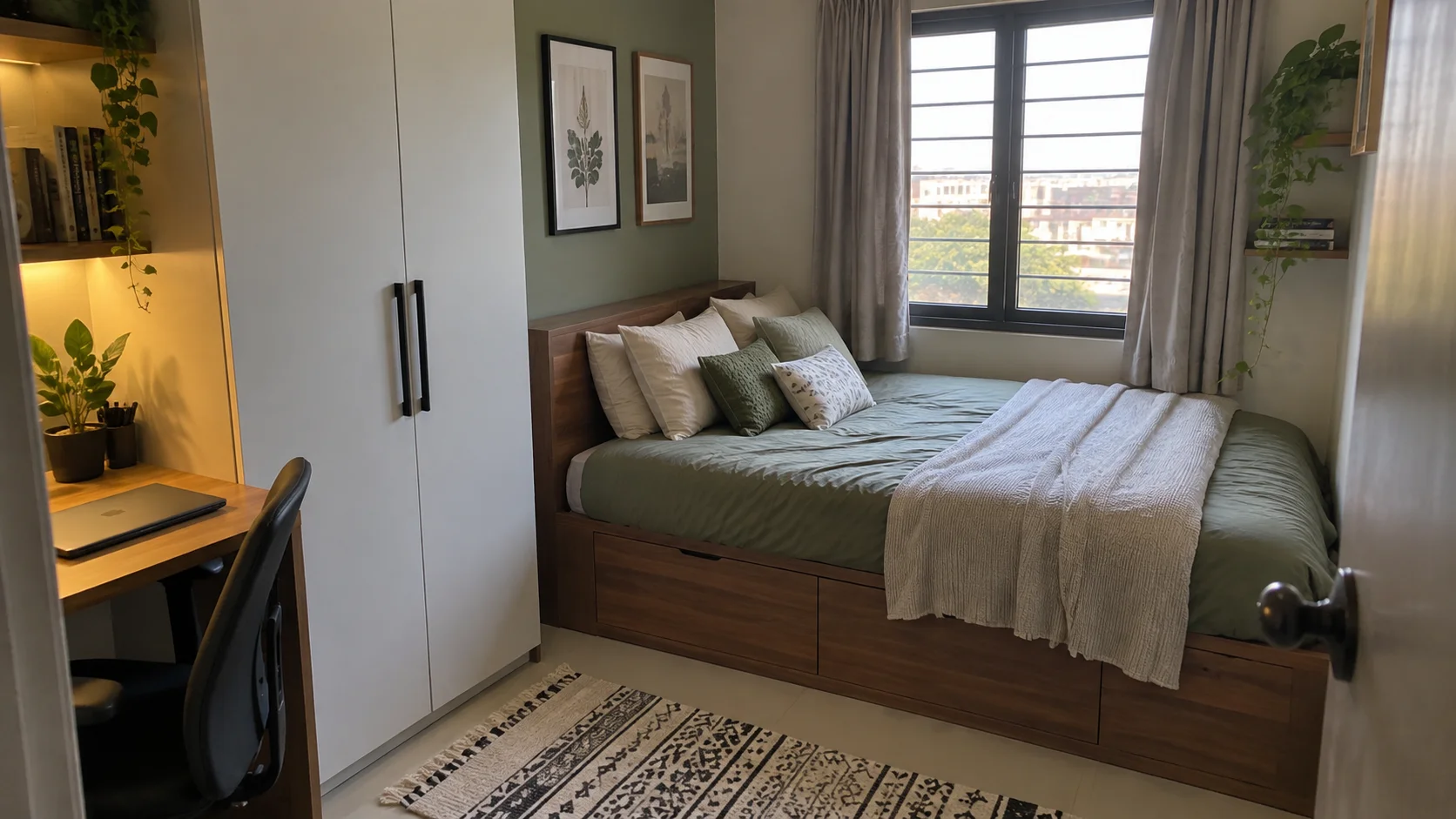
Start by measuring the bedroom and noting its main features. Record the positions of doors, windows, the closet, electrical outlets, and any fixed heating or cooling equipment. These details affect where furniture can go and how easily you can move through the room.
Measure your existing bed, wardrobe, dresser, and desk as well. If you are considering new furniture, compare its full dimensions with the available floor space rather than relying on product photos.
You can mark the approximate furniture footprints on the floor with removable tape. This makes it easier to see whether a drawer can open, a closet door has enough clearance, or a walkway becomes uncomfortably narrow.
Before buying anything, identify the room’s biggest problem. It might be a blocked pathway, insufficient clothing storage, an oversized nightstand, or a lack of useful lighting. Solving that problem first will help you avoid unnecessary purchases.
2. Plan the Layout Around the Bed
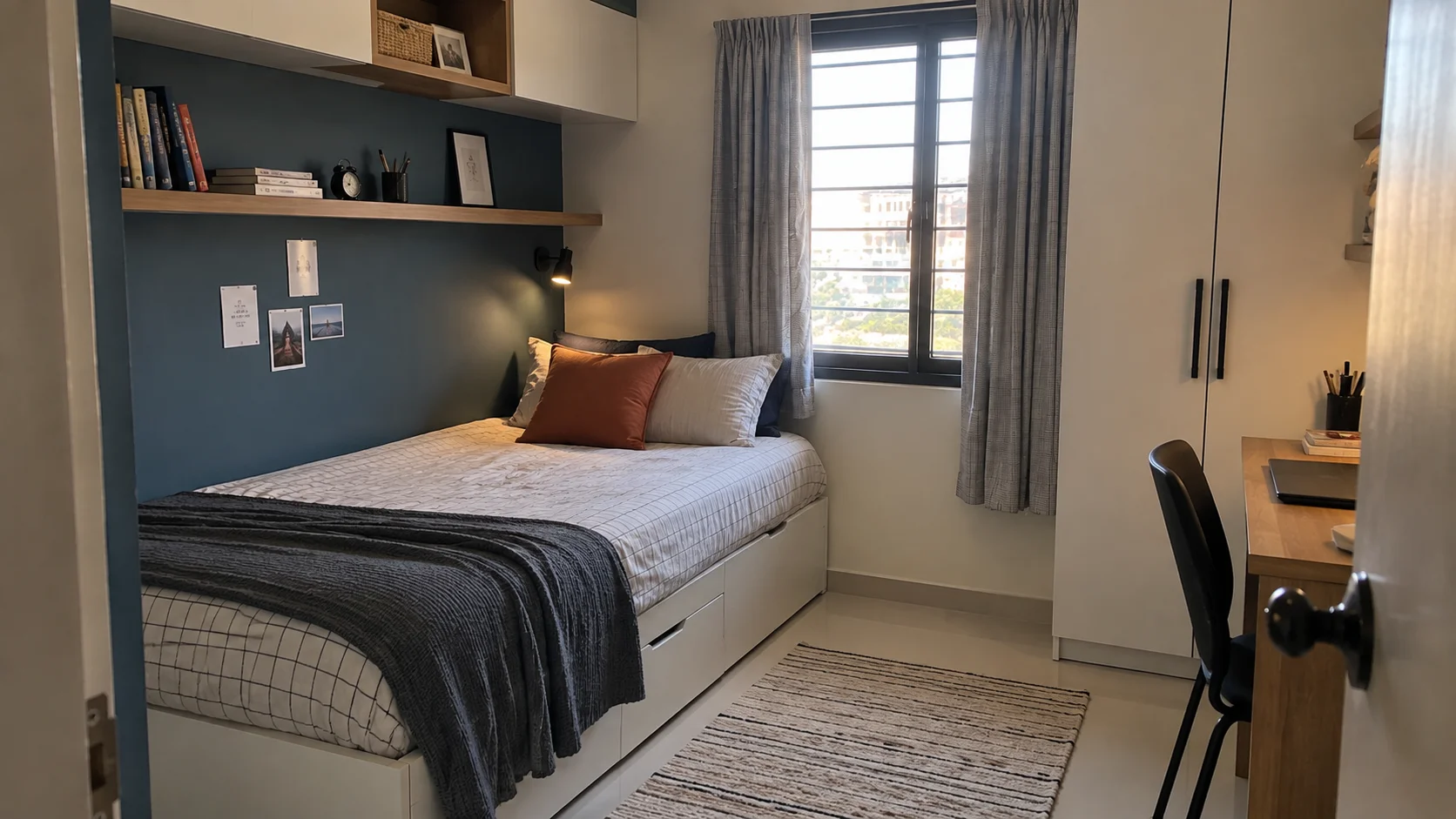
The bed usually occupies the largest area of a bedroom, so its position influences almost every other furniture decision. Begin by testing where it can sit while keeping the entrance, closet, windows, and primary walking route accessible.
Placing the headboard against a suitable wall often creates a clear starting point for the layout. However, the best arrangement depends on the room’s shape, door position, window placement, and the size of the bed.
Avoid forcing symmetrical bedside tables into a room that does not have enough space for them. One compact bedside surface may work better than two bulky tables. Likewise, positioning a bed in a way that blocks closet access can make daily routines unnecessarily difficult.
Try to identify the main activities that take place in the bedroom, such as sleeping, dressing, studying, or getting ready. Assigning space to those activities before adding accessories helps create a layout that feels organized rather than improvised.
Check circulation before finalizing the layout
Walk through the proposed arrangement mentally or test it with temporary furniture outlines. Make sure you can get into bed, change the bedding, open the necessary drawers, and reach the closet without moving other furniture.
If the room also needs a desk or dressing area, decide which function is most important. A small bedroom does not need to accommodate every possible piece of furniture if doing so makes the space difficult to use.
3. Choose Furniture That Fits the Available Space
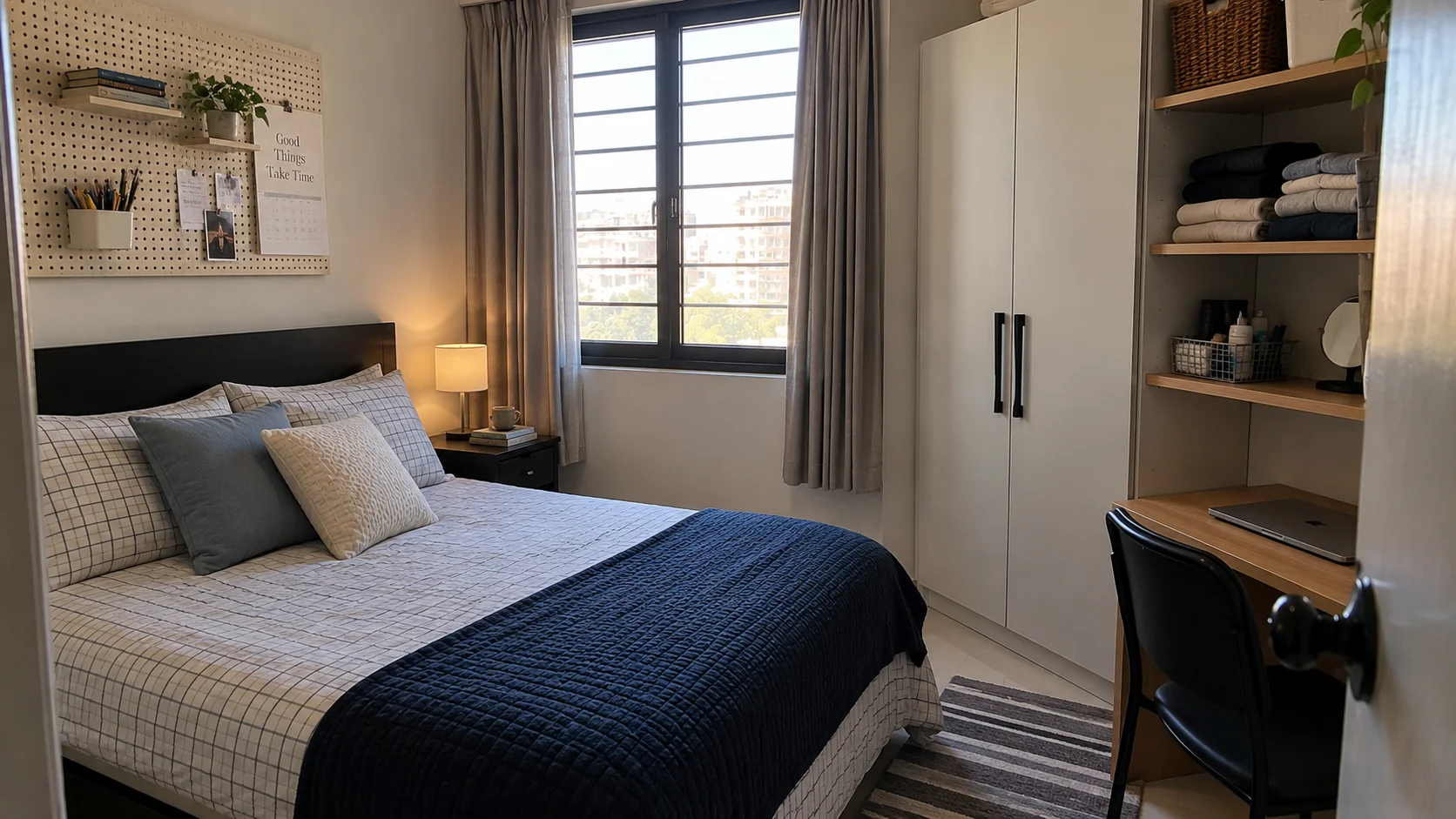
The physical footprint of furniture matters as much as its appearance. A wide dresser may provide generous storage but leave too little room to walk. A visually heavy headboard or bulky bedside cabinet can also make a compact space feel more crowded.
Look for furniture that serves your actual needs without using more floor space than necessary. A narrow chest of drawers, a compact wardrobe, or a bed with integrated storage may be practical alternatives to several separate pieces.
Consider how each item functions when in use. Measure the space required to open doors and drawers, pull out a chair, or access stored belongings. Furniture that fits on paper may still interfere with movement when its doors are open.
Use multifunctional furniture selectively
Multifunctional pieces can be valuable when they replace items that would otherwise occupy separate areas.
For example, a bed with storage drawers may reduce the need for an additional chest. A compact desk with drawers can combine a work surface with storage, while a narrow bedside shelf can provide room for nighttime essentials without a full cabinet.
However, multifunctional furniture is not automatically the best choice. Check its dimensions, accessibility, and ease of everyday use before purchasing it. A complicated storage unit that is difficult to open may be less helpful than a simpler piece that fits the room properly.
4. Use Vertical Space Without Overcrowding the Walls
When floor space is limited, walls can provide additional storage. Floating shelves, wall-mounted cabinets, hooks, and tall bookcases can keep selected belongings off the floor and free up space around the bed.
Use vertical storage for items that need to remain accessible, such as books, frequently used accessories, or a few personal belongings. Store less attractive or rarely used items in closed compartments where practical.
The goal is not to cover every wall with shelves. Too many objects at different heights can make the room look visually busy and create additional surfaces to maintain.
Consider a narrow bookcase or a carefully arranged shelf instead of several unrelated storage units. For more ideas on organizing and styling shelves, see our guide to bedroom bookshelf ideas.
Secure wall-mounted furniture with hardware appropriate for the wall type and the item’s weight. Place frequently used belongings at a comfortable height, and avoid positioning heavy objects where they could fall onto the bed or walking area.
5. Make Under-Bed Storage Useful and Accessible
The area beneath a bed can be a practical place for items that are not needed every day. Spare bedding, seasonal clothing, luggage, and occasional-use belongings may fit there without requiring another cabinet.
First, check the clearance beneath the bed and measure the available height and width. Choose storage containers that fit comfortably and can be removed without moving the bed or disturbing other furniture.
Organize belongings by category rather than placing miscellaneous items into any available space. Keep frequently needed items easier to reach and reserve less accessible areas for things used only occasionally.
If the bed already has built-in drawers, assign each drawer a purpose. This makes it easier to find belongings and reduces the temptation to use every storage space as a general dumping area.
Under-bed storage should also suit the room’s conditions. Avoid storing items there if the space is damp, dusty, or unsuitable for the belongings being stored.
6. Organize the Closet Before Buying More Storage
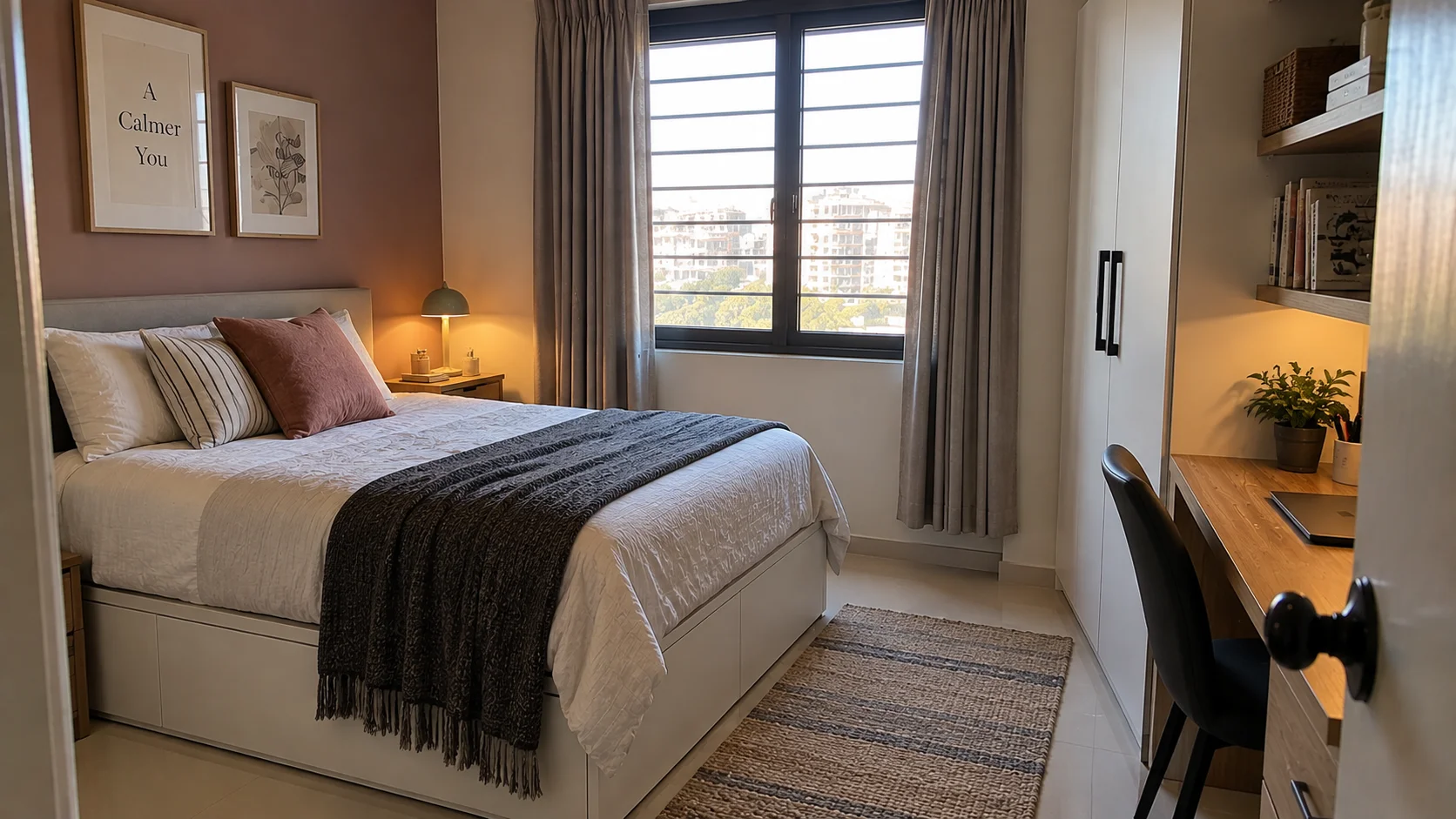
A crowded closet can make a bedroom feel smaller because clothing and accessories spill onto chairs, drawers, and other surfaces. Before purchasing another organizer, review what is already stored there and determine which items need to remain accessible.
Group similar clothing together and separate everyday pieces from seasonal or occasional-use items. Position frequently worn clothing where it is easiest to reach. Less frequently used belongings can occupy higher shelves or other less accessible areas, provided they can be retrieved safely.
Make use of the closet’s existing shelves, hanging space, and drawers before adding new storage equipment. If the closet has adjustable shelving, consider whether the spacing suits the items you actually store.
For a bedroom with limited closet capacity, a narrow clothing rail, a compact wardrobe, or a small set of drawers may help create a more defined dressing area. Choose the combination according to the amount of clothing and available floor space.
For additional organization methods, explore our guide to bedroom storage ideas.
7. Keep the Bedside Area Simple
Nightstands often become crowded with chargers, books, glasses, skincare products, drinks, and decorative objects. Decide which items genuinely need to stay beside the bed and relocate the rest to more suitable storage.
A small drawer or compartment can keep necessary belongings nearby without filling the entire surface. If a conventional nightstand is too large, consider a narrow bedside table or a properly installed wall-mounted shelf.
Keep enough space available for the items you use regularly. An organized bedside area is easier to clean and less likely to interfere with the room’s main walking route.
The best solution is not necessarily the smallest piece of furniture. It is the one that provides the required function while fitting the available space comfortably.
8. Plan Lighting Around Daily Activities
Lighting affects how a bedroom functions throughout the day. A ceiling fixture can provide general illumination, while a bedside light supports reading and softer lighting can create a more relaxed atmosphere.
In a compact bedroom, consider wall-mounted bedside fixtures or appropriately placed ceiling lighting when table lamps would occupy space needed for other essentials. Choose lighting according to how the room is used rather than adding fixtures simply for decoration.
Avoid relying on a single light source if it leaves important areas poorly illuminated. At the same time, several unnecessary fixtures can add visual clutter and require more space, cables, or installation work.
Think about lighting before finalizing furniture placement. Ensure that switches are accessible and that cords do not create trip hazards. Follow the manufacturer’s installation and usage instructions, particularly for fixed electrical fixtures.
9. Choose Colors and Textiles That Work Together
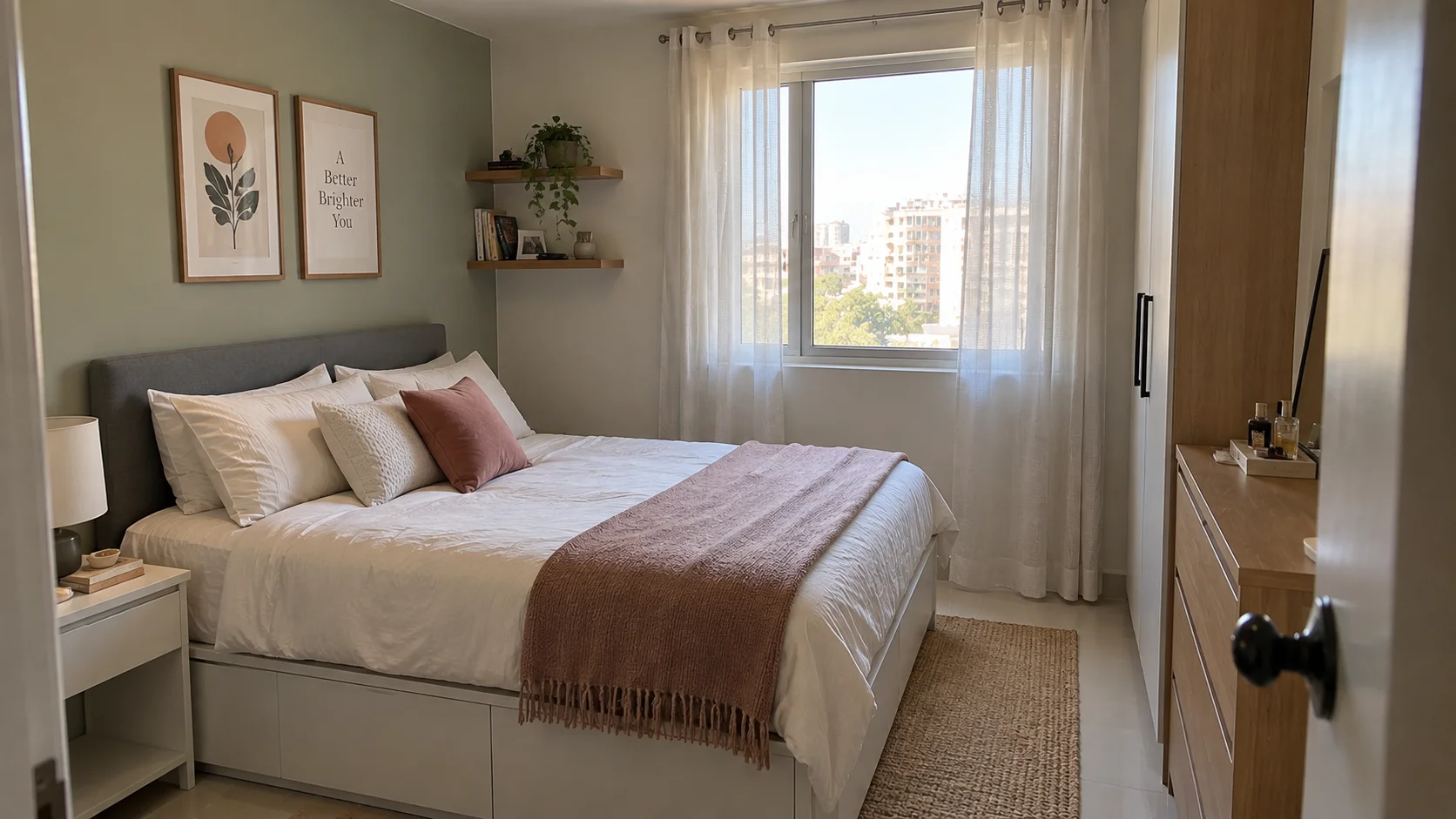
Color cannot physically enlarge a bedroom, but coordinated surfaces can help create a more visually connected space. Consider the relationship between the walls, furniture, bedding, curtains, and flooring rather than selecting each finish independently.
Lighter colors can help create an airy appearance, while darker colors and stronger contrasts can add depth when used deliberately. A small bedroom does not have to be completely white or neutral. The important consideration is how the colors work together in the room’s natural and artificial lighting.
Bedding and curtains can introduce color and texture without requiring additional furniture. If the room already has patterned bedding or a prominent headboard, simpler curtains and accessories may help maintain balance.
Before purchasing new textiles, consider what you already own and whether a change in arrangement would be enough. For further guidance on choosing a restful palette, read our article on calm bedroom paint colors.
10. Use Mirrors and Window Treatments Thoughtfully
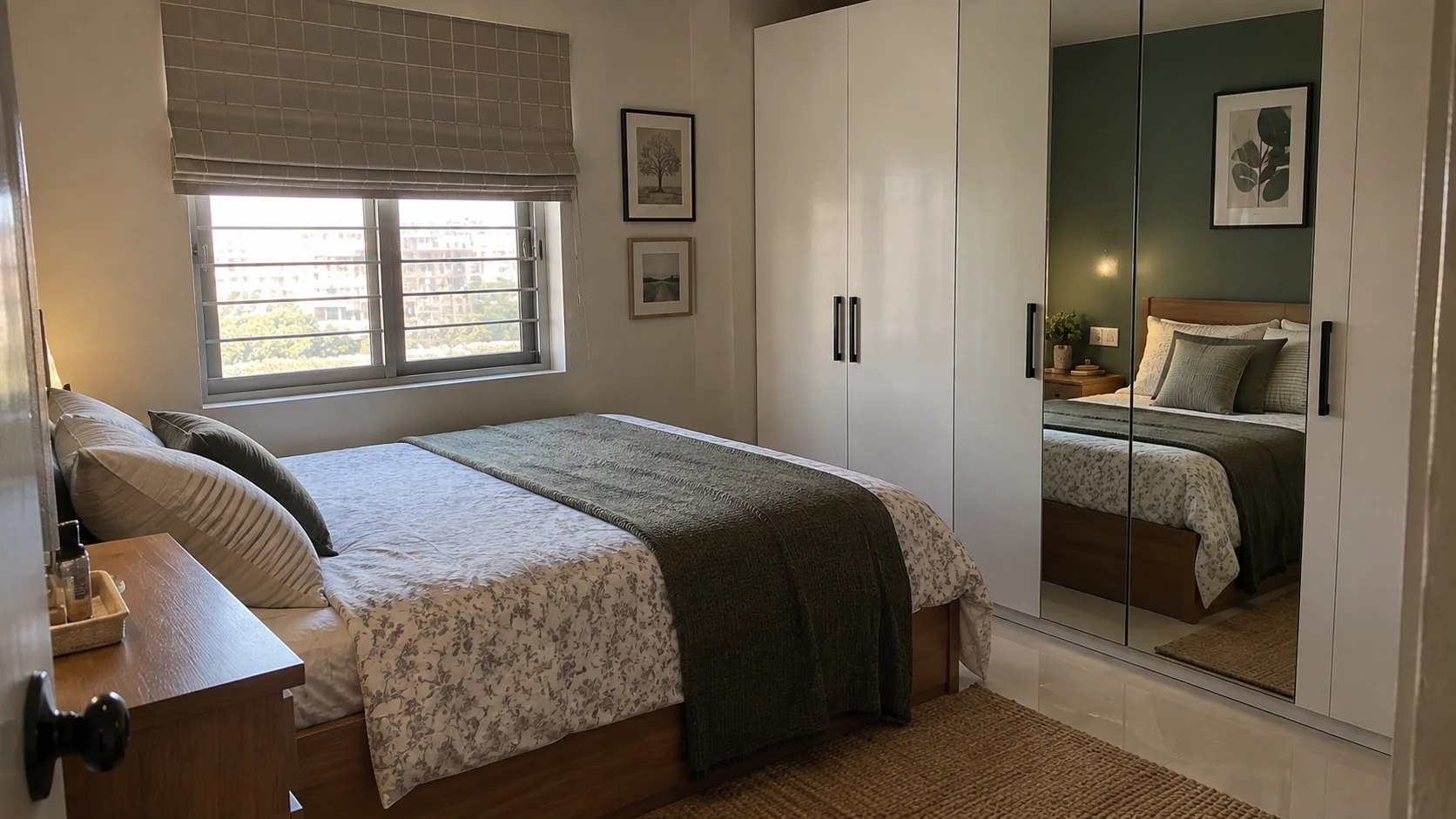
A strategically positioned mirror can reflect light and make a bedroom feel more open. A full-length mirror attached securely to a suitable door or wall can also provide a dressing function without requiring a separate freestanding unit.
Placement matters more than the number of mirrors. Position one where it reflects useful light or a visually pleasant part of the room. If it reflects a cluttered corner, it may make that area more noticeable instead of improving the overall appearance.
Window treatments should also suit the room’s proportions and daily needs. Curtains need enough clearance to open and close comfortably without interfering with furniture or covering useful storage access.
Before installing curtain hardware, check the window dimensions and the surrounding wall space. Our guide to bedroom curtain ideas covers additional styling options.
11. Add Decoration After the Layout Works
Once furniture placement, storage, and lighting are functioning well, introduce decorative details. A small piece of wall art, coordinated bedding, a textured rug, or a few meaningful objects can make the bedroom feel personal without filling every available surface.
Choose decorative items according to the room’s existing colors and materials. Leave some walls, shelves, and floor areas relatively open so the essential furniture remains visually clear.
Avoid purchasing accessories before understanding the room’s main limitations. If the bed blocks a drawer or the closet is difficult to reach, another decorative object will not solve the underlying problem.
For more visual styling ideas focused specifically on decorative finishes, see our separate guide to small bedroom decor ideas.
12. Adapt the Bedroom to Your Needs
There is no single layout that suits every small bedroom. The best arrangement depends on who uses the room, what belongings need to be stored, and whether the space serves additional purposes.
For couples sharing a small bedroom
Divide clothing and personal storage into clear zones. Depending on the furniture available, separate drawers, wardrobe sections, or shared bedside storage may be more practical than buying two large matching units.
Consider how each person accesses the bed and everyday belongings. A balanced arrangement should provide convenient access without filling the room with duplicate furniture that is not actually needed.
For renters
Prioritize furniture that can move with you and organization solutions that do not require permanent changes to the property. Freestanding shelves, compact furniture, and removable organizers may be useful when drilling or renovation is not permitted.
Check the property’s rules before installing wall-mounted storage or changing fixtures. Plan the room around the existing layout before spending money on modifications.
For a bedroom without a closet
Create a dedicated clothing-storage zone using a compact wardrobe, clothing rail, drawers, or suitable shelving. Choose the combination according to the amount of clothing and the space available.
Keep everyday garments easy to access and store seasonal items separately. A defined dressing area is usually easier to maintain than relying on temporary piles on chairs or the floor.
For a bedroom that also serves as a study or workspace
Give the desk a clear place and avoid letting work supplies spread across the bedside area. If the room must serve several purposes, prioritize the activities that happen most often and choose furniture that supports them without blocking the main route through the bedroom.
13. Improve the Room on a Budget
You do not need to replace all your furniture to make a bedroom more functional. Start with changes that address an identifiable problem.
- Remove items that no longer belong in the bedroom.
- Reposition the bed and major furniture to improve access.
- Organize existing drawers, closet shelves, and under-bed storage.
- Relocate items that crowd the nightstand or other frequently used surfaces.
- Improve lighting where it is insufficient or inconvenient.
- Add new organizers or furniture only when a specific need remains.
This order helps you understand what the room actually lacks before spending money. It can also prevent buying storage products that take up space without making belongings easier to use.
Common Small Bedroom Design Mistakes to Avoid
Buying furniture before measuring: Check the full footprint of an item, including the space required to open its doors and drawers.
Filling every empty corner: Open floor space helps circulation and makes the room easier to use. Not every corner requires furniture or accessories.
Adding storage without organizing belongings: Containers and shelves work best when each has a clear purpose. More storage does not automatically create better organization.
Ignoring everyday routines: Frequently used clothing, chargers, books, and other essentials should be easy to reach. A layout that looks attractive but makes daily tasks difficult will be frustrating to maintain.
Treating light colors as a requirement: Light palettes can create an airy feeling, but darker colors can also work when balanced with the room’s lighting, furniture, and textiles.
Decorating before fixing the layout: Resolve blocked pathways, awkward furniture placement, and storage problems before adding decorative finishing touches.
Build a Simple Daily Reset Routine
Spend a few minutes returning clothes, books, chargers, and other everyday items to their designated places. Keep the floor clear and reset frequently used surfaces before the clutter builds up. A simple routine that fits your daily habits is easier to maintain than repeatedly reorganizing the entire bedroom.
Frequently Asked Questions
What is the first step in designing a small bedroom?
Measure the room and identify the positions of doors, windows, closets, and fixed fixtures. Then plan where the bed and essential furniture can fit while keeping the main walking route accessible.
How can I make a small bedroom more functional without buying new furniture?
Start by rearranging the existing furniture, organizing the closet, using suitable under-bed space, and clearing surfaces that have accumulated unnecessary objects. These changes can reveal whether additional furniture or storage is actually needed.
What furniture works best in a small bedroom?
Furniture with an appropriate footprint and useful functionality generally works best. Compact wardrobes, narrow bedside surfaces, beds with suitable storage, and pieces that combine functions may be helpful when they fit the room and remain convenient to use.
Can a small bedroom look good with dark colors?
Yes. Dark colors can work on walls, furniture, or textiles when they suit the available lighting and the rest of the room’s finishes. A balanced palette is more important than following a rule that every small bedroom must be white.
How do I design a small bedroom that also needs a desk?
Place the bed and essential storage first, then identify where a compact desk can fit without blocking movement or access to the closet. Consider the actual working area and chair clearance before selecting a desk.
Final Thoughts
A well-designed small bedroom begins with a practical layout rather than a shopping list. Measure the room, position the bed carefully, choose furniture that fits, and organize storage around the belongings you use most often. After those essentials are in place, lighting, textiles, colors, and a few decorative details can complete the room.
The goal is not to use every available inch. It is to create a bedroom that supports your daily routine, keeps necessary belongings accessible, and feels comfortable to live in.
Love inspiring interiors, practical design ideas, and beautiful spaces? Follow us on Facebook, Instagram, and Pinterest for more interior inspiration, home styling ideas, and everyday design tips.

