
Table of Contents
The empty area above kitchen cabinets can be surprisingly difficult to decorate. It is visible from across the room, yet it sits outside the main working area of the kitchen, which means the wrong objects can quickly make the room feel cluttered. The goal is not to fill every inch simply because the space is available. Good decorating ideas for above the kitchen cabinets make the upper area feel connected to the rest of the room while leaving enough visual breathing space.
Before choosing baskets, plants, pottery, artwork, or other accessories, look at the kitchen as a whole. Consider the cabinet color, countertop, backsplash, ceiling height, lighting, and existing decorative details. The most successful arrangement usually repeats one or two elements already present in the kitchen rather than introducing an unrelated collection of objects. Think of the cabinet tops as part of the room’s overall composition, not as a separate display shelf.
Start by Deciding Whether the Space Needs Decor
Not every kitchen benefits from heavy decoration above the cabinets. If the cabinets already have detailed doors, the backsplash is visually strong, or the kitchen contains many appliances and accessories, adding a large collection overhead may make the room feel busy. In some kitchens, leaving most of the space open and adding only a few carefully selected pieces creates a cleaner and more balanced result.
Look at the empty area from the normal viewing positions in the room. If the space naturally draws attention because of its height or strong architectural shape, a restrained display may be enough. If the cabinet line disappears visually into the wall or reaches close to the ceiling, you may not need much decoration at all. The best choice depends on the proportions and existing visual weight of your kitchen.
Decorating Ideas for Above the Kitchen Cabinets by Kitchen Style
Different kitchen styles call for different approaches. A modern kitchen often looks better with fewer objects, while a traditional kitchen may comfortably accommodate layered accessories and collected pieces. Matching the decorating approach to the room prevents the cabinet tops from looking like an afterthought.
Before choosing individual pieces, identify the dominant character of the kitchen. These simple guidelines can help:
- Modern kitchens usually benefit from simple shapes, restrained color, and fewer accessories.
- Traditional kitchens can accommodate pottery, framed artwork, books, or collected decorative pieces.
- Farmhouse kitchens often work well with baskets, wood accents, ceramic vessels, and greenery.
- Cottage-style kitchens can use softer colors, vintage-inspired pieces, and small collections.
- Industrial kitchens can incorporate darker metal, aged wood, and simple architectural objects.
Modern and Minimal Kitchens
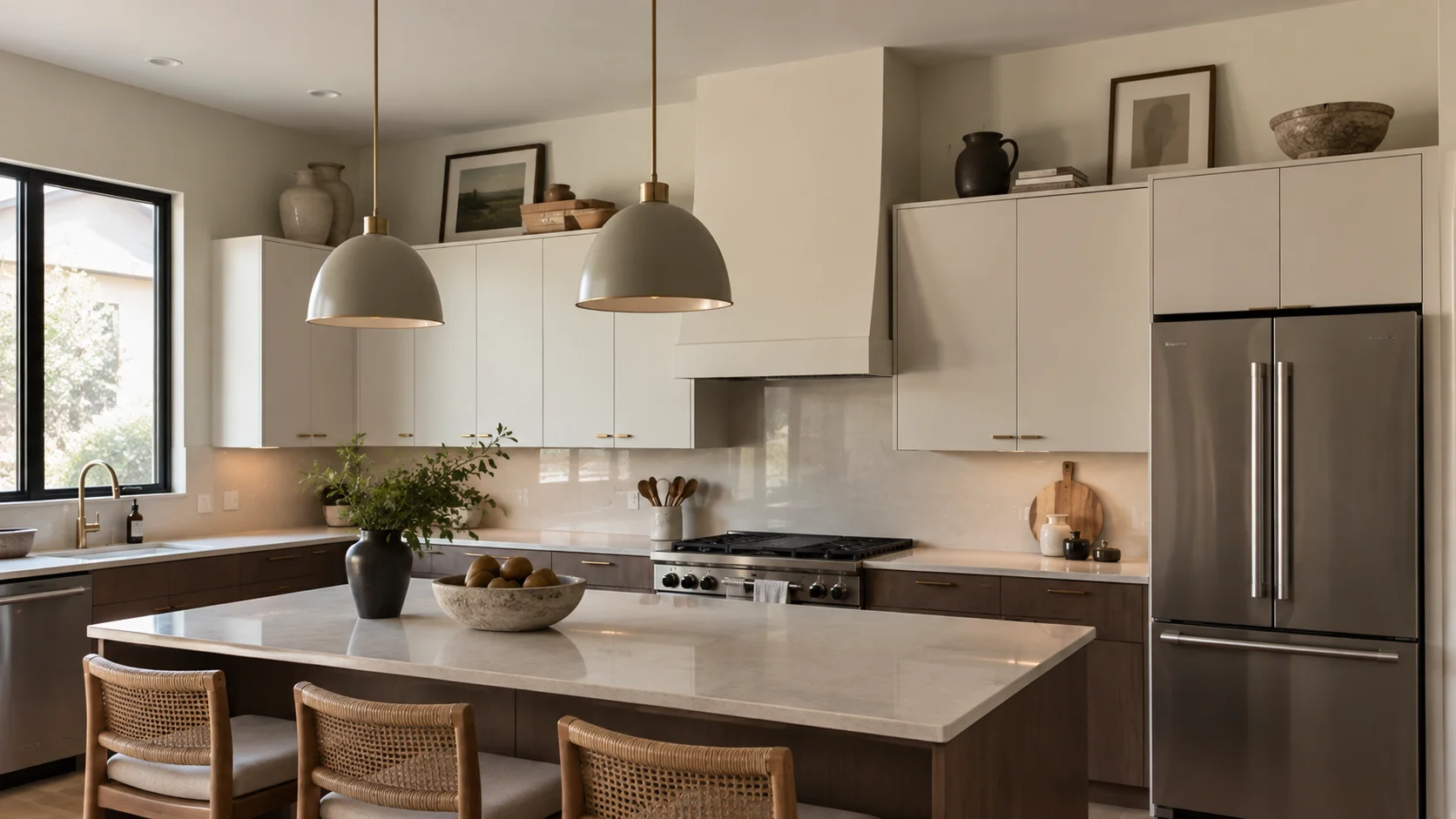
For a modern kitchen, avoid creating a continuous row of small decorative objects. Repetition at that scale can produce visual noise, especially when the cabinets themselves have clean, geometric lines. Instead, choose a few larger pieces with clear silhouettes and allow visible space between them.
Neutral ceramics, simple vessels, sculptural objects, or a small amount of greenery can work particularly well when they echo the kitchen’s existing materials and colors. If the kitchen already contains several finishes, keep the cabinet-top display restrained so it supports the architecture instead of competing with it.
Traditional and Farmhouse Kitchens
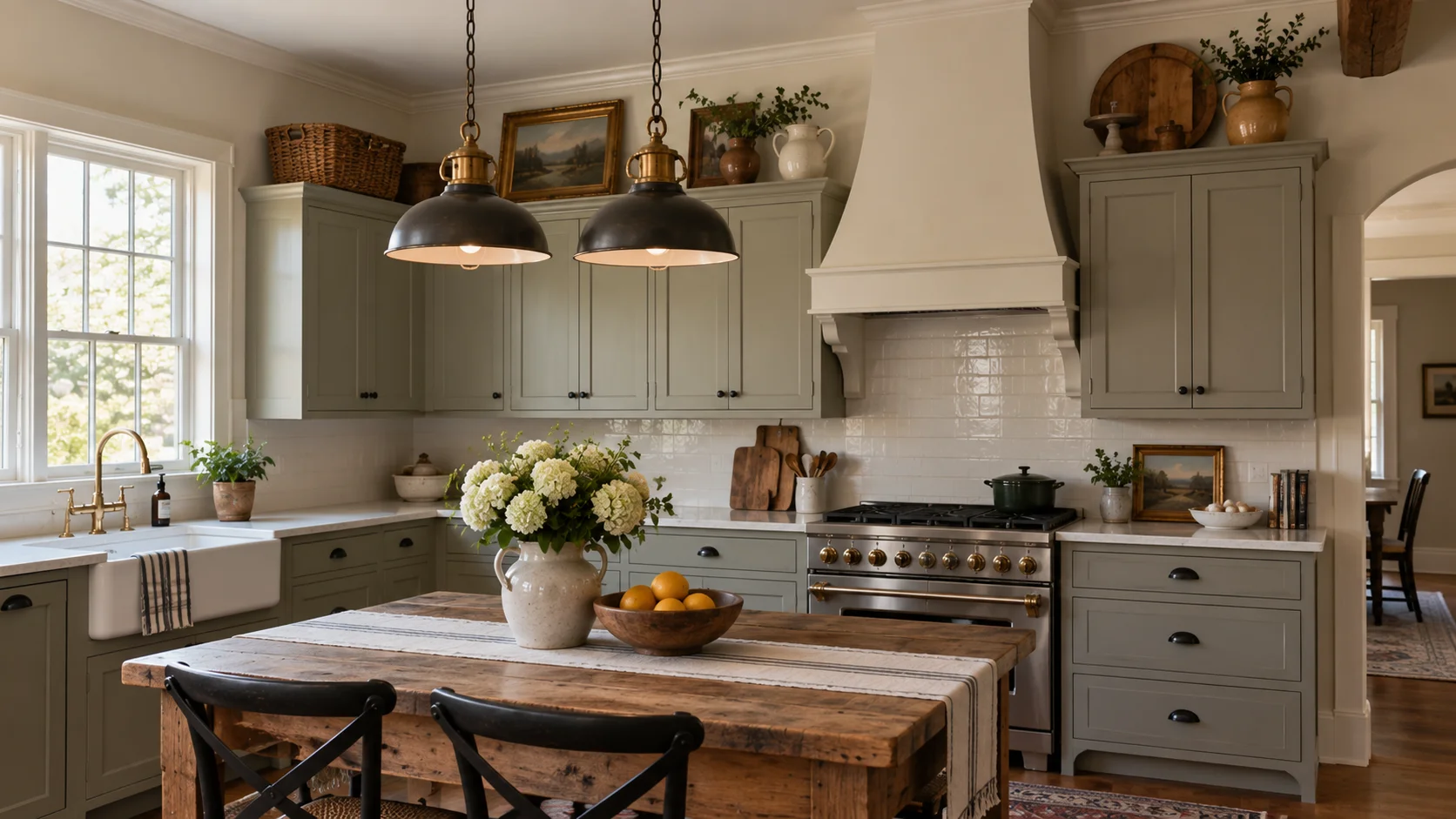
Traditional and farmhouse kitchens offer more flexibility because collected and layered decor can reinforce their comfortable character. Baskets, ceramic pitchers, pottery, wooden pieces, vintage-inspired containers, and greenery can create a warmer appearance when arranged with some variation in height.
Even in a more relaxed kitchen, avoid placing every available decorative item above the cabinets. Select pieces that share a color family or material relationship, then group them into a few visual clusters. This creates the impression of a collection rather than a storage area for objects that have nowhere else to go.
Use a Small Collection Instead of Many Random Objects
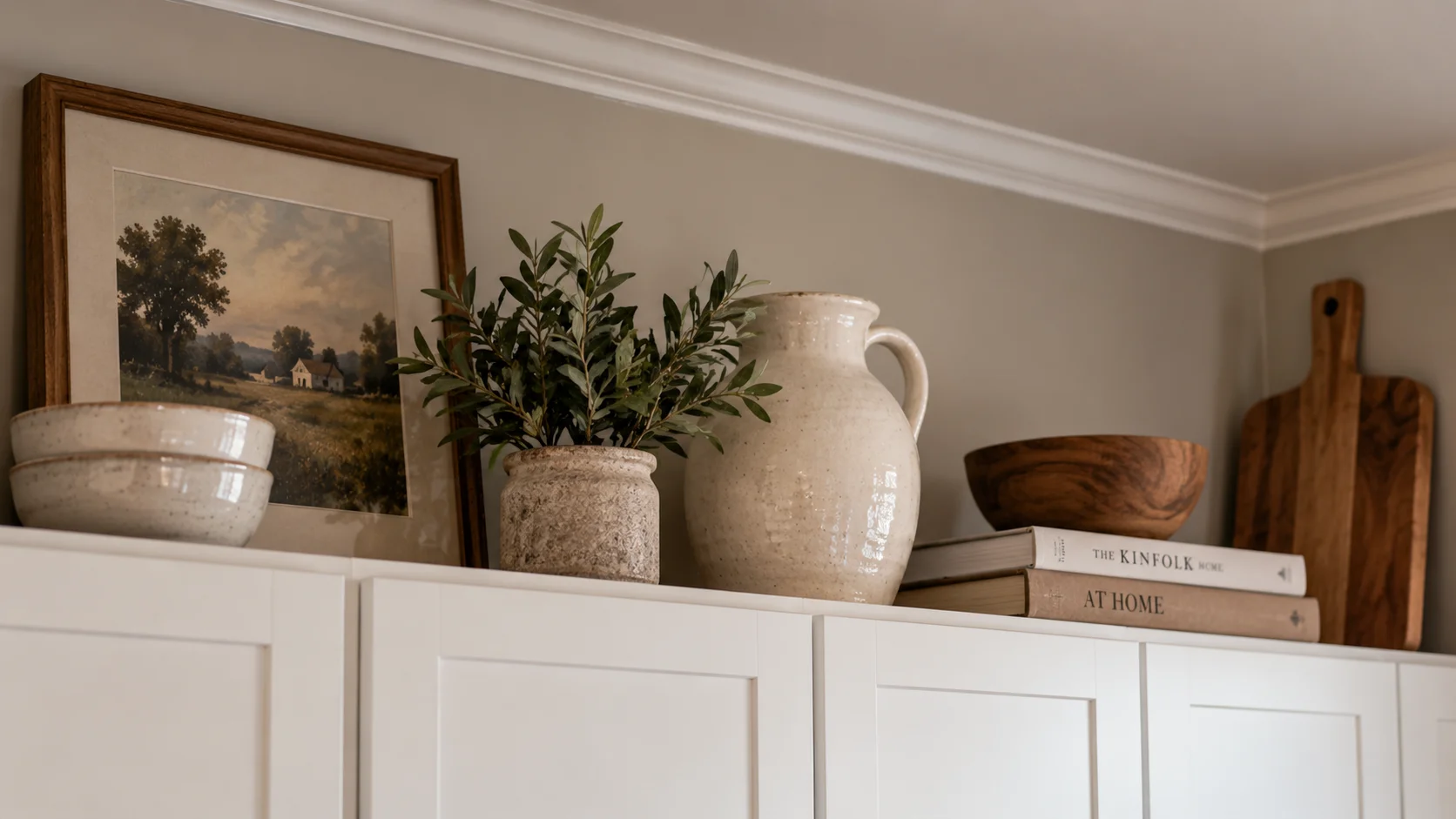
One of the easiest ways to make cabinet-top decor look intentional is to work with a theme or collection. The objects do not need to match exactly, but they should have something in common. Similar colors, materials, shapes, or subject matter can visually connect pieces that are otherwise different.
Try limiting the display to a few related categories rather than combining every type of accessory you own. A collection of pottery may look more cohesive than pottery mixed with unrelated signs, artificial flowers, framed quotes, figurines, and miscellaneous containers. The objective is visual consistency, not maximum decoration.
Add Greenery Without Creating a Maintenance Problem
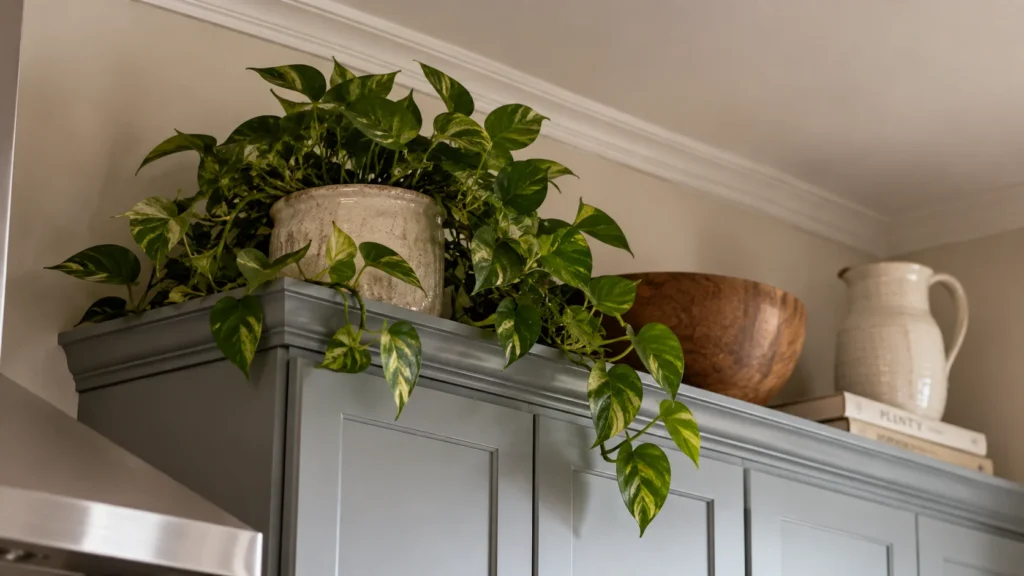
Plants can soften the hard lines of kitchen cabinets and introduce a natural element into the room. However, the cabinet-top area is often inconvenient to reach, so plant selection and placement deserve more thought than they would on a countertop or windowsill. A plant that needs frequent attention may become impractical if accessing it requires moving several objects.
Artificial greenery can be an option when maintaining live plants in that location is difficult, but it should still be used selectively. Whether you choose real or artificial greenery, avoid creating a dense line of plants across the entire cabinet run. A few strategically placed plants can provide softness without turning the upper cabinets into a miniature garden.
Use Baskets and Natural Textures for Warmth
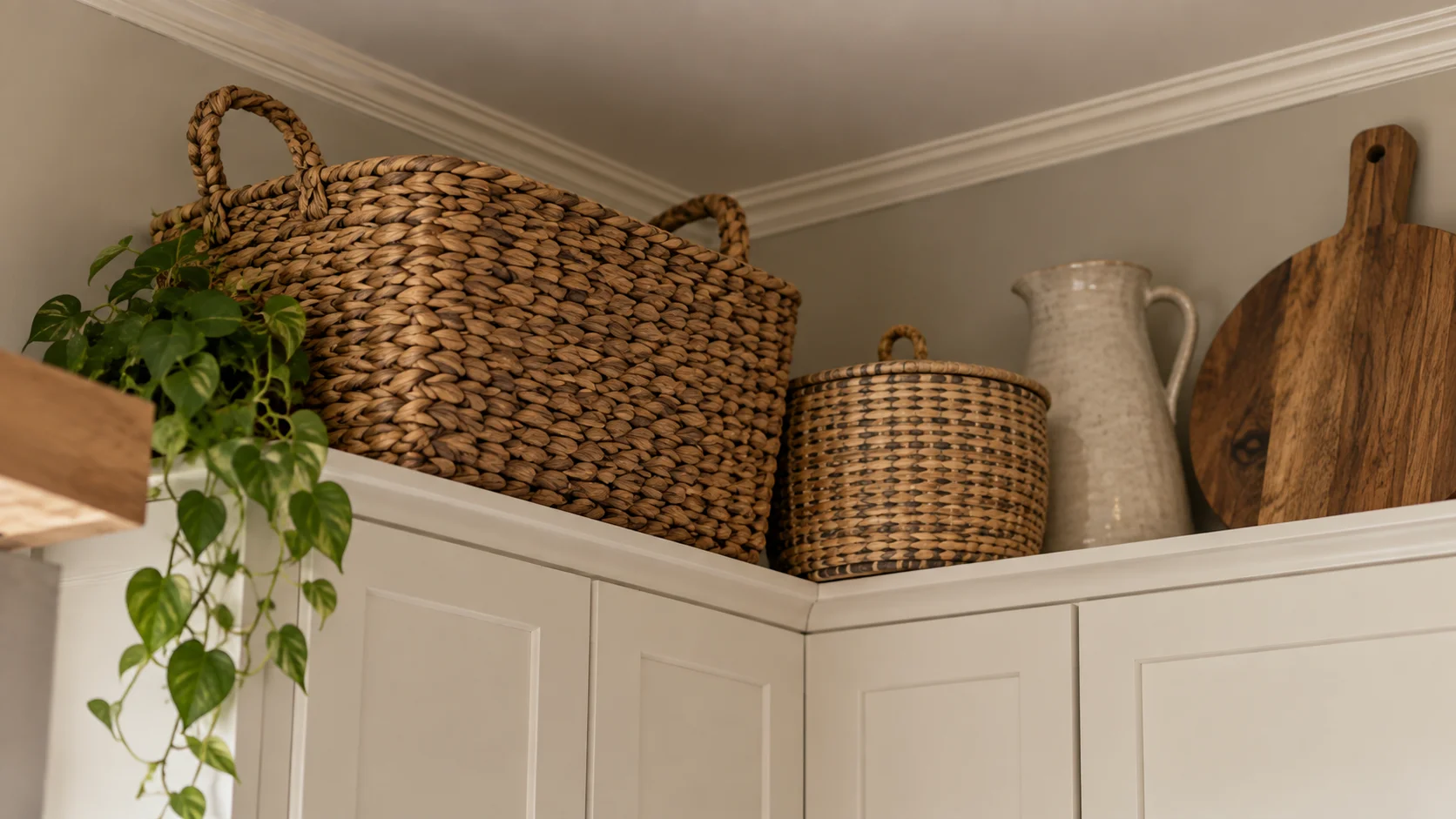
Baskets are among the most versatile decorating ideas for above the kitchen cabinets because their rounded or woven textures can contrast with the straight lines of cabinetry. They can also contribute warmth in kitchens dominated by hard surfaces such as tile, stone, glass, and metal.
If you use baskets, vary their placement rather than creating a perfectly symmetrical row unless the kitchen’s style specifically calls for that look. Larger baskets can help occupy taller spaces, while smaller pieces can be grouped with other decorative objects. Keep the arrangement decorative unless the area is genuinely accessible enough for practical storage.
Display Artwork, Signs, and Decorative Objects Carefully
Artwork can help fill a visually awkward gap without requiring a large number of small accessories. Leaning a framed piece against the wall or positioning a decorative sign among a few other objects can create a focal point. Choose imagery or wording that genuinely suits the kitchen rather than adding generic kitchen-themed signs simply because the room is a kitchen.
Decorative objects can include ceramics, vessels, sculptural pieces, vintage-inspired finds, or objects connected to cooking and dining. Consider the viewing angle before placing anything fragile or visually delicate in a high position. Pieces should remain stable and should not interfere with cabinet doors, ventilation, lighting, or other functional elements.
Create Height With Layered Kitchen Decor
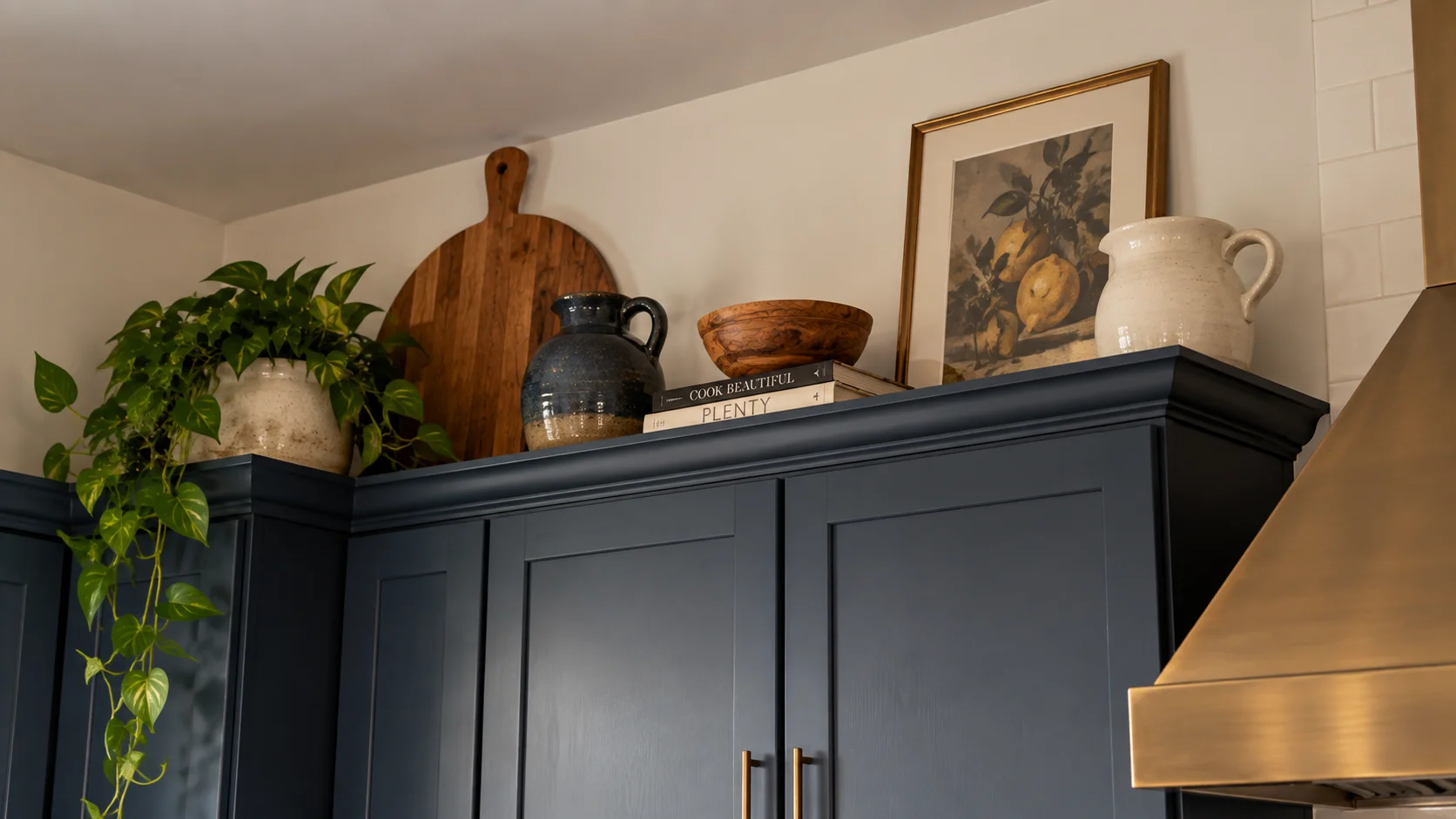
A cabinet-top arrangement can look flat when every object has approximately the same height. Layering creates more visual movement by allowing taller pieces to anchor the arrangement while smaller objects support them. You can create this effect through different object heights rather than buying a large quantity of decor.
Place taller pieces toward the back and shorter pieces toward the front where appropriate, while making sure the overall arrangement remains visible. Avoid stacking objects simply to reach the ceiling. If the display starts to look crowded or unstable, remove pieces rather than continuing to build upward.
Use Color to Connect Cabinet-Top Decor With the Kitchen
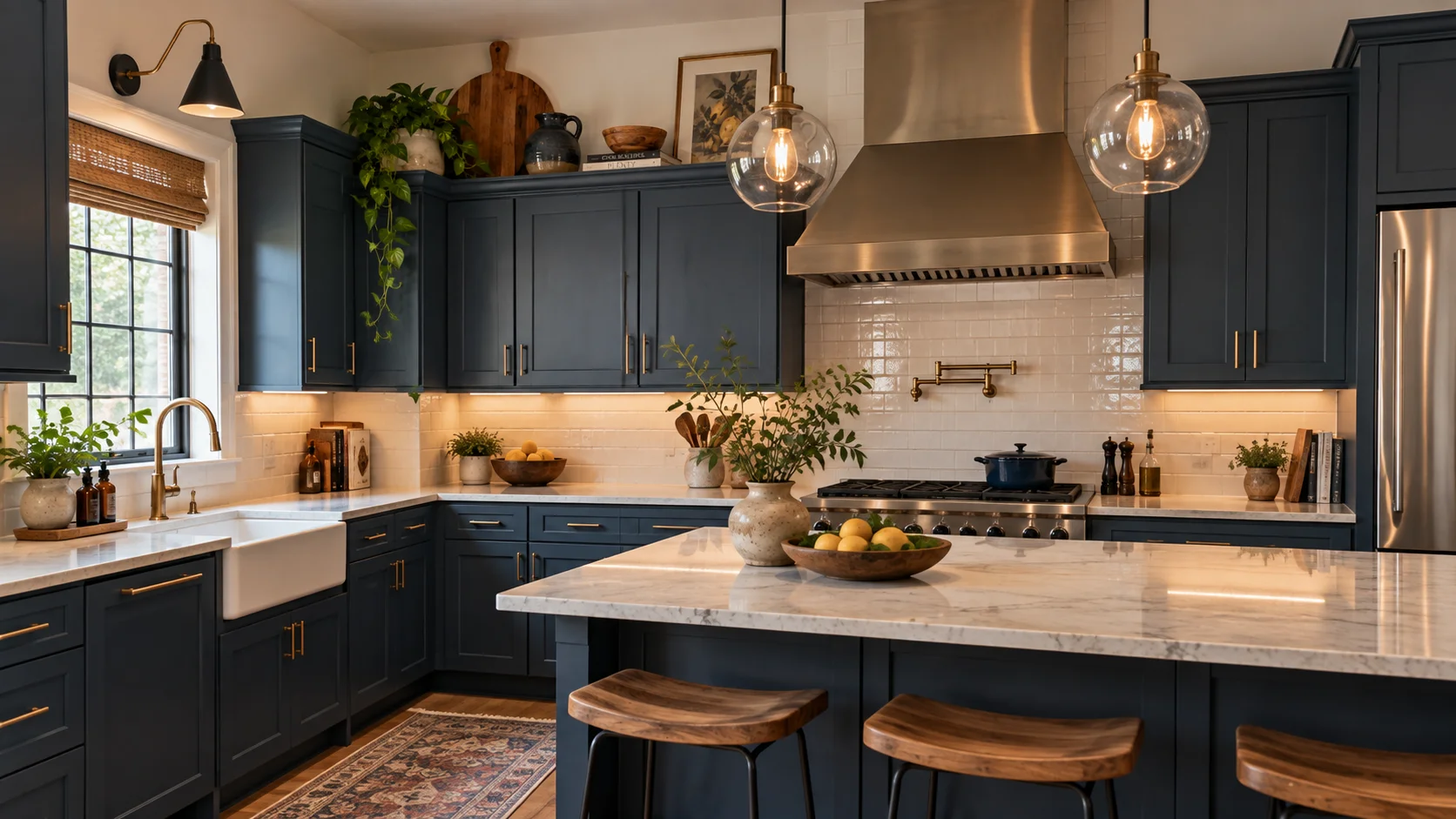
Color is useful for making decorative objects feel like part of the kitchen instead of an unrelated display. Look at existing colors in the backsplash, countertop, flooring, hardware, textiles, or nearby dining area. Repeating one or two of these colors above the cabinets can create a stronger visual connection.
This does not mean every decorative piece needs to match. A mostly neutral arrangement with one repeated accent color can be more effective than a display containing many competing shades. If the kitchen already has bold colors, use the cabinet-top area to echo those colors lightly rather than adding another dominant palette.
Decorating Ideas for Above the Kitchen Cabinets With Lighting
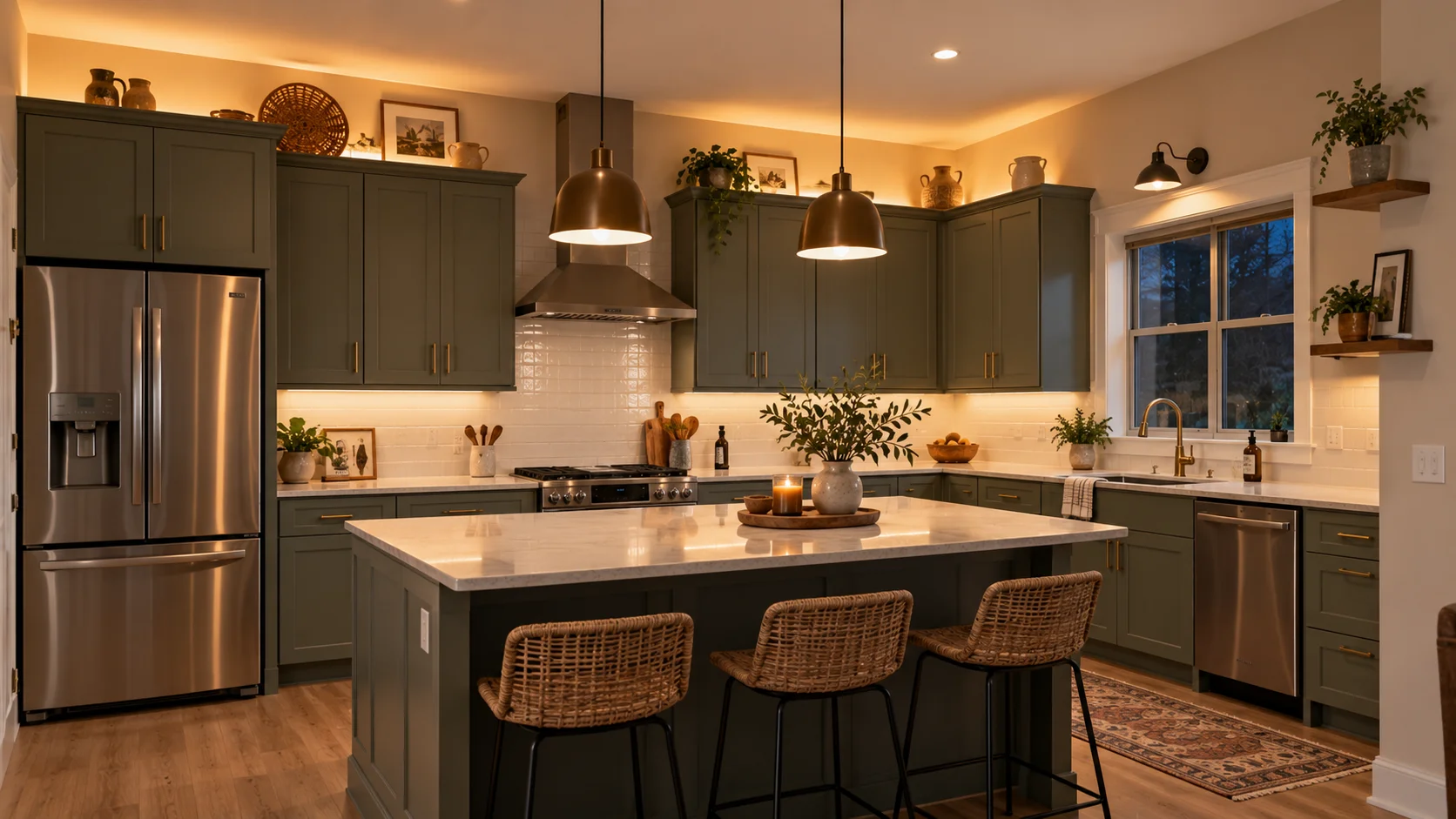
Lighting can make the area above kitchen cabinets more noticeable, particularly in the evening. If suitable lighting already exists in the kitchen, consider how it interacts with the cabinet-top display before adding anything else. Decorative objects can cast shadows or create visual highlights depending on their shape and position.
If you add lighting, keep the installation appropriate for the space and follow the manufacturer’s requirements for the lighting product. Concealed lighting can create a subtle architectural effect, while small decorative lamps may work better in kitchens where there is enough accessible surface. The important point is that lighting should enhance the display rather than become another source of visual clutter.
Work With Different Ceiling Heights
The distance between the cabinets and ceiling greatly affects which decorating approach will work. A narrow gap may need only a few low-profile pieces, while a taller gap can accommodate larger vessels, baskets, artwork, or layered arrangements. Trying to force the same styling method into every kitchen can produce awkward proportions.
For especially tall spaces, think vertically rather than filling the entire area with small objects. A few pieces with substantial visual presence can bridge the gap more effectively than a long line of tiny accessories. In a short gap, restraint is usually easier because the limited vertical space naturally controls the amount of decoration.
Keep the Space Easy to Clean
The area above kitchen cabinets can collect dust and airborne cooking residue, particularly in kitchens without a direct barrier between cooking activity and the cabinet tops. For that reason, decorative objects should be selected with maintenance in mind. A beautiful display that is difficult to clean can quickly become frustrating.
Choose pieces that can be safely cleaned according to their materials and construction. Avoid creating deep layers of objects that make it difficult to reach the surface behind them. If you rarely use or move an item, ask whether it is worth keeping in a location that requires periodic cleaning.
Common Mistakes to Avoid Above Kitchen Cabinets
The biggest mistake is treating the cabinet tops as a place to store everything that does not have another home. Decorative space still needs visual organization. Too many unrelated objects can make even a well-designed kitchen feel crowded, while excessive symmetry can make the arrangement look artificial.
Watch for these common problems:
- Filling every inch of available space.
- Using too many tiny decorative objects.
- Mixing unrelated colors and materials without a visual connection.
- Placing items where they interfere with cabinet doors or lighting.
- Choosing decor that is difficult to clean or safely access.
Another common mistake is copying a styling arrangement from a completely different kitchen. A display that works beautifully with tall ceilings and traditional cabinetry may look oversized in a compact modern kitchen. Use inspiration as a starting point, then adjust the scale, number of objects, and colors to fit your own room.
A Simple Method for Styling the Space
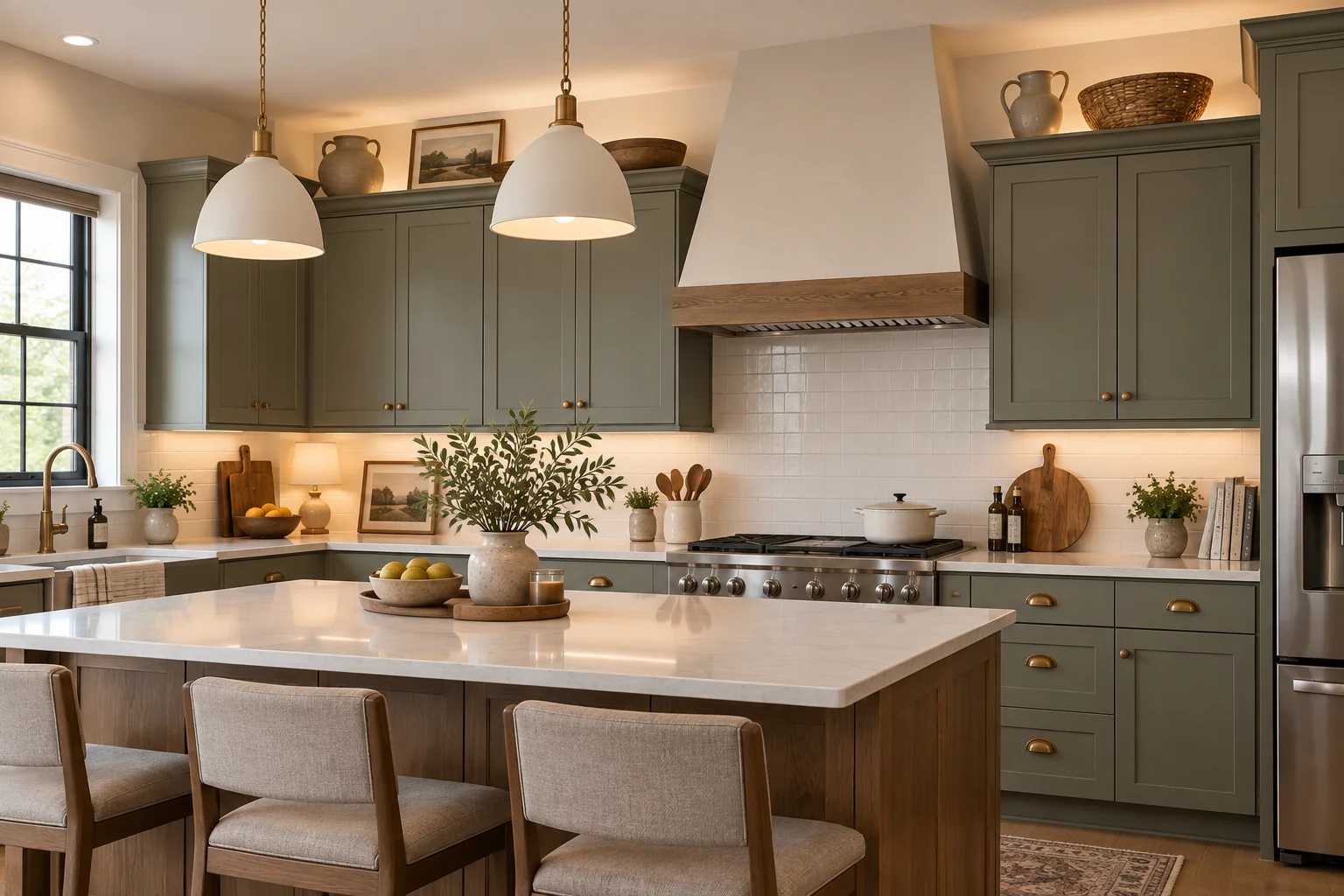
Start by removing everything currently sitting above the cabinets. Clean the surface, then look at the empty space for a few minutes before putting anything back. This gives you a chance to notice where the cabinet line feels visually heavy, where a gap needs height, and where leaving negative space might actually improve the room.
Next, choose one larger anchor object or group, then add a few supporting pieces that relate to it. Step back and view the arrangement from the kitchen entrance, dining area, and other common viewpoints. If the display feels crowded, remove something rather than automatically rearranging everything. A successful arrangement should feel balanced from normal viewing distances.
How to Refresh Above-Cabinet Decor Without Buying Everything Again
You do not need a completely new collection every time you want to update the kitchen. Start by removing half of the current objects and seeing whether the room feels better with less. Then rotate pieces from other areas of the home if their color, material, and scale make sense for the kitchen.
Seasonal changes can also be subtle. Instead of replacing the entire arrangement, switch one or two elements, such as greenery, ceramics, or textiles represented through decorative pieces. This approach keeps the space visually fresh without turning the cabinet tops into an ongoing shopping project.
FAQ
Useful choices include pottery, baskets, greenery, framed artwork, decorative vessels, and a small collection of related objects. The right choice depends on the cabinet-to-ceiling gap, kitchen style, and amount of visual activity already present in the room.
Avoid choosing objects simply because they fit the available space. Consider whether each piece contributes to the overall color, texture, scale, or style of the kitchen. Leaving some areas empty is often better than filling them with unrelated accessories.
There is no single correct approach to cabinet-top decor. The area can look current when it is styled selectively and connected to the rest of the kitchen rather than filled with a large collection of unrelated objects.
A restrained arrangement, coordinated materials, and intentional negative space can help the area feel more contemporary. In some kitchens, however, leaving the space mostly empty may be the better design choice.
Begin by removing objects that do not have a clear relationship to the rest of the kitchen. Group related pieces together and leave visible space between collections instead of creating a continuous row of accessories.
Pay particular attention to scale. Several small objects can create more visual noise than one or two larger pieces, so reducing the number of items can often make a greater difference than buying new organizers or decorative accessories.
Plants can work well above cabinets when they are appropriate for the location and easy enough to maintain. The main consideration is accessibility because plants placed high above cabinets may be harder to water, inspect, or clean.
If live plants are impractical, carefully selected artificial greenery can provide a similar visual effect. Keep the arrangement restrained so the greenery adds softness without overwhelming the upper part of the kitchen.
A high ceiling creates more vertical space, so taller decorative pieces can help establish a better relationship between the cabinets and ceiling. Larger vessels, baskets, artwork, or grouped objects can provide more visual weight than numerous small accessories.
Avoid trying to fill the entire vertical gap. The display should establish a comfortable visual transition between the cabinet tops and ceiling rather than creating a wall of decoration.
The appropriate cleaning frequency depends on the kitchen environment, cooking habits, ventilation, and amount of dust or residue that accumulates. Inspect the area periodically and clean it whenever buildup becomes noticeable.
Keep the display simple enough that you can access the cabinet-top surface without having to dismantle a complicated arrangement. Easy maintenance is an important part of choosing decor for this location.
Love inspiring interiors, practical design ideas, and beautiful spaces? Follow us on Facebook, Instagram, and Pinterest for more interior inspiration, home styling ideas, and everyday design tips.